Quick overview
Leaders succeed at preventing employee burnout by noticing strain before it turns into silence. You act early by spotting rising pressure, rebalancing work before people burn out, and responding to how work feels, not just how it looks on the surface.
In this article, you’ll learn how to recognise early burnout signals, understand what causes them, and take action to protect employee well-being and performance before it’s too late.
What if your most dedicated employees were starting to experience burnout and you didn’t even realize it?
Burnout isn’t just about exhaustion. It quietly pushes teams from thriving to disengagement, affecting both mental and physical health.
Picture a high-performing employee who always meets deadlines, stays late, and rarely takes breaks. On the surface, everything looks fine. But beneath that reliability, exhaustion builds, motivation fades, and stress takes over.
Burnout doesn’t happen overnight. It develops slowly.
When you miss burnout signals, businesses lose more than productivity.
Because you will lose trust, momentum, and people who are hard to replace.
According to Newsroom, “The majority (82%) of employees say they at least sometimes feel burned out in their professional role, with a quarter (25%) saying they feel this way often or always.”
Usually, these numbers don’t trigger early warnings. They show up later as resignations, stalled performance, and teams stretched thin.
This is why preventing employee burnout has become a critical leadership priority.
The good news? Burnout is preventable.
But how do leaders act early to prevent burnout without micromanaging?
To answer that, you first need to understand what workplace burnout is and why it matters today.
What is workplace burnout and why does it matter?
Burnout isn’t just about feeling tired. It’s a complete mental, emotional, and physical exhaustion caused by prolonged workplace stress.
But what makes burnout different from everyday stress? Why do some employees bounce back while others shut down completely?
The World Health Organization defines “burnout as an occupational phenomenon caused by chronic workplace stress that hasn’t been successfully managed”. Gallup highlights this definition in its reporting on workplace well-being.
Unlike temporary stress, burnout doesn’t go away with a weekend off or a vacation.
It lingers, affecting an employee’s ability to focus.
Ignoring burnout and ongoing job stress doesn’t just affect individual employees. It disrupts team members, weakens employee engagement, and lowers overall productivity.
When you fail to address burnout, you often see increased absenteeism, higher turnover, and declining work quality.
By prioritising burnout prevention, you help employees manage their workload, maintain work-life balance, and protect their well-being.
So how do you spot burnout before it’s too late? Early warning signs help you prevent employee burnout.
How can you identify the signs of burnout?
Some employees may openly express frustration or exhaustion, while others suffer silently, pushing through work-related pressure until they hit a breaking point.
But how can you differentiate between a temporary rough patch and full-blown burnout?
As per Dr Paula Redmond, Clinical Psychologist, burnout is characterized by 5 main burnout symptoms:
The 5 main burnout symptoms and how they show up at work
| Burnout symptom | What’s happening beneath the surface | How it typically shows up at work |
| Exhaustion | Sustained workload pressure and limited recovery drain mental and physical energy over time. | Employees feel constantly tired, struggle to recharge even after rest, work longer hours, skip breaks, and show signs of fatigue that affect focus and stamina. |
| Detachment & cynicism | Emotional resources wear down, causing employees to distance themselves from work to cope with ongoing stress. | Work that once felt meaningful starts to feel frustrating or pointless. Employees become disengaged, less empathetic, and more negative about their role or responsibilities. |
| Reduced effectiveness | Cognitive strain and fatigue interfere with concentration, decision-making, and confidence. | Focus drops, mistakes increase, procrastination becomes more common, and employees feel less capable or accomplished in their work. |
| Irritability & mood changes | Ongoing stress heightens emotional sensitivity and reduces tolerance for pressure. | Employees become more easily frustrated, anxious, or overwhelmed, leading to tense interactions, withdrawal, or noticeable shifts in mood and behaviour. |
| Physical symptoms | Prolonged stress activates physical stress responses that affect the body over time. | Headaches, muscle pain, sleep or appetite changes, frequent illness, and other stress-related health issues begin to appear and persist. |
What are early warning signs of employee burnout?
Burnout symptoms rarely appear without warning. Before exhaustion or disengagement becomes obvious, small operational shifts often show up in day-to-day work patterns.
Early warning signs may include:
- Sustained overtime or consistently long workdays
- Increasing errors or rework
- Declining output quality despite longer hours
- Withdrawal from meetings or collaboration
- Irregular schedules or skipped breaks
- Productivity patterns that fluctuate more than usual
These signals often reflect rising pressure, unclear priorities, or workload imbalance rather than lack of commitment.
Looking at patterns over time, rather than isolated incidents, helps leaders act early. When pressure becomes visible before emotional exhaustion sets in, teams can rebalance work, clarify expectations, and protect engagement before turnover risk increases.
What are the causes of employee burnout?
Employee burnout usually develops when high-stress work conditions stay unsustainable for too long.
These patterns don’t appear randomly. They come from workplace conditions that consistently drive the causes of burnout.
1. Work overload and unrealistic expectations
Work becomes unsustainable when demands keep rising, but time and support stay the same. Long hours, tight deadlines, and constant availability create mental exhaustion and ongoing workplace stress.
At first, people push through. Over time, energy runs out, employee engagement drops, and mistakes increase. And what once felt like progress starts to feel like survival, which opens the door to burnout.
2. Lack of control and autonomy
Excessive oversight strips people of ownership. Micromanagement, rigid rules, and constant approvals signal a lack of trust and limit how employees organise their work or share ideas.
This loss of autonomy steadily increases workplace stress and weakens motivation. Instead of focusing on outcomes, people focus on avoiding errors, which quietly accelerates burnout.
3. Poor work-life balance
Burnout often follows the loss of boundaries between work and personal life. Late-night messages, long hours, and always-on expectations make it hard to disconnect and recover.
Without real downtime, emotional exhaustion builds. Focus slips, absenteeism rises, and employee engagement fades, even among people who once felt deeply committed.
4. Toxic work culture and micromanagement
A workplace shaped by unclear expectations, poor communication, and excessive control creates constant tension. This work environment directly harms employee well-being by weakening trust and reducing collaboration.
Over time, people stop taking initiative and withdraw emotionally. Work feels transactional rather than meaningful, and disengagement can lead to burnout.
5. Lack of recognition and career growth
People need to know their effort matters and that their role has a future. When recognition disappears, and growth feels out of reach, motivation slowly erodes.
Without feedback or professional development, engagement declines and employees begin to look elsewhere. Burnout sets in when effort feels invisible and progress feels stalled.
Other contributors to burnout
Workplace stress isn’t the only factor that affects employee well-being. Challenges in personal life can also contribute to emotional exhaustion, making it difficult to stay focused, motivated, and engaged at work.
Some of the most common personal life factors include:
- Financial stress – Worrying about money can make employees feel trapped in high-pressure jobs, leading to exhaustion.
- Family responsibilities – Balancing work with caregiving, parenting, or household demands can contribute to burnout.
- Health struggles – Physical or mental health issues make it harder to keep up with work, leading to stress and fatigue.
- Lack of downtime – Employees who don’t get enough personal time to relax and recharge are more likely to experience chronic stress.
Although businesses can’t control external stressors, they can create a workplace that helps employees manage them more effectively.
Why is it important for companies to address burnout now?
Ignoring workplace stress and employee exhaustion doesn’t just affect individuals. It affects the entire business and weakens the employee experience, whether employees work in-office, remotely, or in a hybrid model.
When employees feel overworked, undervalued, or emotionally drained, productivity declines, turnover rises, and company culture weakens.
A Newsroom study found that companies prioritizing employee well-being experienced:
- 91% of employees reported positive workplace well-being, compared to 51% in companies that took no action.
- Higher retention rates, reducing costly turnover and recruitment efforts.
- Fewer sick days and lower absenteeism keep teams stable and productive, especially when companies offer mental health days as part of their wellness initiatives.
How can leaders effectively prevent employee burnout?
You prevent employee burnout by acting early to address root causes before stress turns into disengagement or performance declines.
You do this by applying clear and practical prevention strategies.
Instead of reacting after people are exhausted, you focus on workload clarity, employee well-being, and sustainable work patterns.
Leaders who take deliberate action create an environment where employees stay motivated, supported, and productive.
Here are the practical ways you can do that.
Step 1: Support a better work-life balance
A healthy work-life balance is one of the most effective ways to reduce employee burnout, and flexible scheduling plays a key role in achieving it.
Employees who can maintain boundaries between work and personal life experience higher job satisfaction and long-term motivation. Businesses can encourage this by:
- Implementing flexible work schedules – Allow employees to set work hours that help them balance personal and professional responsibilities.
- Encouraging regular breaks and time off – Promote short breaks throughout the day and ensure employees take their vacation time.
- Respecting personal time – Reduce after-hours emails, calls, and unrealistic workload expectations.
Step 2: Recognize and reward employees while promoting purpose-driven work
Employees feel more engaged when they know their work is meaningful and valued. Therefore, you can boost motivation and reduce burnout by:
- Aligning roles with company values – Show employees how their contributions impact the organization’s success.
- Providing career growth opportunities – Offer mentorship programs, upskilling, and clear paths for advancement.
- Celebrating achievements – Recognize individual and team contributions with incentives, public appreciation, and bonuses.
Step 3: Listen to employees, foster open communication, and train managers
Poor leadership and lack of communication between managers and human resources are among the leading causes of workplace stress.
Employees need to know that their voices matter and that their concerns won’t be ignored. When leaders actively listen and take action, employees feel valued, engaged, and supported.
Companies can foster a workplace culture of active listening and transparency by:
- Encouraging open conversations – Listen to employees’ concerns about heavy workload, stress, and job satisfaction in a judgment-free space.
- Providing burnout awareness training for managers – Teach leaders how to recognize early signs of burnout and respond with meaningful solutions.
- Using feedback tools to drive change – Conduct regular check-ins, anonymous surveys, and team member discussions to truly listen and act on employee needs.
- Leading by example – Managers should listen to their teams, model healthy work habits, encourage breaks, and promote a balanced workload.
Step 4: Empower employees with autonomy and control over their work
Employees feel more motivated and engaged when they have control over their workload. Workplaces that rely on micromanagement and rigid policies create stress and lower employee morale. Instead, businesses should:
- Allow flexibility in task management – Let employees decide how they approach their work.
- Trust employees with decision-making – Give them ownership over projects without excessive oversight.
- Support career development – Encourage employees to take on new challenges that align with their strengths and goals.
Step 5: Invest in mental health and well-being programs
A workplace that prioritizes mental well-being creates an environment where employees feel supported and valued. Employers can reduce employee stress and prevent job burnout by:
- Providing access to mental health resources – Offer counseling services, stress management workshops, or employee assistance programs.
- Encouraging wellness initiatives – Promote mindfulness, exercise, and self-care activities.
- Creating a stigma-free environment – Make mental health discussions normal and encourage employees to seek help when needed.
Step 6: Encourage social connection and team bonding
Workplace relationships and social engagement impact job satisfaction and reduce workplace burnout. A disconnected team can lead to low employee morale and high turnover rates.
You can improve engagement by:
- Hosting team-building activities – Encourage collaboration through off-site retreats, virtual events, or casual team meetups.
- Creating mentorship programs – Help employees feel more connected by pairing them with mentors.
- Promoting a culture of support – Foster teamwork by encouraging employees to collaborate rather than compete.
When companies take proactive steps to reduce stress, promote balance, and support employees, they create a healthier, more engaged workforce that drives long-term success.
Step 7: Ensure fair workload distribution with workforce analytics
Work overload and unrealistic expectations often build quietly, long before the risk of burnout becomes visible.
As a leader, you prevent this by gaining clear visibility into how work is actually distributed across your team, rather than relying on assumptions or last-minute signals.
You use workforce analytics to:
- Understand workload patterns – See where effort concentrates over time so no one carries a sustained, hidden burden
- Identify burnout risks early – Review time use and productivity trends to spot rising pressure before performance declines
- Set realistic expectations – Align deadlines and capacity with how work actually happens, not how it is assumed to happen
This level of visibility helps you act early and fairly. You rebalance workloads, protect employee well-being, and support consistent performance without micromanaging.
How can HR detect employee burnout early?
Employee burnout rarely shows up overnight. It builds through small shifts in workload, focus, and energy that are easy to overlook.
Early signals often include:
- Longer working hours without better results
- Declining output quality
- Increased idle time or distraction
- Uneven workload distribution across teams
- Employees staying online longer while accomplishing less
Instead of waiting for complaints or resignations, HR can review workload patterns, time allocation, and productivity trends to spot sustained pressure early. This approach is especially important in remote and hybrid environments where behavioral changes are harder to observe directly.
When overload becomes visible early, assignments can be rebalanced, staffing adjusted, and managers supported in constructive coaching conversations. The goal is prevention, not discipline.
Organizations that use workforce analytics to detect burnout earlier often improve retention, engagement, and long-term team stability because employees feel supported rather than scrutinized.
How do managers coach underperforming employees remotely?
Remote coaching works best when feedback is grounded in clear work patterns rather than assumptions.
Before concluding that motivation is the issue, review:
- Workload distribution
- Task clarity and priority alignment
- Focus time versus meeting time
- Interruptions or excessive context switching
Underperformance often stems from unclear expectations, competing priorities, or workflow friction, not lack of effort.
By looking at productivity trends and time allocation, managers can identify specific obstacles and address them constructively in one-on-one conversations. Discussions shift toward solutions such as clarifying goals, adjusting workload, or providing additional training.
Data-guided coaching removes blame and encourages collaborative problem-solving. Feedback becomes specific and actionable rather than general criticism.
What kind of leader do you want to be for employee well-being?
As a leader, the choices you make every day shape how work feels for your team. The expectations you set, how work gets shared, and how you respond under pressure all affect whether people feel supported or stretched too far.
Burnout rarely comes from a lack of care. It usually comes from not seeing the full picture. When you don’t have clear visibility into how work is actually happening, pressure builds quietly. By the time you notice it, someone is already exhausted, disengaged, or close to burning out.
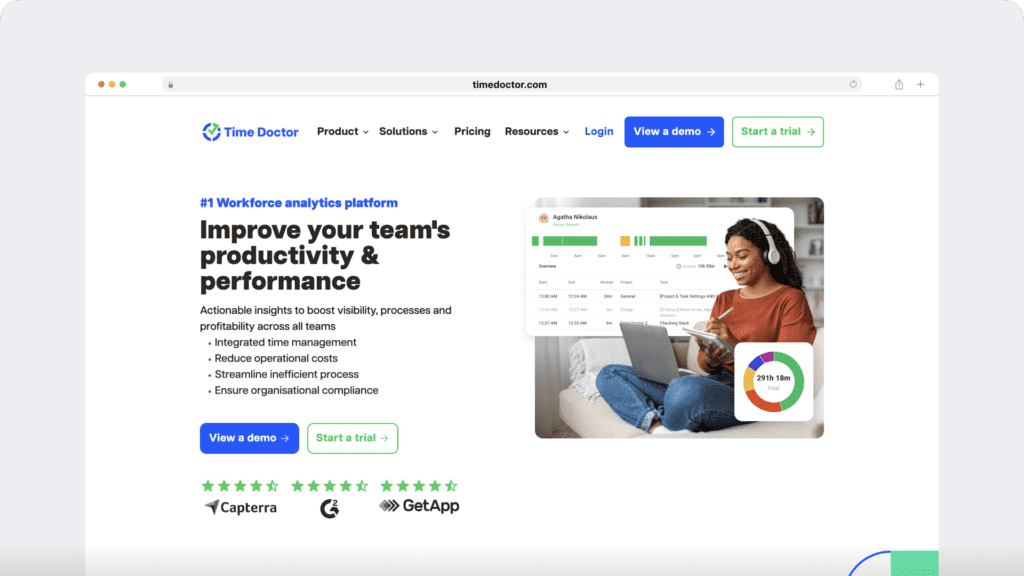
Workforce analytics platforms like Time Doctor help close that gap. They give you a clearer view of workload and effort, so you can spot rising pressure early, rebalance work fairly, and support your team without micromanaging.
Because preventing burnout isn’t about working harder. It’s about seeing sooner and leading with clarity and care.
Preventing employee burnout with Time Doctor
At this stage, preventing burnout is less about knowing what to do and more about having the clarity to act consistently.
You need a way to see how work unfolds day to day, rebalance pressure early, and support teams without slipping into control.
Time Doctor provides a workforce analytics foundation built around empowered leadership, actionable visibility, and seamless partnership.
Empowered leadership
Lead with trust, clarity, and fairness
Burnout often starts when leaders lack a clear picture of the relationship between effort and outcomes. Time Doctor equips you with workforce analytics that help you lead with confidence instead of control.
- Clarify effort and outcomes with employee time tracking – Understand how time is allocated across tasks and projects so performance conversations feel fair and grounded.
- Support coaching with Benchmarks AI – Compare workload and productivity patterns across roles or teams to spot what “healthy performance” actually looks like.
- Enable meaningful recognition and growth – Use real work data to recognize contributions, guide development, and support career conversations without guesswork.
This approach builds trust and helps employees feel seen, supported, and valued before exhaustion sets in.
Actionable visibility
Spot burnout risks early and act before they escalate
Burnout doesn’t appear overnight. It shows up gradually through workload imbalances, disengagement, and declining focus. Time Doctor gives you real-time visibility into these patterns across remote, hybrid, and in-the-office teams.
- Identify workload imbalances with productivity analytics – See where effort concentrates, where work spills into long hours, and where redistribution is needed.
- Surface early burnout signals using activity trends – Track app usage, idle time, meeting insight, and unusual activity patterns that indicate overload or disengagement.
- Protect work-life balance with time management and attendance data – Detect sustained overtime or skipped breaks that increase emotional exhaustion and absenteeism.
- Understand how work actually happens – Use screen monitoring and task-level insights to uncover workflow friction without relying on assumptions.
This visibility helps you correct issues early, while work is still sustainable.
Seamless partnership
Scale prevention without adding friction
Burnout prevention needs to work across teams, tools, and industries without creating extra overhead. Time Doctor integrates easily into existing workflows and supports leaders at scale.
- Support distributed teams with workforce analytics – Maintain consistency across remote, hybrid, and in-office environments.
- Connect insights across systems with integrations – Align time, productivity, payroll, and operational data to reduce admin burden.
- Simplify adoption with intuitive dashboards – Give managers the right level of insight without overwhelming them.
- Scale confidently across industries – Whether you lead technology companies, agencies, or healthcare teams, the platform adapts to different operating models and compliance needs.
This partnership-focused approach ensures burnout prevention becomes part of how work runs, not another process teams have to manage.
Final thoughts
Burnout rarely starts with failure. It starts with good people carrying too much for too long, quietly pushing through because they care. By the time disengagement shows up, the damage has often already been done.
Now, if someone on your team is struggling, would you actually notice it?
Preventing burnout means noticing strain before it turns into silence. It means stepping in early, rebalancing work, and protecting the people who keep everything moving.
When you can see pressure forming in real time, then you don’t have to guess or react too late. You can lead with care, fairness, and confidence.
If you want a clearer way to support your team before burnout takes hold, see how Time Doctor helps leaders build healthier, more sustainable workdays.
View a demo of Time Doctor and see how real-time insights help your team stay balanced, engaged, and productive.
Frequently asked questions (FAQs)
Leaders act early by seeing pressure build in real work data, not waiting for complaints or missed deadlines. Time Doctor shows time spent on tasks, total hours worked, sustained overtime, and workload distribution across individuals and teams.
When leaders notice patterns like consistently long days, skipped breaks, or uneven effort over time, they can rebalance work, adjust expectations, or remove bottlenecks before burnout affects performance or well-being.
Workforce analytics help leaders see how work actually happens over time. Time Doctor highlights hidden overload, uneven effort, and sustained pressure, so burnout risks become visible early instead of appearing after performance drops.
Time Doctor avoids micromanagement by showing patterns, not policing people. Leaders don’t watch screens in real time or check in constantly. Instead, you review workload trends, total hours, overtime patterns, and focus time at a team or role level.
Because you look at aggregated time and productivity data over days or weeks, you step in to adjust workloads or expectations only when pressure consistently builds. Employees keep control over how they work day to day, while leaders maintain accountability without hovering.
Time Doctor shows you how long people actually work, when work spills into late hours, and where workloads stay uneven across remote, hybrid, and in-office teams.
Using employee time tracking, attendance, and productivity analytics, you can see sustained overtime, skipped breaks, and long workdays that often signal rising burnout. Meeting insight and unusual activity patterns help you spot disengagement or overload without asking people to report stress themselves.
Because the same data applies across all work locations, you can compare teams fairly, rebalance work early, and protect work-life balance without micromanaging.
SHRM (the Society for Human Resource Management) describes burnout as a growing workplace risk tied to sustained job stress, workload imbalance, and lack of support, reinforcing why early visibility and proactive leadership matter.
Preventing burnout in remote teams starts with clear visibility into workload and capacity. Without in-person cues, pressure can build quietly.
Managers reduce risk by:
• Reviewing workload distribution regularly
• Monitoring sustained overtime and irregular schedules
• Protecting uninterrupted focus time
• Setting realistic expectations aligned with capacity
• Holding consistent one-on-one conversations to surface stress early
In remote environments, burnout often appears through longer online hours paired with declining output quality. Addressing these patterns early is more effective than reacting after performance declines.
Time Doctor supports this approach by providing workforce analytics that highlight workload trends, sustained overtime, focus time, and productivity patterns across remote, hybrid, and in-office teams. Instead of relying on guesswork, managers can see when pressure builds and rebalance work before burnout escalates.
Healthy remote productivity depends on balanced systems, not constant availability. When workloads stay sustainable and expectations remain clear, teams stay engaged and performance remains steady over time.


Liam Martin is a serial entrepreneur, co-founder of Time Doctor, Staff.com, and the Running Remote Conference, and author of the Wall Street Journal bestseller, “Running Remote.” He advocates for remote work and helps businesses optimize their remote teams.