Quick overview
Visibility is the key to scaling operations sustainably because it gives you a clear view of how work actually happens across your business operations. It allows you to fix inefficiencies early, maintain performance, and support business growth without increasing costs at the same rate.
As your customer base grows and you begin to scale up, visibility helps you identify what works, repeat it across team members, and avoid inefficiencies that slow you down.
In this article, you’ll learn why visibility becomes harder as you scale, where gaps start to appear, and how to scale your operations without losing control.
During rapid growth, visibility drops, making it harder to understand what people are actually working on. Reports show activity, but they don’t explain where time goes or why results vary.
What once felt simple now feels messy. Small issues take longer to fix, performance becomes inconsistent, and you spend more time figuring out problems than improving them.
Without clear visibility, inefficiencies build quietly, and decisions rely on guesswork rather than real data.
So what does scaling operations really mean, and why does it become more complex as you grow?
Table of Contents
- What does it mean to scale operations?
- Why operations break down as you scale without visibility
- How can you identify inefficiencies before they disrupt your business?
- What do scalable operations actually look like?
- The role of workforce analytics in scaling operations effectively
- How Time Doctor helps you scale operations with clarity and control
- Final thoughts
- Frequently asked questions (FAQs)
What does it mean to scale operations?
Scaling operations is the ability to increase output without increasing costs or headcount at the same rate.
So, instead of hiring more people like many startup teams, you improve how work gets done so your scaling efforts become more efficient.
In simple terms, it means building a scaling process that allows your team to do more work while maintaining performance, quality, and timelines. This depends on improving operational efficiency and making sure workflows are repeatable across teams or locations.
Think of it like a machine. If you want it to produce more, you don’t just add more people around it. You improve how the machine runs and introduce automation tools so it can handle more work on its own.
What are the key aspects of scaling operations?
Scaling operations depends on improving how work gets done, not just increasing output. The following elements determine whether your operations can scale without losing performance or control.
Efficiency-focused growth
Scaling operations focuses on increasing output without matching increases in cost or headcount. This requires improving how work is done so teams can handle more without simply adding more people.
Operational optimization
Scaling depends on improving how work flows, not just adding more steps. You reduce delays, simplify tasks, and use process automation to remove repetitive work and unnecessary approvals that slow things down.
Infrastructure and tools that support scale
As operations grow, systems, tools, and new technologies need to handle higher demand. The goal is to ensure that workflows, tools, and reporting systems can keep up without creating new bottlenecks.
Clear planning and process consistency
Scaling works best when everyone follows a clear, consistent process. A template helps guide how work should be done, so there’s less confusion. Without that, people do things differently, results become inconsistent, and quality becomes harder to maintain as you grow.
Why operations break down as you scale without visibility
Operations break down as you scale because visibility decreases while business complexity increases.
Here’s what typically starts to go wrong:
Work becomes harder to see
As your operations grow, work gets spread across different teams, tools, and processes, making it harder to track in one place.
Reports and dashboards show activity, but they don’t explain where time goes or why delays happen.
Without clear visibility, it’s hard to see where effort is being spent or what’s slowing things down.
Processes start to drift
Over time, your operations processes start to drift as people start doing things in different ways.
Even small changes create inconsistency. Two teams doing the same task can get very different results, leading to delays and confusion.
Without a clear and consistent way of working, scaling becomes harder to manage.
Inefficiencies multiply quietly
Small delays and rework may seem minor, but they build up over time and slow overall output.
Your team stays busy, but results don’t improve at the same rate.
To fix this, you need more than productivity reports. You need clear visibility into how work is actually done.
How can you identify inefficiencies before they disrupt your business?
You can identify operational inefficiencies early by looking at how work flows, not just the results. Most issues build over time through small delays, uneven workloads, and repeated tasks that go unnoticed without a focus on continuous improvement.
Common warning signs include missed deadlines, rising costs without better output, and teams staying busy without real progress, which can hurt the customer experience.
As Robert Isherwood, AMBAC International, explains, “determine which tasks are not getting done or which projects are not moving forward. Then look closely at why.”
In other words, don’t just look at what’s late or stuck. Look at what’s not moving at all and figure out what’s blocking it. It’s like checking traffic, not by counting cars, but by finding where everything is at a standstill.
Step 1: Map how work moves across your processes
Break down how tasks move from start to finish. This helps you identify unnecessary steps, repeated approvals, or unclear handoffs.
When processes feel slow, it is often because workflows are overly complex or responsibilities are not clearly defined.
Step 2: Track time and performance metrics
Measure how long tasks take, how much work gets completed, and where delays occur.
Key indicators to monitor:
- Increasing turnaround times
- Lower output despite high activity
- Higher rates of rework or errors
These patterns reveal where your operations are losing efficiency and where you can streamline processes through iterative improvements across your workflows.
Step 3: Compare teams performing similar work
When teams handle the same tasks but produce different results, it usually points to process inconsistencies.
One team may be using more efficient steps, better tools, or clearer workflows.
Comparing performance helps you identify best practices and apply them across your operational initiatives.
Step 4: Identify where work slows down between steps
Delays often occur between tasks rather than during them.
Approvals, handoffs, and follow-ups are common areas where work gets delayed. When tasks remain idle, overall performance suffers.
Step 5: Gather insights from frontline teams
Your employees often have direct knowledge of where inefficiencies exist.
As Chris Coldwell from Quicksilver Software Development Inc highlights in Forbes, “Ask the people who use the processes… They have first-hand experience with the pain points and inefficiencies surrounding the current systems. — Engaging with your team helps uncover issues that data alone may not reveal.”
Step 6: Monitor common early warning signs
Some inefficiencies appear in predictable patterns:
- Repetitive manual tasks
- Frequent status checks or follow-ups
- Poor coordination between teams
- Rising frustration or burnout
- Processes that rely heavily on one individual
These signals indicate that your operations may not scale effectively.

The challenge is that many of these inefficiencies are not immediately visible.
Without clear visibility into time, tools, and workflows, it becomes difficult to detect where problems are forming until they begin to impact performance.
What do scalable operations actually look like?
Scalable operations are structured, consistent, and predictable, while still maintaining the adaptability to handle changing demand.
Whether you’re managing a contact center, a BPO operation, a staff leasing model, or a healthcare back office, growth does not reduce control. It improves it.
Instead of reacting to issues, you can clearly see how work is progressing across teams, processes, and locations, and make informed decisions based on real operational data.
Workflows are clear and consistent
Work follows a defined and repeatable process across teams, shifts, and locations.
- In a contact center or BPO, this means every ticket follows the same steps, from intake and categorization to resolution and follow-up, with clear SLAs for response and handling time.
- In healthcare, claims and records go through standardized stages such as verification, coding, approval, and submission, reducing errors and delays.
- In supply chain operations, inventory, orders, and deliveries follow fixed steps, from processing and picking to shipping and tracking, so delays can be identified quickly.
- In agencies or tech teams, project management and delivery follow structured phases like planning, execution, review, and handoff, ensuring timelines and outputs stay consistent.
This level of consistency makes it easier to maintain quality, enforce SLAs, support customer satisfaction, and scale without performance gaps.
Performance is measurable and comparable
You can measure performance across teams, locations, vendors, or external partnerships using the same metrics.
For example, you can compare:
- resolution time across support teams
- turnaround time across processing teams
- delivery speed across project teams
This allows you to identify performance gaps, understand why they exist, and improve resource allocation based on data rather than assumptions.
Workloads are balanced based on capacity and demand
Work is distributed based on actual capacity, demand, and better forecasting, not guesswork.
This helps you avoid overloading high-performing teams while under utilizing others, thereby improving throughput and protecting team performance as operations scale.
Inefficiencies are visible and addressed early
Delays, rework, and process gaps become visible before they affect output.
Instead of discovering issues after SLAs are missed or costs increase, you can identify where work slows down and fix it early.
This reduces waste, improves efficiency, and protects margins as you grow.
High-performing practices are scaled across the organization
When one team performs better, you can clearly identify why.
You can then standardize those practices across teams, locations, or vendors, creating consistent performance at scale.

So what kind of visibility do you need to scale operations effectively and maintain control?
The role of workforce analytics in scaling operations effectively
Workforce analytics is the process of measuring how time, tools, and workflows are used to improve operational performance.
It helps you move beyond surface-level reports by showing where time is spent, where delays happen, and where inefficiencies build over time.
Many teams already use tools like Jira, Zendesk, SAP, or Oracle to manage work. Workforce analytics builds on this data to connect the dots and give you a clearer view of what’s actually slowing things down.
With this visibility, you can:
- See how time is spent across tasks and tools
- Spot delays and bottlenecks early
- Compare performance across teams or vendors
- Identify inefficiencies like rework or idle time
- Find patterns that create new opportunities to improve
This makes it easier to standardize what works and scale it with confidence.
As McKinsey explains in The Big Boost, “scaling becomes more challenging as operations grow in complexity… without clear visibility into how work is executed.”
That’s why workforce analytics has become essential for operations leaders who want to scale without adding more layers of oversight.
With a workforce analytics provider like Time Doctor, you can turn these insights into action and improve performance without relying on guesswork.
If you’re exploring ways to improve visibility, workforce analytics tools built for operations teams can help you get started.
How Time Doctor helps you scale operations with clarity and control
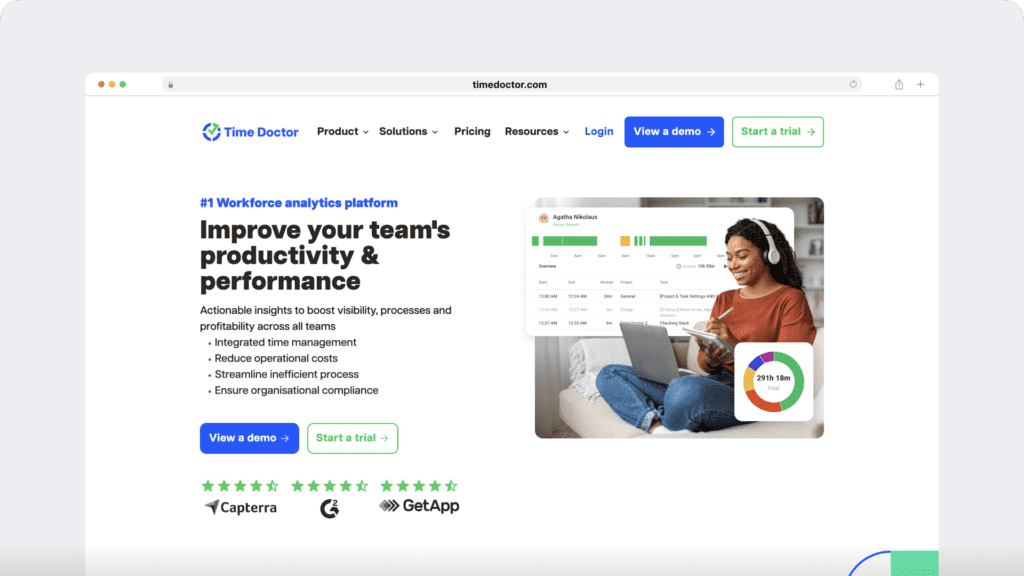
Scaling operations often break when visibility drops.
You add more people, more tools, and more workflows, but it becomes harder to understand where time is going, why delays happen, and which teams are actually performing well.
Workforce analytics platforms such as Time Doctor provide real-time, actionable visibility into how work is performed across your organization, making it easier to scale without losing control.
Turn daily activity into clear, actionable decisions
As your operations grow, relying on updates or reports slows you down.
Time Doctor’s workforce analytics show how time is actually spent across tasks, teams, and tools. Instead of guessing where effort is going, you can see real activity patterns and understand what is driving performance.
With productivity analytics, you can quickly identify where work slows down, where teams are overburdened, and where time is being underutilized.
Standardize performance using real benchmarks
Scaling fails when every team works differently.
Time Doctor uses Benchmarks AI to help you compare performance across teams, shifts, and locations. You can identify which teams are performing at a higher level and understand what they are doing differently.
This makes it easier to standardize best practices and apply them across your operations, so scaling becomes consistent, not chaotic.
Identify inefficiencies and unusual patterns early
Delays rarely come from one big issue. They build from small problems that go unnoticed.
Time Doctor highlights these patterns through unusual activity reports, showing where behavior or performance starts to deviate. You might notice rising idle time, inconsistent work patterns, or excessive task switching.
With optional screen monitoring, you can add context to understand workflow issues without relying on constant check-ins.
This helps you fix problems early before they impact SLAs or client delivery.
For regulated operations, it also creates a clearer audit trail, which helps support accountability and compliance as volume grows.
Manage distributed teams with consistent visibility
Scaling often means managing a distributed workforce across locations, time zones, or vendors.
Platforms like Time Doctor give you a consistent view of how work is performed across all teams, regardless of where they are. You can compare performance, balance workloads, and maintain alignment without adding layers of oversight.
This supports visibility without micromanagement, helping you lead with trust while staying in control.
Improve efficiency while protecting margins
Scaling often increases activity, but not always results.
With tools like Time Doctor, you can identify where time is being lost across workflows, tools, or processes. With visibility into app usage and work patterns, you can reduce inefficiencies, eliminate low-value work, and improve output.
Through integrations with your existing tools, this visibility fits into your current workflows without adding complexity.
It also makes visibility easier to roll out across teams without creating a heavy IT project.
The result is higher efficiency without increasing costs at the same rate, helping protect margins as you grow.
Support operational consistency at scale
Whether you are managing CX teams, BPO operations, healthcare processes, or agency workflows, Time Doctor helps you maintain consistent execution across your organization.
With visibility into time, performance, and workflows, supported by attendance and work pattern insights, you can ensure teams stay aligned and operations remain predictable as you scale.
Final thoughts
Scaling starts to feel heavy when you’re no longer sure what’s really driving results.
You see the growth, but you don’t fully trust what’s behind it.
You make decisions, but part of you knows you’re still filling in the gaps.
Maybe you already have full visibility into how work flows across your teams and outsourcing partners.
Or maybe you’re still relying on updates that only show part of the picture.
This is where workforce analytics changes everything. It gives you a clear, real-time view of how work actually happens, so you can make decisions with confidence instead of guesswork.
Time Doctor helps you turn that visibility into action by giving you AI-enhanced insights into time, workflows, and performance, so you can scale with clarity, not uncertainty.
View a Demo to scale operations with clarity, consistency, and control.
Frequently asked questions (FAQs)
Scaling operations refers to increasing the amount of work a business can handle without increasing costs or headcount at the same rate. It focuses on improving efficiency, standardizing workflows, and maintaining consistent performance as demand grows.
Scalable operations are processes and systems that can handle increased demand without breaking down or requiring proportional increases in resources. They rely on repeatable workflows, consistent performance, and clear visibility into how work is performed.
Visibility is important because it helps you understand how work flows across teams, tools, and processes. Without it, inefficiencies, delays, and inconsistencies go unnoticed, making it harder to maintain performance and control as operations grow.
You can identify inefficiencies early by analyzing how work flows through your processes, tracking time and performance metrics, comparing teams doing similar work, and monitoring patterns such as delays, rework, and uneven workloads. These signals often appear before performance issues become visible.
Effective strategies include standardizing workflows, improving visibility into how work is performed, using data to guide decisions, balancing workloads based on capacity, and continuously identifying and removing inefficiencies. These approaches help maintain consistency and performance as operations grow.
Workforce analytics helps you scale operations by providing visibility into how time, tasks, and tools are used across your organization. It allows you to identify inefficiencies, compare performance, and standardize what works, making it easier to scale consistently without losing control.
You can scale operations without increasing headcount by improving efficiency, eliminating low-value work, optimizing workflows, and using data to better allocate time and resources. This allows your existing team to handle more work without sacrificing quality or performance.
Growth typically involves increasing output by adding more resources, such as hiring more people or expanding capacity. Scaling focuses on increasing output while improving efficiency, so results grow faster than costs.
To set up scalable operations, you need clear and repeatable processes, consistent performance metrics, visibility into workflows, and systems that support higher demand. This allows you to maintain control and performance as your business expands.
Tools such as workforce analytics, employee time tracking, productivity analytics, and process monitoring platforms help operations leaders understand how work is performed, identify inefficiencies, and standardize what works. These tools become especially valuable when teams are scaling across shifts, locations, or vendors.
SaaS companies scale operations by improving visibility into how work is performed across teams, automating repetitive tasks, and using data to optimize performance. As customer demand grows, clear processes and workforce analytics help maintain consistency without increasing costs at the same rate.


Carlo Borja is the Content Marketing Manager of Time Doctor, a workforce analytics software for distributed teams. He is a remote work advocate, a father and an avid coffee drinker.