Quick overview
Business complexity becomes easier to manage when you have clear visibility into how work actually happens. When time, workflows, and tools are easy to see, it’s much simpler to spot bottlenecks, reduce rework, and keep teams aligned.
In this article, you’ll learn how to recognize where complexity is building, understand how it affects performance, and find practical ways to simplify operations using workforce analytics.
As your operations grow in a complex world, work often becomes harder to manage, even when everything is designed to scale.
Think of your operations like a highway.
At first, traffic flows smoothly. There are only a few cars, and everything moves at a steady pace.
But as more cars enter the road, lanes get crowded, exits get busy, and movement slows down.
Even though everything is still moving, it becomes harder to see where delays are coming from.
That’s exactly how complexity builds inside operations.
So what exactly is business complexity, and why does it become harder to manage as organizations scale?
Table of Contents
- What is business complexity?
- Why does business complexity increase as operations grow?
- How does business complexity show up in real operations?
- How does business complexity impact performance and cost?
- How do operations leaders reduce business complexity?
- How does workforce analytics simplify operations?
- Reduce complexity with Time Doctor
- Final thoughts
- Frequently asked questions (FAQs)
What is business complexity?
Business complexity happens when work becomes harder to manage because there are too many processes, systems, teams, new technologies, and expansion into new markets involved.
It shows up when tasks go through too many steps, workflows become confusing, and it’s hard to see how work is actually getting done. Silos start to form between teams, creating organizational complexity that makes communication harder and slows down progress.
As teams and systems expand, different levels of complexity begin to build across processes, systems, and teams. More layers get added, making coordination slower and harder for teams to stay aligned.
At the same time, reporting and meeting stakeholder expectations become more difficult, especially as market conditions change and information is scattered across multiple tools and systems.
Why does business complexity increase as operations grow?
Business complexity increases as as organizations expand, particularly in a global business, where more systems, teams, and processes are layered across locations.
As more systems and processes are added, coordination becomes harder and visibility into workflows becomes limited, especially across interconnected areas like the supply chain.
In many organizations, complexity grows faster than visibility, which makes operations harder to manage even when teams are performing well.
There are four (4) common drivers and types of business complexity:
| Internal complexity Organizational structures, processes, and systems become harder to manage as the business grows. | External complexity Market changes, customer demands, and regulations add layers of decision-making. |
| Product or service complexity Expanding offerings and custom work increase variability in how work is delivered. | Operational complexity Fragmented tools, inefficient workflows, and redundant roles create hidden operational costs. |
As these layers build, work becomes harder to track, align, and standardize across a distributed workforce.

How does business complexity show up in real operations?
Business complexity appears in everyday operational challenges that slow down execution and reduce efficiency.
Too many tools and systems
Teams switch between multiple platforms to complete a single workflow, which creates delays, duplication, and confusion.
This is common in technology companies and agencies, where teams rely on multiple tools for communication, project management, and reporting.
Fragmented workflows across teams
Work moves through multiple handoffs, increasing the risk of errors, rework, and missed SLAs.
In BPO, KPO, and contact center operations, this often shows up when tasks pass between teams or shifts, making it harder to maintain consistency and speed.
Expanding business processes and requirements
As new systems and requirements are added, processes become harder to manage and standardize.
In healthcare, financial services, and other regulated environments, compliance requirements and documentation add layers that slow down workflows.
Interdependent operations
A single change in one process can impact multiple teams, tools, and outcomes at the same time, making coordination more complex.
This is especially visible in staff leasing and distributed teams, where work spans multiple clients, locations, and responsibilities.
How does business complexity impact performance and cost?
Business complexity directly affects operational performance by increasing the effort required to complete work, track key metrics, and make decisions.
As complexity grows, organizations experience:
- Reduced profitability: The costs of complexity increase faster than revenue, raising operational costs and reducing margins.
- Slower execution: Execution becomes harder to coordinate, which delays decisions and slows down delivery.
- Higher operational risk: Fragmented systems and unclear processes make outcomes less predictable and harder to control.
According to Deloitte, “organizations that fail to manage complexity struggle to distinguish between value-adding activities and operational waste, which limits their ability to scale efficiently.”
If complexity makes it harder to see what actually adds value, how can operations leaders simplify workflows without adding more tools or oversight?

How do operations leaders reduce business complexity?
Business complexity can be reduced by simplifying workflows, improving coordination across teams, and using data to improve how work gets done.
Process and operational simplification
Map and streamline workflows
Start by visualizing how work actually moves across processes, systems, and teams. This helps uncover bottlenecks, unnecessary steps, and rework that slow down execution.
Use automation and AI
Apply automation and AI to handle repetitive tasks and reduce manual effort. This improves productivity and allows teams to focus on higher-value work.
Standardize execution
Align workflows, tools, and processes across teams to reduce variation. When execution is consistent, operations become easier to manage and scale.
Reduce unnecessary coordination
Limit excessive meetings and manual follow-ups by improving communication and workflow clarity. This helps teams move faster with fewer delays.
Organizational and structural alignment
Clarify roles and responsibilities
Ensure ownership is clearly defined to prevent confusion and avoid decision-making bottlenecks across teams.
Align teams around workflows
Move away from siloed structures and focus on process-based collaboration. This improves coordination and reduces friction between teams.
Strengthen cross-team cooperation
Encourage shared accountability to reduce miscommunication and improve coordination across teams.
Technology and data management
Simplify tools and systems
Reduce tool sprawl by consolidating platforms and improving how systems connect. This makes workflows easier to manage and reduces duplication.
Improve data visibility
Use data and reporting to spot inefficiencies and improve decision-making across teams.
Workforce analytics provides real-time visibility into workflows, time usage, and performance.
Use analytics to focus on value
Analyze workflows, time usage, and performance data to identify which activities add value and which create unnecessary complexity.
Preventing future complexity
Set clear standards for new processes and tools
Evaluate whether new systems or workflows are necessary before adding them. This prevents unnecessary layers from building over time.
Maintain continuous visibility
Track performance, workflows, and workload distribution regularly to detect complexity early and keep operations under control.
Reinforce process clarity
Make sure teams understand how and why processes work. This helps maintain consistency and prevents teams from reverting to inefficient practices.

If complexity comes from a lack of visibility, what gives operations leaders a clear view of how work flows across teams and processes?
How does workforce analytics simplify operations?
Workforce analytics simplifies operations by making performance easier to measure and improve.
Tools like Time Doctor, Hubstaff, and ActivTrak provide different ways to apply workforce analytics, helping teams gain visibility into performance and workflows.
Instead of guessing what is happening, It shows how time is spent and where delays or inefficiencies occur. This helps teams address issues early and keep work moving smoothly.
With better visibility, operations become easier to manage:
- Find bottlenecks faster
Spot where work slows down or gets stuck - Reduce rework and wasted effort
Remove unnecessary steps and repeated tasks - Keep teams aligned
Improve coordination across teams, even in remote or distributed setups - Standardize workflows
Apply consistent ways of working to reduce confusion and variation
Without clear data and performance metrics, teams often rely on assumptions that lead to inefficiencies.
Time Doctor is a workforce analytics tool that gives clear visibility into team activity, workflows, and tool usage. It helps managers make decisions using real data, so teams can stay productive without constant oversight.
This helps teams:
- See workflows, time usage, and performance in real time
- Use data to guide decisions and stay aligned
- Adopt the platform easily without adding complexity
Reduce complexity with Time Doctor
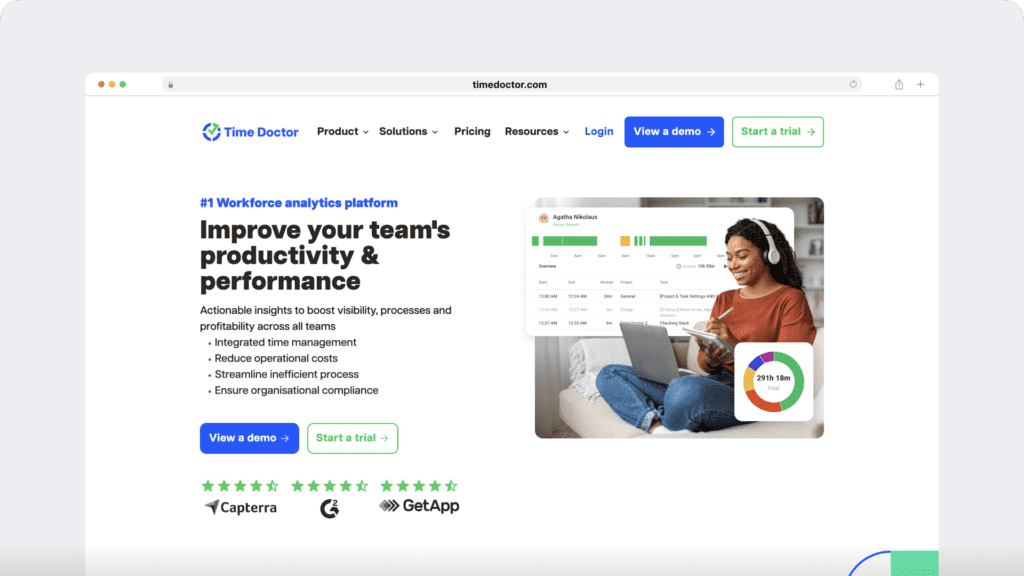
Time Doctor is a workforce analytics platform that helps reduce complexity by giving clear visibility into daily workflows, time usage, and team activity.
Instead of relying on fragmented reports or assumptions, it turns daily activity into AI-enhanced, actionable insights. This helps identify bottlenecks, reduce rework, and support faster, smarter decisions across operations.
With Time Doctor, complexity becomes easier to manage by tracking key indicators such as:
- Time spent per workflow or task
Identify processes that take longer than expected and highlight inefficiencies - Idle time and activity patterns
See where work slows down or where teams may be overloaded - App and website usage
Reveal tool sprawl, context switching, and unnecessary steps in workflows - Workload distribution across teams
Spot imbalances, bottlenecks, and areas of rework - Trends over time
Detect recurring inefficiencies and opportunities for continuous improvement
This level of visibility allows managers to lead with trust, not control, using real data to guide decisions, support teams, and improve performance across remote, hybrid, and in-office environments.
As a result, operations become easier to simplify, scale, and manage without adding more layers or increasing oversight.
Here’s what that looks like in a real operations environment:
Let’s say you’re managing a BPO or contact center team handling customer support tickets across multiple shifts.
Each week, your team spends around 10 hours dealing with delays, repeated work, and unclear handoffs between agents.
That adds up to over 500 hours per year lost to inefficiencies that are hard to see in daily operations.
Now imagine having clear visibility into workflows, tools, and team performance across operations:
- Bottlenecks get identified before they impact SLAs and customer satisfaction
- Workflows become easier to standardize across teams and shifts
- Tool usage becomes clearer, reducing unnecessary switching between systems
- Workload gets distributed more evenly across agents
Even a 20% reduction in wasted time can return hundreds of productive hours back to your team each year while helping improve response times and overall customer satisfaction.
Instead of adding more tools, meetings, or layers of oversight, complexity gets reduced by making work visible and easier to improve.
Final thoughts
At some point, every operation reaches a breaking point.
Not because teams aren’t working hard, but because work becomes harder to understand.
The question is no longer whether complexity exists, but whether it’s something you continue to work around… or finally take control of.
Because the longer it stays hidden, the more it quietly slows everything down.
View a demo to see how you can take back control and bring clarity into how work flows across your operations. Or connect with us on LinkedIn to explore more insights on simplifying operations and improving team performance.
Frequently asked questions (FAQs)
Workforce analytics refers to the use of data to understand how work happens across teams, tools, and workflows. It helps track time usage, workflow movement, and performance patterns.
With workforce analytics, operations leaders can identify bottlenecks, reduce inefficiencies, and improve how work gets done. Platforms like Time Doctor provide this visibility through real-time insights into daily activity and productivity.
Businesses measure complexity by tracking how work flows, how long tasks take, and where delays or rework happen.
Common indicators include time spent per task, workload distribution, tool usage, and recurring inefficiencies. Workforce analytics platforms such as Time Doctor make this easier by centralizing data and showing how work actually happens across operations.
A common example is when a single task requires multiple tools, approvals, and handoffs between teams.
In a BPO or contact center, this might look like a customer issue being passed across agents, systems, and shifts, causing delays and repeated work. Without clear visibility, these inefficiencies are hard to detect and fix.
Businesses reduce complexity by improving visibility into workflows and simplifying how work is done.
Instead of adding more tools, the focus shifts to understanding how existing processes, systems, and teams operate. Workforce analytics helps by providing clear insights into workflows, allowing teams to streamline operations and remove unnecessary steps.
Business complexity slows down decision-making, increases operational costs, and creates inconsistent performance across teams.
As workflows become harder to manage, teams spend more time coordinating work instead of completing it. This leads to delays, missed SLAs, and reduced efficiency over time.
Operations leaders manage complexity by making work visible, standardizing workflows, and continuously improving performance using data.
This includes identifying bottlenecks, reducing rework, aligning teams, and monitoring operations in real time. Workforce analytics tools like Time Doctor support this by providing the insights needed to simplify and scale operations effectively.


Carlo Borja is the Content Marketing Manager of Time Doctor, a workforce analytics software for distributed teams. He is a remote work advocate, a father and an avid coffee drinker.