Quick overview
Proactive management improves operations by providing early visibility into workload shifts, bottlenecks, and capacity risks, so you can act quickly and put contingency plans in place before issues disrupt performance. With real-time workforce analytics, operations become more predictable, teams stay balanced, and service levels hold steady even as demand changes.
This article shows you how proactive management works inside real operations, why it matters, and how workforce analytics from Time Doctor helps you lead with clarity instead of confusion.
How can you lead effectively when you find problems too late and already hurt your team’s performance?
When bottlenecks remain hidden, workloads shift without warning, and short-term delays become backlogs, it becomes much harder to lead your operation effectively. Your day shifts from guiding the team to chasing updates and fixing issues that should never have reached this point.
You expect steady workflows and a team that stays aligned across remote, hybrid, and in-office setups. Without proactive management, early warning signs stay buried.
Table of Contents
- What is proactive management?
- What are the benefits of proactive management compared to reactive leadership?
- What are the traits of a proactive management leader?
- How can you implement proactive management through strategic planning?
- How does Time Doctor enable proactive management without micromanaging?
- Final thoughts
- Frequently asked questions (FAQs)
What is proactive management?
Proactive management means staying ahead of potential issues by spotting early signals rather than reacting after problems arise.
As Forbes contributor Cheryl Robinson puts it, “Proactive leadership entails anticipating challenges and opportunities rather than merely responding to them.” This mindset shifts leaders to move from reacting to surprises to staying ahead of them.
It gives you a clear view of how work moves across your different work environments, so you can identify bottlenecks, workload shifts, and rising delays before they become bigger problems.
It is the practice of using real-time visibility and workforce analytics to understand where your operation is heading, not just what happened in the past.
With this awareness, you move from reacting to surprises to anticipating risks early, which keeps your teams aligned.
What are the benefits of proactive management compared to reactive leadership?
A proactive approach shifts your operations away from the constant disruption caused by reactive management toward a more consistent, predictable way of working.
This shift creates steadier workflows, more reliable outcomes, and stronger stakeholder trust.
Here are the key advantages you gain when proactive management becomes your management style:
1. Stronger operational predictability
Real-time awareness makes workflows easier to understand across teams and providers, strengthening decision-making and turnaround times while avoiding unexpected slowdowns.
2. Earlier detection of risks
Idle time spikes, workflow friction, and tool-related issues become visible earlier, which strengthens your risk management and gives your operation more time to adjust before service levels are affected.
3. More effective resource planning
Clear capacity trends make it easier to streamline workload distribution and prevent overload. This improves time management, supports smoother collaboration across your distributed workforce, and strengthens contingency plans when demand shifts.
4. Better service quality and stronger SLA control
Threats to customer experience become visible earlier, giving you time to act before SLAs are at risk. This keeps service quality consistent and supports open communication across team members as demand changes.
5. Healthier teams with less burnout
You can identify rising workload pressure sooner, which helps you prioritize the right adjustments, address potential risks early, and maintain steady productivity across your operation.
6. Decisions grounded in real data
Workforce analytics, productivity analytics, and clear operational benchmarks replace guesswork and strengthen adaptability. You can adjust faster when priorities shift, demand changes, or new risks emerge.
Together, these benefits support a leadership approach built on clarity, fairness, and trust. With proactive management guiding your decisions, your operation becomes steadier, your teams stay aligned, and your workflows hold up even when demand shifts.
What are the traits of a proactive management leader?
Strong management does not depend on heroic effort. It depends on forward-thinking habits, situational awareness, and access to reliable information.
A proactive leader:
• Anticipates challenges and takes proactive measures instead of relying on a reactive approach.
• Uses data and performance metrics to understand how work flows across teams and tools.
• Sets clear expectations and avoids micromanagement.
• Invests in process improvement and continuous learning.
• Builds trust by sharing transparent insights rather than assumptions.
• Spots early signs of burnout or overload.
• Makes decisions that support both performance and well-being.
People stay aligned, trusted, and focused on results when objective insights guide them.
How can you implement proactive management through strategic planning?
Here are six (6) practical strategies you can use to build proactive leadership and strengthen problem-solving across your operations.
1. Gain visibility into how work gets done
You cannot fix what you cannot see. Proactive management starts with understanding how time, tools, and tasks move across your operation.
Workforce Analytics, Employee Monitoring, and Activity Timelines reveal:
• how workflows behave across different queues or clients
• where time is lost to low value tasks or tool friction
• which processes slow down during peak hours
• how remote and hybrid teams distribute their effort
This clarity helps you lead without micromanaging and gives you a baseline view of how work should flow when operations are healthy.
2. Forecast workloads using trend insights
Proactive management depends on foresight and ongoing risk assessment. You need to know when volume will rise, when teams will hit capacity, and where cycle times begin to shift.
AI-driven benchmarks surface these patterns by highlighting:
• rising processing times
• recurring workload spikes
• shifts in team performance
• outliers compared to similar roles or teams
These insights help you plan staffing, protect SLAs, and prepare for demand, especially in sectors like Healthcare, Technology Companies, Agencies, and Distributed Workforce environments.
3. Identify bottlenecks early
Every operation has friction. What matters is how quickly you detect it and prepare for future challenges.
App and website usage, task duration patterns, and Productivity Analytics show:
• tools that slow people down
• repeated context switching
• inefficient processes
• workflow delays
• tasks that consume too much time
These signals point to process friction, not individual performance, so you can fix systems before pressure builds.

4. Maintain trust through clear visibility
Trust improves when expectations and information are visible. Proactive management depends on teams’ understanding of how their work contributes to bigger goals and supports continuous improvement.
Empowered leadership is supported when teams can:
• sharing productivity trends with teams
• showing progress toward targets
• allowing people to understand their own patterns
• removing guesswork from coaching conversations
Visibility builds alignment, not micromanagement.
5. Strengthen workload balance
You need a clear view of who has too much work and who has room to help. Without this balance, taking initiative becomes harder, and burnout spreads quickly.
Workforce analytics surface these signals by highlighting:
• utilization trends
• idle time patterns
• realistic capacity limits
• overtime risks
• workload imbalance across remote, hybrid, and office teams
This focus helps protect your team from chronic overload while maintaining consistent output.
6. Create management strategies for disruptions
Attendance, shift patterns, and time availability matter when demand fluctuates. Proactive leaders look for root causes and prepare for unexpected volume spikes or staffing gaps.
Integrated workforce insights support this by providing visibility into:
• Attendance insights
• Payroll-ready accuracy
• Schedule adherence data
• Unusual Activity Reports
• Meeting Insight for time spent in calls and collaboration
This preparation protects throughput when conditions shift.
How does Time Doctor enable proactive management without micromanaging?
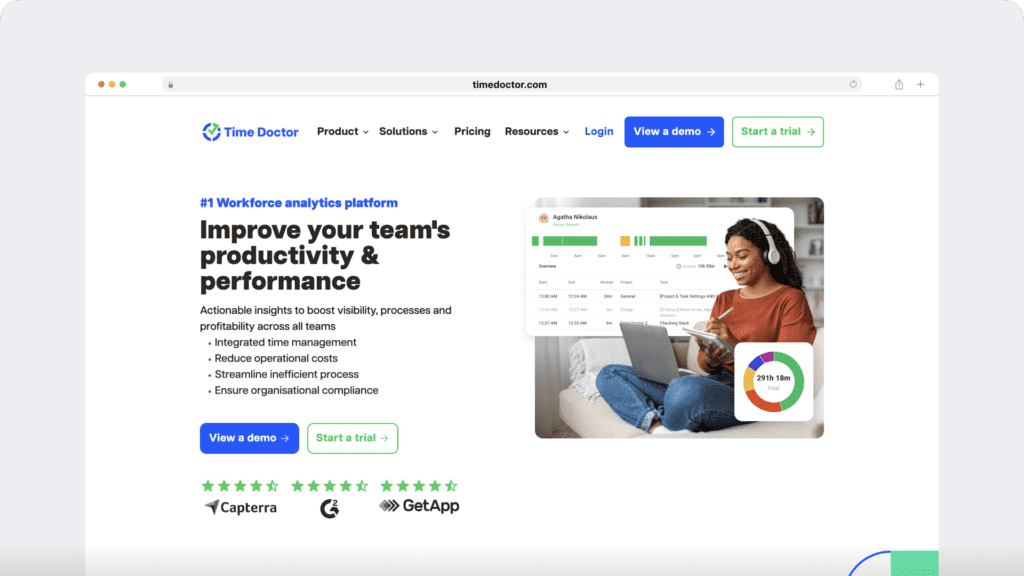
Time Doctor is a workforce analytics platform built for leaders who want clarity without control. It provides real-time visibility into how work actually happens, helping you spot potential problems early and lead with trust instead of pressure.
Empowered leadership
Empowered Leadership supports proactive management by giving leaders clear, contextual insight into how work actually happens. By bringing together time tracking, task-level data, and productivity trends in one view, leaders can spot issues early, coach more fairly, balance workloads, and set consistent expectations without relying on surveillance.
Actionable visibility
With real-time workforce analytics, you gain early signals when bottlenecks form, workloads shift, or distractions and context switching increase. Activity timelines, productivity patterns, attendance data, and AI-powered benchmarks surface trends that matter, so you can intervene early, protect SLAs, and keep workflows steady even as demand changes. This turns day-to-day work into clear, usable insight rather than reactive reports.
Seamless partnership
Time Doctor integrates seamlessly into your operations without adding friction. You can roll it out quickly, your teams can adopt it easily, and you get responsive support when you need it. This gives you reliable visibility without creating extra work for IT or disrupting existing workflows, making proactive management practical and sustainable at scale.
Final thoughts
When workforce analytics provide real-time visibility into time, productivity, attendance, and workload patterns, leadership becomes intentional rather than reactive. The question is no longer what went wrong, but what signals are already showing you what’s coming next.
So, are you leading your operations with actionable visibility and trust-based insights, or are you still relying on lagging reports and assumptions that surface problems too late?
Because in modern operations, the difference between steady performance and constant disruption comes down to whether you can see how work actually happens and act on it in time.
Get a demo to see how workforce analytics support proactive management at scale.
Frequently asked questions (FAQs)
The 5 P’s of being proactive are:
• Planning
• Prioritization
• Prediction
• Prevention
• Performance awareness
These depend on visibility into how time is spent, how workloads shift, and where
A proactive management practice is monitoring real-time workforce signals, such as workload balance, idle time, attendance patterns, and process delays, and addressing them before performance or service levels are affected. Time Doctor enables this by surfacing these signals continuously, rather than waiting until issues escalate.
The four common types of management are:
• Directive
• Supportive
• Participative
• Proactive
Proactive management relies on real-time visibility into work patterns. A workforce analytics platform that connects time, activity, and productivity data shows how work flows across people, tools, and teams, helping leaders make informed decisions early rather than reacting after issues surface.
One of the biggest challenges of proactive management is a lack of visibility. Without reliable insight into time use, productivity trends, and attendance, leaders often react too late. Time Doctor addresses this by centralizing workforce analytics so issues surface while there is still time to respond.
For modern operations with remote, hybrid, and in-office teams, proactive management is often the most effective approach when consistent throughput and service levels are required. It allows leaders to anticipate capacity risks and performance shifts using real-time data. Platforms like Time Doctor support this by providing consistent visibility across distributed teams.
Strategic planning supports proactive management by using workforce trends and benchmarks to anticipate demand, capacity limits, and operational risks. A workforce analytics platform strengthens this process by combining historical and real-time data, helping leaders plan ahead so issues do not affect SLAs or delivery timelines.
Managers can encourage a proactive mindset by making work visible and progress transparent. When teams can see productivity trends, workload balance, and performance patterns, they are more likely to raise concerns early and take initiative. Time Doctor provides managers and teams with shared visibility into how work actually happens.


Liam Martin is a serial entrepreneur, co-founder of Time Doctor, Staff.com, and the Running Remote Conference, and author of the Wall Street Journal bestseller, “Running Remote.” He advocates for remote work and helps businesses optimize their remote teams.