Quick overview
Manager effectiveness is measured by how teams operate under each manager, not just by results, and how consistently those patterns reflect the impact of great managers.
You can evaluate it using:
- Team productivity patterns
- Workload balance across employees
- Focus time and idle trends
- Work-life balance signals
- Benchmark comparisons across teams
These data points, especially when compared across teams using benchmarks, reveal which managers drive consistent performance, where coaching is needed, and how leadership impacts overall business outcomes.
This article helps HR leaders and human resources teams measure and improve manager effectiveness using data and benchmarks, so leadership becomes consistent and scalable.
Teams doing similar work can deliver completely different business results. Some become high-performing teams with clear top performers. Others fall into delays, uneven workloads, and constant follow-ups driven by micromanagement.
It feels like looking at a scoreboard without seeing how the game was actually played.
So what’s causing the gap?
Reports and reviews show what happened, but not the “why.” The same issues repeat, and new challenges keep piling up across teams.
This is where things break down. Manager effectiveness is not a soft skill problem. It’s a visibility and measurement problem that directly affects leadership development.
Managers are expected to deliver results, coach teams, and keep people engaged, often without clear insight into how work actually happens. That pressure builds fast.
As Gartner notes, “75% of HR leaders say managers are overwhelmed by their growing responsibilities.”
And yet, these same managers shape performance, employee experience, and how work gets done every day.
To measure manager effectiveness clearly, you first need to define what it actually looks like in practice.
Table of Contents
- What is manager effectiveness?
- Why is manager effectiveness difficult to measure?
- How do you measure manager effectiveness with data?
- How do productivity benchmarks improve manager effectiveness?
- What does manager effectiveness look like in practice?
- What helps managers improve performance over time?
- How does Time Doctor improve manager effectiveness?
- Final thoughts
- Frequently asked questions (FAQs)
What is manager effectiveness?
Manager effectiveness refers to how consistently a manager drives team performance, supports their direct reports, and maintains sustainable workloads using measurable behaviors.
It is defined by how teams and individual contributors work, not just what they produce.
Effective managers:
- Balance workloads across team members
- Run structured, outcome-focused 1:1s
- Remove blockers early
- Maintain performance without overloading teams
- Reflect strong leadership skills in practice
As Gallup states, “Managers account for at least 70% of the variance in employee engagement scores.”
This means manager effectiveness directly impacts productivity, engagement, retention, overall employee experience, and job satisfaction.
Why is manager effectiveness difficult to measure?
Manager effectiveness is difficult to measure because most organizations rely on lagging indicators such as performance reviews, engagement surveys, output metrics and traditional KPIs.
These methods only show outcomes after problems have already developed.
In practice:
- Burnout appears after workload imbalance builds up
- It’s harder to maintain engaged employees
- Performance drops after inefficiencies compound
- Coaching happens after issues escalate
The real problem is limited visibility into how work happens across teams.
Without a consistent way to compare managers using real data, it becomes difficult to standardize leadership or build a consistent performance management approach.
Because manager effectiveness is difficult to observe directly, you need a clear way to measure it using real work patterns.
How do you measure manager effectiveness with data?
The most reliable way to measure manager effectiveness is by using productivity benchmarks and workforce analytics to understand how teams operate. This creates clarity and helps managers build trust through data.
1. Team productivity patterns
Team productivity patterns show how time is spent across tasks and tools.
Workforce analytics platforms like Time Doctor, ActivTrak, Hubstaff, and Insightful provide visibility into how teams allocate time. However, the real value comes from connecting that data to benchmarks and coaching insights that improve how managers lead.
If one team focuses on high-impact work while another shows fragmented activity, this reflects differences in management priorities.
2. Workload balance across employees
Workload balance shows how evenly work is shared across a team.
For example, two teams may handle the same workload. One spreads tasks evenly, while the other relies on a few employees working overtime. This difference shows how managers assign work and manage capacity.
3. Focus time and idle trends
Focus time shows how much uninterrupted work gets done, while idle trends highlight interruptions or blockers.
For example, one team may average 5 to 6 hours of focused work each day, while another only reaches 3 to 4 hours with frequent interruptions. This difference shows how managers structure workflows and protect time for deep work.
4. Work-life balance signals
Work-life balance data reflects whether teams operate sustainably and whether managers create a positive work environment.
Consistent overtime or workload spikes indicate planning issues at the management level.
This also answers:
Are managers creating sustainable work environments?
5. Benchmark comparisons across teams
Benchmarking is the most reliable way to measure manager effectiveness.
It compares teams doing similar work to identify differences in:
- Productivity
- Efficiency
- Workload distribution
Let’s say:
- Team A completes tasks faster with stable workloads
- Team B shows delays and overtime
Differences in team output, workload balance, and efficiency directly reflect how managers influence performance and prioritize work.
If two teams perform the same function but show different productivity and workload patterns, the difference is not just operational. It often reflects the gap between good managers and those who consistently drive better results.
Manager effectiveness metrics and what they reveal
| Metric | What it shows | What it reveals about managers |
| Productivity patterns | How time is spent across tasks and tools | Whether managers guide teams toward high-impact work |
| Workload balance | How work is distributed across team members | How effectively managers assign and prioritize tasks |
| Focus time and idle trends | Levels of uninterrupted work vs interruptions | How well managers structure workflows and remove blockers |
| Work-life balance signals | Overtime patterns and workload sustainability | Whether managers maintain sustainable team performance |
| Benchmark comparisons | Performance differences across similar teams | How different managers influence outcomes and efficiency |
How do productivity benchmarks improve manager effectiveness?
Productivity benchmarks improve manager effectiveness by creating a consistent standard for evaluating leadership across teams.
Instead of relying on subjective assessments, benchmarks allow you to compare managers using measurable outcomes that reflect core managerial competencies.
In practice, benchmarks help you:
- Identify high-performing managers
- Detect inefficiencies early
- Standardize best practices across teams
- Support scalable organizational success
- Empower managers to apply what works consistently
This aligns with empowered leadership, where managers improve through data-driven coaching, not guesswork .
Benchmarks turn manager effectiveness into a scalable system.
What does manager effectiveness look like in practice?
Manager effectiveness becomes clear when you compare teams under similar conditions.
For example:
- One team shows stable output and balanced workloads
- Another shows high activity but low results
- Another shows delays and idle gaps
Without data, these teams appear similar.
With workforce analytics, these patterns reveal:
- Which managers drive efficiency
- Which managers need support
- Which practices can be scaled
This is actionable visibility, enabling leaders to act before issues escalate.

What helps managers improve performance over time?
Manager effectiveness improves when you act on the patterns revealed by your data.
At a practical level, the most effective managers consistently:
- Run structured 1:1s that focus on real issues
- Remove blockers quickly to keep work moving
- Prioritize high-value tasks over busy work
- Balance workloads across the team
- Coach based on real data, not assumptions
These behaviors strengthen practical management skills and drive better performance. But they become more consistent when managers follow a clear framework.
One commonly used approach is the 30-60-90 rule, which helps managers improve team performance over time:
- First 30 days focus on understanding how the team works, including workflows, tools, and performance patterns
- Next 60 days focus on identifying gaps, such as inefficiencies, workload imbalances, or delays
- First 90 days focus on implementing improvements based on those insights
Without data, managers rely on observation. With workforce analytics and benchmarking, they validate faster and support continuous learning.
Organizations also use surveys to gather feedback on leadership and communication. While helpful, these insights only show part of the picture.
When combined with real work data, they give a clearer view of performance and make it easier to identify coaching opportunities.
How does Time Doctor improve manager effectiveness?
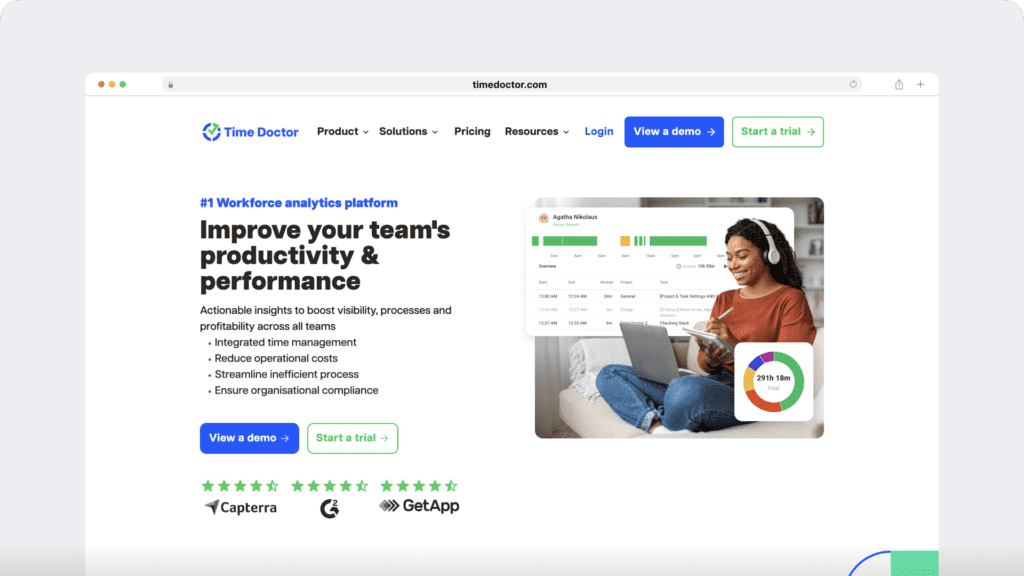
Manager effectiveness improves when you use workforce analytics to see how teams operate and identify development opportunities.
Time Doctor is a workforce analytics tool that turns your daily activity into clear insights, helping you understand how people managers influence productivity, workload, and outcomes.
Improve coaching with data, not guesswork
Time Doctor helps you move from subjective feedback to data-driven coaching.
By comparing teams across managers using Benchmarks AI, you can identify where performance patterns differ, spot leadership gaps, and understand what high-performing managers do differently.
This makes it easier to support managers with clear coaching and data-driven development plans.
Over time, this creates a consistent standard for developing effective leaders across teams.
See how work actually happens across teams
Manager effectiveness becomes clear when you can see how work flows day to day.
Time Doctor shows how time is spent, how focus is maintained, and supports employee development across teams.
These patterns highlight real-time signals such as overload, inefficiencies, or uneven task distribution.
Instead of reacting after performance drops or burnout appears, you can step in earlier, guide managers, and improve team outcomes with confidence.
Scale consistent management across the organization
Improving one manager is useful. Standardizing effective management across teams is what drives real impact.
Time Doctor makes it easier to apply consistent measurement and benchmarking to improve organizational performance across remote, hybrid, and in-office work.
Because it’s easy to adopt, you can improve visibility, consistency, and goal setting without adding complexity.
This allows you to build a more reliable, data-driven leadership approach that improves performance, supports employee well-being, and scales as your organization grows.
Final thoughts
Manager effectiveness is not based on opinion. It shows up in how teams work and reveals the impact of each manager’s leadership style.
When you compare productivity patterns, workload balance, and benchmarks, you begin to see why some teams thrive while others struggle.
This turns manager effectiveness from a subjective judgment into something you can measure, improve, and scale.
View a demo to improve manager effectiveness with real data.
Frequently asked questions (FAQs)
Manager effectiveness refers to how consistently a manager drives employee performance, supports employees, and maintains balanced, sustainable workloads using measurable behaviors.
It is reflected in how teams operate day to day, not just in final results.
Manager effectiveness is measured by analyzing team-level work patterns and comparing them across managers using productivity benchmarks.
Key indicators include productivity patterns, workload balance, focus time, and work-life balance signals. Workforce analytics tools help surface these insights, making it easier to evaluate manager performance objectively and identify coaching opportunities.
Benchmarking in manager effectiveness is the process of comparing team performance across managers to identify differences in productivity, efficiency, and workload distribution.
It reveals which management practices lead to better outcomes and helps standardize effective leadership across teams. Platforms like Time Doctor use benchmarking to connect team performance directly to manager impact.
Workforce analytics is the process of analyzing how time, tools, and workflows are used across teams to improve performance and decision-making.
It provides visibility into how work actually happens, helping leaders understand how managers influence team behavior and outcomes using real data.
Manager effectiveness directly impacts team performance, employee engagement, and retention.
When managers are consistent, teams perform better and workloads stay balanced. When it is unclear or inconsistent, inefficiencies, burnout, and performance gaps increase.
The 30-60-90 rule is a framework that helps managers improve team performance over their first three months:
• First 30 days focus on understanding team workflows and patterns
• Next 60 days focus on identifying gaps using data and benchmarks
• First 90 days focus on implementing improvements
With workforce analytics tools like Time Doctor, managers can validate assumptions faster and make better decisions earlier.
A managerial effectiveness survey collects employee feedback on leadership, communication, and support.
It provides perception-based insights into how managers are viewed. When combined with workforce analytics data, it gives a more complete picture of how manager behavior impacts actual team performance. Tools like Time Doctor help connect this feedback with real work patterns.