Quick overview
HR analytics focuses on people-related data, such as hiring, retention, and engagement, and typically uses historical reports to guide business strategy.
Workforce analytics focuses on how work gets done, using real-time data on productivity, workload, and workflows to help leaders optimize decisions and act faster at an operational level.
The key difference is simple. HR analytics explains workforce trends using historical people data, while workforce analytics shows how work happens in real time so leaders can act immediately.
In this article, you’ll learn how workforce analytics differs from HR analytics, when to use each, and why workforce analytics plays a critical role in managing productivity, workload, and employee well-being in modern teams.
You have plenty of HR data. Dashboards show hiring trends, engagement scores, and turnover rates. Yet when a team starts burning out or productivity drops, the warning comes too late, and labor costs quietly increase.
It’s like checking last month’s weather to decide what to wear today. Accurate, but not useful in the moment.
That’s where the conversation around workforce analytics vs HR analytics becomes critical.
Both matter.
But only one shows how work actually happens right now, so you can make data-driven decisions for the future workforce.
Table of Contents
- What is HR analytics in human resources?
- What is workforce analytics?
- How does workforce analytics improve visibility and productivity?
- Key differences between HR analytics and workforce analytics
- When should you use workforce analytics vs HR analytics?
- Why modern HR leaders need workforce analytics
- How workforce analytics works in practice
- When organizations should use both
- Choosing the right workforce analytics platform
- How Time Doctor supports workforce analytics
- Final thoughts
- Frequently asked questions (FAQs)
What is HR analytics in human resources?
HR analytics is the practice of using people data and key performance indicators (KPIs) to understand hiring, retention, engagement, and other workforce trends for strategic planning and performance management.
It answers questions like
- Are we hiring fast enough?
- Is our recruitment process effective?
- Where do we have skills gaps?
- Why are employees leaving?
- How engaged are our teams?
- Are compensation and benefits competitive?
Common HR analytics data includes
- Recruitment and talent acquisition metrics
- Turnover and attrition rates
- Diversity and inclusion data
- Employee engagement surveys
- Compensation benchmarks
Most HR teams rely on HRIS platforms or people analytics tools for data collection and analysis.
What are the limitations of HR analytics?
HR analytics tracks employee turnover and other performance metrics, but it only shows what happened, not why it happened.
It rarely provides actionable insights, such as
- Why did employee performance drop last week?
- Which teams are overloaded today
- Where work slows down in real time
While HR analytics supports long-term planning, it often leaves a gap in day-to-day decision-making, which impacts business outcomes.
What is workforce analytics?
Workforce analytics is the practice of using real-time workforce data and operational key metrics to understand how work gets done and improve staffing, productivity, workload, and decisions.
It focuses on how work actually happens across your organization, helping teams become more high-performing rather than just tracking who is employed or how they feel.
Instead of relying on limited data sources like surveys or historical reports, it uses real work patterns such as:
- Time allocation across tasks
- App and tool usage
- Workload distribution
- Productivity trends
- Workflow efficiency
- Early burnout signals
What makes workforce analytics different from HR analytics?
Workforce analytics gives you operational visibility that supports decisions across HR functions.
You can see:
- Which teams are stretched and forecast burnout risks before they escalate
- Where time gets lost based on real-time workforce data, and how to streamline workflows
- How work shifts across remote, hybrid, and in-office setups
Leaders need “real-time insights into how work is actually happening” to make faster, smarter decisions.
Why does the difference between workforce analytics and HR analytics matter?
You stop relying on delayed data collection and start preventing problems in real time.
So, instead of asking:
“Why did this happen?”
You start asking:
“What’s happening right now, and what can we fix today?”
How does workforce analytics improve visibility and productivity?
Workforce analytics improves visibility by showing how time, tools, and workflows are actually used across teams.
Instead of relying only on performance metrics or surveys, you can see real work patterns in real time.
This helps you:
- Identify inefficiencies before they affect output
- Improve productivity by reducing wasted time
- Balance workloads across teams
- Support managers with data-driven coaching
- Protect employee satisfaction and prevent burnout
With this level of visibility, productivity becomes easier to improve because you understand what is actually driving performance.
This is why many HR leaders now evaluate workforce analytics alongside productivity analytics platforms to improve workforce visibility.
Key differences between HR analytics and workforce analytics
Here’s where the distinction becomes clear:
| Category | HR Analytics | Workforce Analytics |
| Focus | People management | How work gets done |
| Data type | HR records, surveys | Activity, time, workflows |
| Timeframe | Historical | Real-time and trend-based |
| Primary users | HR teams | HR, Ops, Managers, Executives |
| Goal | Strategic insights | Operational decision-making |
| Use Cases | Hiring, retention, engagement, compensation | Productivity, workload, workflow efficiency, burnout detection |
| Data foundation | People data from HR records and surveys | Workforce data from time, activity, tools, and workflows |
Simple way to think about it
- HR analytics = “Who and why”
- Workforce analytics = “How and what’s happening now”
You need both. But only one helps you act immediately.
When should you use workforce analytics vs HR analytics?
If you’re deciding where to focus, here’s a simple way to think about it
Use HR analytics when you want to
- Improve hiring and the recruitment process
- Analyze employee turnover and retention
- Track engagement and people data trends
- Build long-term HR strategies
Use workforce analytics when you want to
- Understand how work actually gets done
- Improve productivity and performance in real time
- Identify workload imbalances and burnout risks
- Optimize staffing and reduce unnecessary labor costs
Most organizations don’t choose one or the other.
They use HR analytics for strategy and workforce analytics to execute that strategy effectively.
Why modern HR leaders need workforce analytics
HR leaders today deal with a different reality
- Distributed teams
- Increasing burnout risks
- Pressure to prove ROI on people decisions
- Managers who need better coaching data
HR analytics alone can’t solve these problems.
1. Workforce planning becomes proactive
Let’s say three teams report feeling overwhelmed.
The HR department might see data that shows
- High engagement scores
- Stable retention
Everything looks fine on paper.
Workforce analytics reveals
- One team works 20% more hours than the others
- Another spends 30% of their time on low-value tasks
Now you know where to act and which initiatives to prioritize before focusing on reducing time to hire or hiring blindly.
2. Burnout gets detected early
Burnout rarely shows up in surveys first.
It shows up in patterns that predictive analytics can identify early
- Increasing idle time
- Longer working hours
- Context switching across too many tools
That changes everything, especially when trying to protect your top talent from burnout.
You move from exit interviews to early intervention.
3. Managers become better coaches
Most HR leaders struggle with inconsistent manager performance.
Some managers
- Run effective 1:1s
- Support team growth
Others
- Miss early warning signs
- React too late
Workforce analytics gives managers
- Clear visibility into team workloads
- Data to guide coaching conversations
- Signals on where support is needed
This supports data-driven coaching and stronger talent management, not guesswork.
4. Remote and hybrid visibility improves
In distributed teams, visibility breaks down fast.
Without workforce analytics
- Activity looks similar across roles
- Output feels inconsistent
- Trust becomes harder to maintain
With the right data
- You gain transparency, not surveillance
- Teams understand expectations
- Leaders make fair decisions
This is what “visibility without micromanagement” actually looks like in practice.
How workforce analytics works in practice
Let’s make this real.
Scenario 1: operations team slowdown
Your operations team starts missing deadlines.
HR analytics might show
- No change in headcount
- Stable engagement
No obvious issue, even after reviewing standard data analysis reports.
Workforce analytics shows
- 25% of the time goes into rework
- One approval step creates delays
- Two teams duplicate effort
Now you can:
- Fix the process
- Rebalance workloads
- Remove bottlenecks
No guesswork needed.
Scenario 2: Hidden overload
Let’s say your support team handles customer tickets.
Workforce analytics reveals
- One group spends 40% more time per ticket
- Another group multitasks across too many tools
This points to
- Training gaps
- Workflow inefficiencies
Instead of hiring more people, you fix the root cause.
When organizations should use both
This is not an either-or decision.
The strongest organizations help HR professionals combine both layers:
HR analytics → strategic layer
- Hiring
- Retention
- Engagement
- Compensation
Workforce analytics → operational layer
- Productivity
- Work patterns
- Efficiency
- Burnout signals
Together, they create a full picture.
Think of it like this
- HR analytics sets the direction
- Workforce analytics shows how the journey actually unfolds
Choosing the right workforce analytics platform
Not all tools solve this problem well.
If you’re evaluating workforce analytics software, look for capabilities that reflect real work, not just surface-level tracking.
What to prioritize
- Time tracking that reflects actual work patterns
- App and website usage insights
- Workload visibility across teams to improve HR operations
- Productivity trends over time
- Early burnout indicators
- Benchmarks AI for comparison and planning
- Compliance-ready reporting for regulated industries
The goal is simple
You want clarity that helps you act and stay aligned with your business goals, not just more data.
What the research says
The shift toward real-time workforce insight isn’t just a trend.
As Deloitte explains, “Success may now depend more on sensing change, experimenting quickly, and adapting continuously.”
The gap is how fast leaders can act on that change.
Workforce analytics closes that gap by giving real-time visibility into how work happens, so leaders can respond before problems escalate.
Seeing the difference is one thing. Acting on it is another.
Here’s how workforce analytics works in practice.
What tools support workforce analytics?
To apply workforce analytics effectively, organizations rely on tools that capture real-time workforce data.
These platforms typically include
- Time tracking to understand how work hours are spent
- App and website usage insights to reveal productivity patterns
- Workload visibility across teams
- Productivity analytics and trends over time
- Work-life balance indicators to detect burnout early
- Compliance-ready reporting for regulated industries
This is why many organizations are moving toward dedicated workforce analytics software that provides deeper operational visibility than traditional HR tools.
While HR tools focus on people data, workforce analytics tools focus on how work actually happens.
Examples of workforce analytics tools include dedicated workforce analytics platforms, employee productivity analytics software, and workforce monitoring software.
Time Doctor falls into this category by providing HR leaders with real-time visibility into productivity, workload, and work patterns.
These categories often overlap in buying decisions, especially when HR leaders are evaluating workforce analytics software, employee productivity analytics software, workforce monitoring software, and broader workforce analytics platforms.
How Time Doctor supports workforce analytics
This is where theory turns into execution.
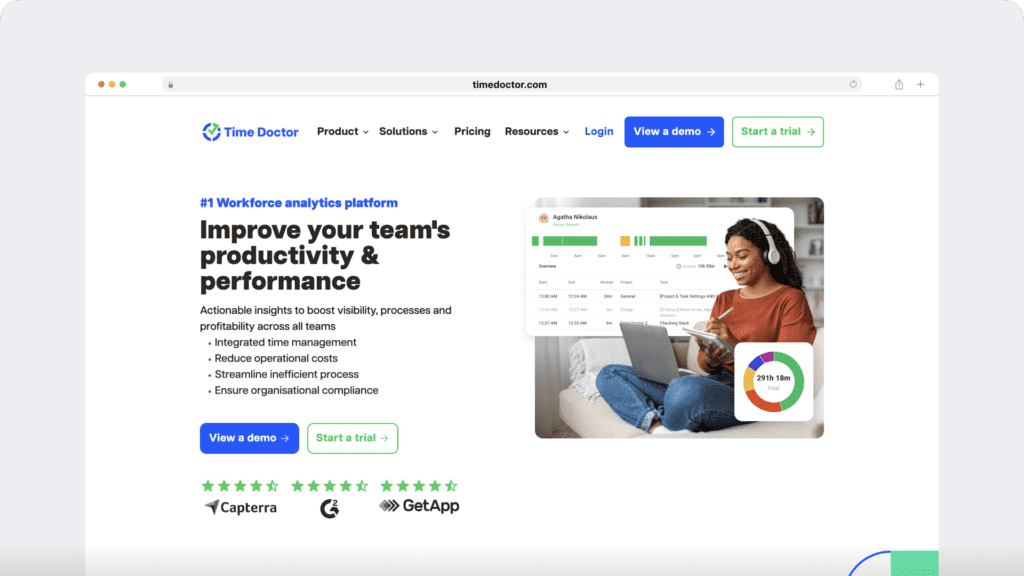
Time Doctor is a workforce analytics platform that helps you execute HR strategies by showing how work actually happens in real time.
How does workforce analytics support empowered leadership?
You gain visibility that helps managers coach instead of control.
Instead of guessing
- Who needs support
- Where performance drops
You see it clearly through real work patterns, not assumptions.
This reinforces a simple shift: lead with trust, not control, and use data to support better conversations and fair decisions.
How does workforce analytics improve actionable visibility?
You get real-time insight into
- Time tracking data that shows how work hours are actually spent
- App and website usage to understand productivity patterns
- Workload distribution across teams
- Productivity trends over time
- Work-life balance signals that highlight burnout risks
- Screenshots and audit logs to support transparency, accountability, and compliance
AI-powered insights, enhanced by machine learning, help surface trends, risks, and opportunities, so you don’t have to dig through reports to find what matters.
You can
- Spot inefficiencies early
- Fix workflow issues quickly
- Identify early signs of burnout through work patterns and time allocation
How does workforce analytics help detect burnout early?
Instead of relying on surveys, you can see early warning signs in real work data.
For example
- Extended work hours
- Rising idle time
- Uneven workload distribution
This helps you step in early, support teams, and improve employee satisfaction before issues escalate.
How does workforce analytics create transparent accountability?
Visibility works both ways.
Features like screenshots and audit logs can also help organizations maintain transparent accountability and support compliance without relying on assumptions.
Teams understand how work is measured, and leaders make decisions based on consistent, shared data.
That creates accountability without pressure and builds trust across remote, hybrid, and in-office teams.
Why does ease of adoption matter in workforce analytics?
Adoption matters just as much as insights.
You don’t want another tool that
- Creates IT overhead
- Requires constant maintenance
You want something that fits into your workflow and starts delivering value fast.
What does workforce analytics look like in practice?
Let’s say your HR team wants to reduce burnout.
Instead of waiting for engagement surveys, you can
- Identify teams working extended hours
- Spot rising idle time patterns
- Understand workload imbalance
Then act immediately.
That’s the shift from reactive HR to proactive workforce management.
Final thoughts
HR analytics gives you the big picture.
Workforce analytics shows you what’s happening inside that picture, in real time.
If you rely only on HR analytics, you risk
- Late decisions
- Missed warning signs
- Reactive management
If you add workforce analytics, you gain
- Clarity into daily operations
- Early signals before problems escalate
- Better alignment between strategy and execution
That’s how modern HR leaders move from reporting to real impact.
If your team needs more than historical HR reporting, this is where a workforce analytics platform can help turn visibility into action.
Get a Demo to improve workforce visibility and prevent burnout before it starts.
Frequently asked questions (FAQs)
HR analytics focuses on people-related data like hiring, retention, and engagement, using historical insights to guide strategy. Workforce analytics focuses on how work gets done, using real-time data on productivity, workload, and workflows to support faster operational decisions.
Workforce analytics is the process of analyzing how time, tasks, tools, and workflows are used across teams to improve productivity, efficiency, and employee well-being. It provides real-time visibility into how work actually happens, helping leaders act quickly and make better decisions.
People analytics focuses on employee-related insights such as engagement, performance reviews, and retention trends. Workforce analytics focuses on work patterns such as time allocation, workload distribution, and productivity. Together, they provide both strategic and operational visibility.
HR analytics provides strategic insights into hiring, retention, and engagement, while workforce analytics provides operational visibility into how work gets done. When combined, they help organizations align workforce strategy with real-time execution and make more informed decisions.
With a workforce analytics platform like Time Doctor, leaders can connect high-level HR insights with real-time productivity data to improve both planning and performance.
HR analytics supports long-term, strategic decisions based on historical data. Workforce analytics supports day-to-day operational decisions by showing real-time productivity trends, workload issues, and workflow inefficiencies.
Tools like Time Doctor help leaders act on these insights quickly by turning daily work patterns into clear, actionable data.
Workforce analytics helps improve retention by identifying early signs of burnout, workload imbalance, and disengagement. By acting on these signals early, leaders can support employees, improve work-life balance, and reduce turnover before issues become visible in HR reports.
Platforms like Time Doctor make this easier by giving real-time visibility into work patterns, so teams can address risks before they escalate.
Workforce analytics enhances people analytics by adding real-time context to employee data. It helps explain why trends in engagement, performance, or retention are happening by showing how work is distributed, where inefficiencies exist, and how employees spend their time.
Neither is better on its own. HR analytics helps organizations understand workforce trends and build strategies using people data. Workforce analytics complements this by providing real-time visibility into how work is performed. Together, they enable better planning, execution, and performance management.