
Quick overview
The benefits of employee retention describe the positive impact across your business when people stay engaged, productive, and supported over time with a healthier work-life balance. Leaders unlock these benefits by creating clarity around how work happens, acting on early signals, and building trust through consistent, fair decision-making.
When retention is handled well, you gain:
- Lower employee turnover and hiring costs
- Stronger employee engagement and morale
- More consistent performance across team members
- Retention of knowledge and institutional experience
- Higher productivity with less disruption
- Better customer satisfaction and service continuity
- A stronger, more stable organizational culture
- An improved employer brand that attracts and retains top talent
- More predictable workforce planning and capacity decisions
- Sustainable growth and innovation without burning teams out
In this article, you’ll learn what employee retention benefits mean in practice, why they matter for leaders today, what happens when they’re missing, how modern teams unlock them, and how Time Doctor helps turn retention into a leadership advantage.
What happens to your business when employee retention starts slipping before you even see the warning signs?
You don’t lose employees overnight. Instead, you lose focus, consistency, and momentum first. Over time, burnout builds quietly, workloads drift out of balance, and high performers disengage long before they start looking for a new job.
And by the time turnover becomes visible, lost productivity has already taken a toll, and teams are stretched thin trying to keep up.
When employee retention benefits lack clear direction, leaders often end up reacting instead of leading.
As a result, costs rise beyond annual salary expenses, knowledge walks out the door, and decisions rely more on assumptions than real insight into how work actually gets done.
Gallup data shows this pattern that “most employees who left in 2024 did not do so for better pay alone. Engagement, culture, and work-life balance accounted for more than two-thirds of exit reasons, highlighting how often retention issues start with day-to-day work experience rather than compensation.”
At that point, retention is no longer just an HR concern. In a competitive job market, a rising turnover rate becomes a business risk that directly affects performance, culture, and long-term growth.
What are employee retention benefits?
Employee retention benefits are the positive business results you see when current employees stay with your company instead of leaving, even beyond what a traditional benefits program alone can deliver.
They describe what improves across the organization when people remain engaged, productive, and supported by more than just perks or a competitive benefits package, such as health insurance, life insurance, paid time off, enrollment programs, or fair reimbursement policies.
For you as a leader, these benefits show up as lower employee turnover, more stable teams, and less disruption from constantly hiring and onboarding new employees. Work continues with fewer resets because experience, knowledge, and team relationships stay in place.
It also reflect how employees experience their day-to-day work, the clarity of their career paths, and access to professional development over time.
With manageable workloads, flexible work arrangements, and fair work schedules, engagement stays higher, performance is steadier, and collaboration improves.
It is what gets better for the business when people stay and keep doing good work over the long term.
Why do employee retention benefits matter for leaders?
When people stay and your valuable employees continue to perform and grow, the impact shows up in several practical ways:
- Consistent performance is easier to maintain when employees can build on experience, relationships, and clear development opportunities.
- Team continuity strengthens productivity, collaboration, and career development.
- Lower turnover cuts rehiring costs and makes capacity planning easier.
- Healthier workloads improve job satisfaction and long-term wellness.
- Clear retention signals give leaders confidence about what’s working and what needs attention.
Therefore, strong employee retention improves execution, cost control, and long-term growth, turning retention into a daily leadership advantage.
What happens when employee retention benefits are missing?
Even with the best intentions, unclear or inconsistent employee benefits lead to recurring issues. The impact builds over time rather than showing up as one-off events. That’s why:
- Burnout builds quietly as engaged employees lose momentum, often becoming visible only after performance or morale declines, especially when support such as parental leave exists on paper but feels difficult to use.
- Workload imbalance increases, putting employee well-being and mental health at risk while leaving some teams stretched and others underutilised.
- When professional growth stalls, knowledge and experience leave with employees, forcing teams to relearn processes and slow execution.
- Productivity erodes over time through rework, context switching, and the constant onboarding of new hires rather than obvious failures.
- Company culture weakens as consistency disappears, making it harder to maintain trust, accountability, and a positive workplace culture.
- Customer experience becomes uneven as team changes affect responsiveness, quality, and continuity.
- Leaders and human resources teams rely on assumptions and exit interviews rather than timely insight into daily work.
Over time, these patterns lead to high turnover and weaken clarity, stability, and confidence in how the organisation operates.
10 key employee retention benefits leaders should focus on
Employee retention creates value when it improves how work gets done, not just how long people stay. The benefits below show where retention delivers measurable impact across performance, cost, and stability.
1. Lower turnover and hiring costs
Lower employee turnover reduces recruitment, onboarding, and training expenses. Teams spend more time executing work instead of replacing people, which makes workforce costs more predictable.
2. Stronger employee engagement and morale
Retention supports higher employee engagement by creating continuity and trust. Employees stay invested in outcomes when expectations remain clear and workloads feel sustainable.
3. More consistent performance
Stable teams deliver steadier results. Retention reduces performance swings caused by constant handovers, ramp-up time, and lost context.
4. Knowledge and experience retention
When employees stay, institutional knowledge remains accessible through shared practices, documentation, and ongoing guidance from mentors. Teams avoid repeating mistakes and move faster with shared understanding of processes and priorities.
5. Higher productivity
Retention protects productivity by reducing disruption. Less time goes to onboarding and rework, allowing effort to translate more directly into output.
6. Better customer satisfaction
Experienced teams provide more consistent service. Retention improves customer satisfaction by preserving relationships, context, and service quality.
7. Stronger company culture
Retention reinforces company culture through stable working relationships. Trust, accountability, shared norms, and support for Diversity, Equity, and Inclusion (DE&I) are easier to sustain when teams remain intact.
8. Improved employer brand
High retention strengthens your employer brand by signaling stability, fairness, competitive compensation, and long-term security through benefits like health benefits and retirement plans. Hiring becomes easier and more selective when employees stay and advocate for the organisation.
9. Better workforce planning
Strong retention makes workforce planning more predictable, so teams stay balanced without constant reactive hiring.
10. Sustainable growth and innovation
Strong retention creates stability, giving employees room to grow through better processes, shared ideas, and learning opportunities.
When people stay, the business runs with more stability, less waste, and greater confidence, protecting performance today while strengthening the bottom line for the future.
How do leaders unlock employee retention benefits in modern teams?
You unlock employee retention benefits when you stop guessing and start seeing how work actually happens in real-time. Instead of reacting to resignations or missed targets, you notice early patterns that are easier to fix and far less disruptive, especially in a post-pandemic world where work looks very different.
Clear visibility into time, workload, and effort helps you lead proactively. It keeps expectations fair, builds trust across teams, and supports employee feedback that leads to better decisions. With workforce analytics in place, retention stops relying on intuition and starts supporting career growth opportunities grounded in daily work.
This approach scales across roles, demographics, and work models, including hybrid work, without creating silos or micromanagement.
Instead, it aligns teams around shared insight and turns retention from scattered initiatives into a leadership and competitive advantage, and supports sustainable growth.
How does Time Doctor help leaders unlock employee retention benefits?
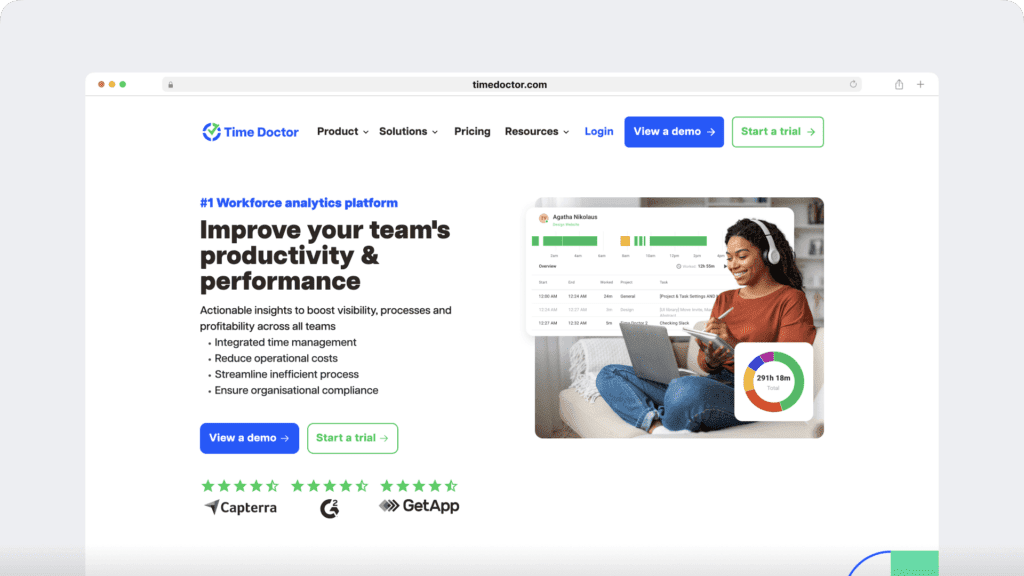
Time Doctor helps you unlock employee retention benefits by turning workforce analytics into clear, shared insight into how work actually happens. Instead of relying on assumptions, you gain visibility that supports trust, consistency, and stronger leadership decisions.
Across remote work, hybrid, and in-office teams, this clarity lets you lead with confidence without drifting into micromanagement or crossing into surveillance. People feel supported, not watched, and leaders stay informed without losing trust.
Empowered leadership
Time Doctor supports empowered leadership by grounding coaching and performance conversations in real work data, so retention decisions feel fair, consistent, and timely.
- Employee time tracking and time management insights help you see when effort is sustainable versus excessive. This allows you to adjust workloads early, before overwork turns into burnout or disengagement that leads employees to leave.
- Productivity analytics provide context behind performance changes. Instead of assuming motivation issues, you can see whether interruptions, tool overload, or shifting priorities are affecting output, which leads to more constructive conversations and less frustration on both sides.
- Meeting insights reveal how collaboration impacts focus time. When employees spend too much time in meetings, engagement often drops. Seeing this pattern helps you protect focus time, which improves employee satisfaction and reduces quiet quitting.
- Data-informed coaching across teams creates consistency. When expectations are clear and applied evenly, employees feel treated fairly, which strengthens trust and reduces attrition risk.
That clarity and fairness are key reasons people choose to stay, even when work gets demanding.
Actionable visibility
Time Doctor provides actionable visibility by helping you spot retention risks early, while there is still time to respond with support instead of reaction.
- Workforce analytics and employee monitoring reveal workload imbalance and disengagement trends across teams. When you can see uneven effort or declining focus early, you can rebalance work before stress or frustration pushes employees to leave.
- Screen monitoring and unusual activity reports surface changes in work patterns that often signal burnout, overload, or disengagement. These signals give you an opportunity to check in, clarify priorities, or remove friction before productivity and employee morale drop.
- Benchmarks AI helps you compare workload and productivity patterns across similar roles or teams. This prevents chronic overwork of high performers and reduces attrition caused by uneven expectations or unnoticed strain.
- Attendance and payroll alignment ensure time, effort, and compensation stay consistent. When employees trust that their time is tracked fairly and accurately, resentment drops and retention improves.
With this level of insight, retention decisions become proactive, evidence-based, and easier to sustain.
Seamless partnership
Time Doctor fits into your existing environment with minimal disruption, supporting retention at scale as teams grow and change.
- Easy adoption for teams means employees spend less time learning new systems and more time focusing on meaningful work. When tools feel intuitive and supportive rather than intrusive, resistance drops and long-term engagement improves.
- Low lift for IT reduces delays, workarounds, and tool sprawl that can frustrate both teams and leaders. Clear integrations and stable performance help maintain a consistent work environment, which supports trust and reduces attrition caused by operational friction.
- Scalability across roles and environments allows retention practices to remain consistent as teams grow or shift between remote, hybrid, and in-office work. Employees experience the same expectations and support regardless of location, which strengthens fairness and stability.
- Integrated attendance, payroll, and productivity workflows reduce administrative confusion and errors that often erode trust over time. When effort, time, and compensation align clearly, employees feel treated fairly and are more likely to stay.
- Support for diverse industries and team models, including healthcare, technology companies, agencies, and distributed workforces, ensures retention strategies adapt without constant process changes that disrupt teams.
This makes retention support practical, sustainable, and aligned with how your organisation already works.
Final thoughts
What does your employee retention rate really say about how your organisation is being led?
Retention is more than a metric. It reflects the health of your work environment, the clarity of expectations, and the trust people feel day to day, including trust in leadership and the providers that support employees through key life moments.
When leaders act early, support teams consistently, and rely on real visibility instead of assumptions, retention benefits start to compound.
The strongest organisations don’t retain people by chance. They retain them because leadership creates clarity, fairness, and stability at work. When leadership improves and support systems like mentorship programs are in place, retention follows.
In a complex, fast-moving workforce, where job seekers are more selective, retaining your best people becomes a strategic advantage. It protects performance, limits turnover costs, strengthens culture, and builds confidence in the future.
Retaining employees, done well, isn’t just about keeping people on payroll. It’s about building a business that people choose to stay with.
View a demo to reduce burnout and improve employee retention with Time Doctor.
Frequently asked questions (FAQs)
Time Doctor helps leaders improve employee retention by providing visibility into workload balance, time use, and productivity patterns. This allows you to identify burnout risks early, support employees consistently, and make fair decisions that encourage people to stay rather than disengage.
Time Doctor helps clarify key retention factors such as workload distribution, employee experience, engagement trends, and capacity limits. By turning daily work patterns into actionable insight, leaders can address retention issues before they result in turnover.
Employee retention is important because it protects productivity, reduces hiring costs, and preserves institutional knowledge. Time Doctor supports retention by helping leaders act on early signals instead of reacting after employees leave, making retention a proactive leadership practice.
Time Doctor links employee experience to real work conditions by showing how time, meetings, tools, and interruptions affect daily work. This helps leaders improve job satisfaction, reduce friction, and create conditions that support long-term retention.
High employee turnover is often caused by burnout, unclear priorities, uneven workloads, and a lack of visibility. Time Doctor helps reduce turnover by highlighting these issues early through workforce analytics, allowing leaders to intervene with support instead of assumptions.
Time Doctor plays a role in employee retention strategies by providing consistent, role-based insight into how work happens across teams. This supports fair expectations, better coaching, and proactive decision-making that strengthens retention over time.
Employee retention metrics matter because they reveal whether leadership practices are working. Time Doctor makes these metrics actionable by pairing them with real work data, helping leaders understand why trends are changing and what to do next.
Employee growth affects retention by showing people they can progress without leaving. When growth is visible in daily work, employees stay engaged, motivated, and more likely to commit long-term.
Wellness programs can support retention, but they work best when paired with clear visibility into workload, time use, and team capacity. Without understanding how work actually happens day to day, wellness initiatives alone often address symptoms rather than root causes.


Carlo Borja is the Content Marketing Manager of Time Doctor, a workforce analytics software for distributed teams. He is a remote work advocate, a father and an avid coffee drinker.