Quick overview
Employee performance improves when teams focus on data-driven outcomes and meaningful progress.
That means setting clear goals, tracking the right performance signals, and using real work data to understand how time, effort, and tools translate into results.
When you rely on workforce analytics, you gain clear visibility into workload, focus, and progress without micromanaging. This helps you coach earlier, prevent burnout, and improve performance across different work settings and team structures.
In this article, you’ll learn how to measure employee performance, avoid common pitfalls, and use workforce analytics to improve results with clarity and trust.
Your employees want feedback, but can you give it with confidence?
Employees want to know how they’re doing. They look to their leaders, managers, and peers for feedback that helps them grow, improve, and see a future in their role.
Gallup data shows that feedback drives engagement. In fact, “80% of employees who say they received meaningful feedback in the past week report being fully engaged”, but many leaders still struggle to deliver that level of feedback consistently.
When you’re leading a team, that gap creates pressure. As work accelerates across distributed work environments, you’re expected to assess performance fairly and optimize alignment while supporting development.
Without clear insight into how work actually gets done, employee performance management turns reactive, quality of work becomes harder to assess, strong performers can be overlooked, and early signs of burnout or disengagement are easy to miss.
This is why employee performance remains one of the most difficult challenges for modern organizations. It’s not because of a lack of intent or effort. It’s a lack of reliable performance signals that reflect day-to-day work and support timely, meaningful feedback.
Table of Contents
- What is employee performance?
- Why is measuring employee performance harder than it looks?
- What factors influence employee performance?
- What are the KPIs for employee performance?
- How can you measure employee performance without micromanaging?
- How Time Doctor helps you improve employee performance across your workforce
- Final thoughts
- Frequently asked questions (FAQs)
What is employee performance?
Employee performance is how effectively your employees carry out their responsibilities and contribute to business goals that ultimately shape customer satisfaction.
It reflects how time, effort, and skills translate into meaningful progress and results, and it provides the foundation for accurate performance evaluation and focused employee training.
Performance is not just about output or hours worked. It also includes how employees manage their time, maintain focus, collaborate with others, and support ongoing employee development across different work environments.
At its simplest, it shows whether work aligns with expectations and priorities, and whether results can be sustained over time, which is essential for consistent performance improvement.
Why is measuring employee performance harder than it looks?
When you’re leading teams and delivering results, measuring employee performance is more complex than it appears. A few realities consistently make performance evaluation difficult today:
1. Employee performance is continuous, not annual
Teams don’t operate on yearly review cycles. Priorities change quickly, and work evolves week to week. When performance assessment relies on infrequent reviews or memory, feedback arrives too late to support employee development or effective talent management.
2. Employee performance goes beyond output
Performance is not just about visible output or hours worked. It includes how employees manage time, maintain focus, collaborate, and turn hard work into real employee productivity. When performance measurement focuses on activity alone, meaningful progress can be missed and impact becomes harder to assess accurately.
3. Visibility breaks down across modern work environments
As teams operate across distributed, remote, hybrid, and in-office work environments, traditional performance signals lose reliability. Without clear insight into how an employee’s work actually gets done day to day, performance evaluation becomes reactive, and consistent performance improvement is harder to sustain.
What factors influence employee performance?
Employee performance doesn’t improve in isolation. It’s shaped by a small set of everyday factors that determine whether effort turns into progress or stalls quietly over time.
1. Clarity of goals and priorities
Performance suffers when expectations feel vague or constantly shift. Employees perform better when they understand what matters most, how their work connects to broader goals and initiatives, and how success is defined. Without that clarity, even motivated teams can move in the wrong direction.
2. Workload and capacity
Too much work spreads focus thin. Too little work leads to disengagement. Balanced workloads help employees apply their competencies effectively, maintain consistent performance, and avoid burnout. When capacity issues go unnoticed, performance problems often appear later as missed deadlines, declining quality, or attrition.
3. Time management and focus
How employees spend their time matters as much as what they produce. Frequent interruptions, context switching, and unstructured days reduce employee productivity, even when people are working hard. Sustained focus supports higher-quality output and more predictable performance.
4. Tools, workflows, and friction
Complex processes and disconnected tools create hidden drag on performance. When employees spend excessive time navigating systems or switching between platforms, effort gets absorbed by friction instead of results. Streamlined workflows help work move forward with less resistance.
5. Feedback and managerial support
Performance improves when feedback is timely, relevant, and grounded in real work. Regular guidance from people managers helps employees adjust early, reinforce good habits, and identify skill gaps before issues become harder to address.
What are the KPIs for employee performance?
The most effective Key Performance Indicators (KPIs) help clarify how employee performance takes shape in day-to-day work. Rather than relying on isolated metrics, strong performance evaluation helps HR teams see how effort, focus, and outcomes connect across roles.
1. Delivery and output signals
These KPIs show whether work moves forward as expected. Task completion, delivery timelines, and progress against goals indicate whether priorities translate into results. On their own, these metrics explain what was delivered, but not how the work unfolded.
2. Quality and consistency signals
Performance also depends on how reliable and accurate work remains over time. Patterns such as rework, errors, customer feedback, or internal review input reveal whether output meets expectations as workloads change.
3. Time, focus, and workload signals
How employees spend their time directly influences performance. Signals related to time allocation, focus, and unusual work patterns help explain gaps between effort and results, while also surfacing workload imbalance and early burnout risk.
4. Engagement and retention signals
Sustained performance relies on commitment and stability. Trends in engagement, absenteeism, or turnover provide context for performance improvement by showing whether results can be maintained over time.
5. Collaboration and contribution signals
Employee performance rarely happens in isolation. Signals that reflect participation across projects, responsiveness within workflows, and contribution to shared outcomes show how individual work supports team performance across distributed work environments.
How can you measure employee performance without micromanaging?
Measuring employee performance works best when visibility replaces guesswork, not when oversight turns into control. The goal is to understand how work happens day to day while still giving teams the autonomy they need to perform at their best.
Workforce analytics makes this possible by turning real work data into clear performance signals. Instead of hovering, you gain consistent insight that helps improve performance and deliver constructive feedback with clarity and trust.
With a workforce analytics approach, you can:
- See performance patterns over time rather than reacting to isolated moments, which leads to fairer and more accurate performance evaluation
- Connect effort, focus, and time to meaningful outcomes instead of relying on surface-level activity
- Deliver timely, fact-based feedback that supports employee development while identifying patterns behind burnout, disengagement, or repeated absences
- Maintain consistent visibility across distributed, remote, hybrid, and in-office work environments without resorting to micromanagement
Time Doctor supports this approach by making performance data transparent and easy to understand. This allows leaders to manage performance proactively, strengthen trust, and drive sustainable performance improvement across their workforce.
How Time Doctor helps you improve employee performance across your workforce
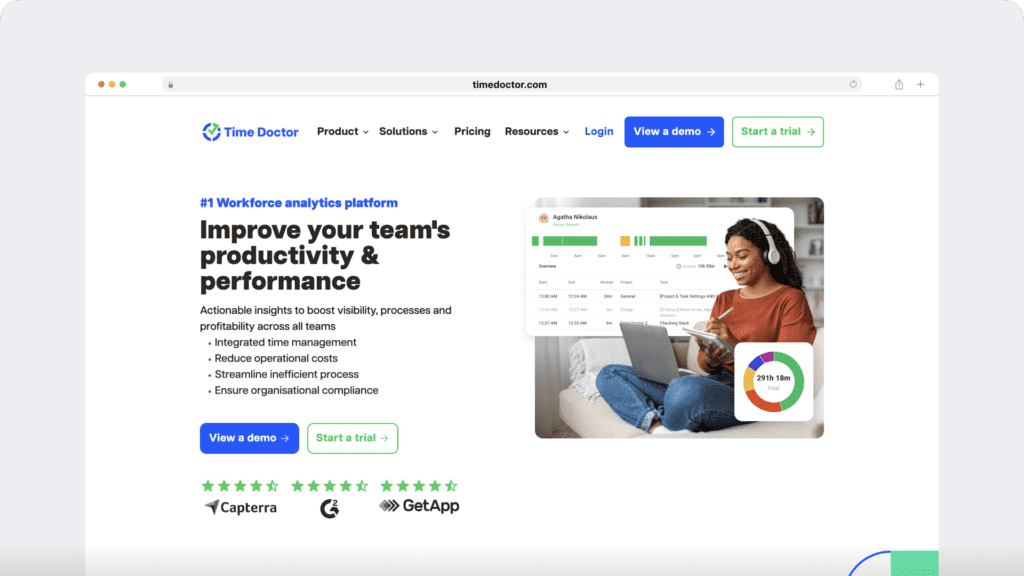
Time Doctor is a workforce analytics platform that helps you see how work actually happens across your distributed workforce, so performance management stays fair, informed, and grounded in real data.
With Time Doctor, performance improvement starts with clear, practical visibility:
1. Understand how time and effort translate into results
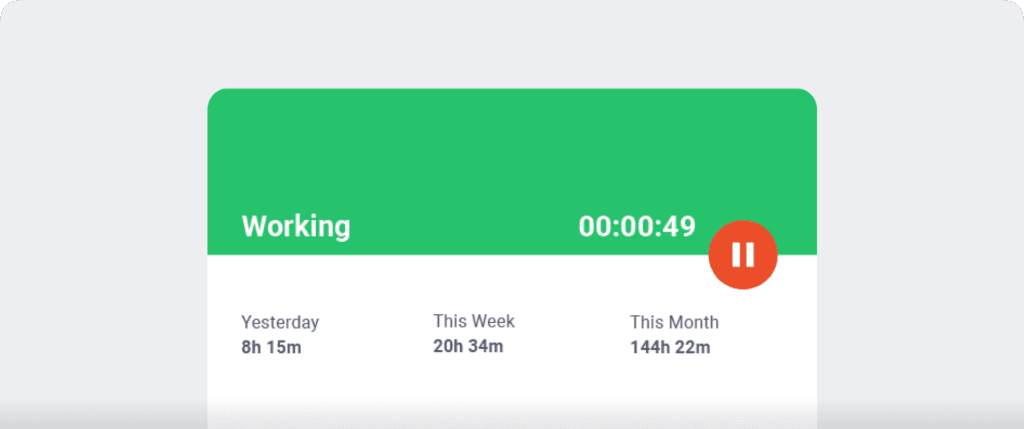
Through employee time tracking and productivity analytics, you gain insight into how employees manage their time, stay focused, and move work forward. This supports better time management without turning performance discussions into surveillance.
2. Spot early performance and workload risks
Workforce analytics surface patterns such as workload imbalance, declining focus, or unusual activity. Signals like unusual activity reports, attendance trends, and work-hour patterns help flag burnout or disengagement early, which is especially important in regulated environments like healthcare, where consistency and compliance matter.
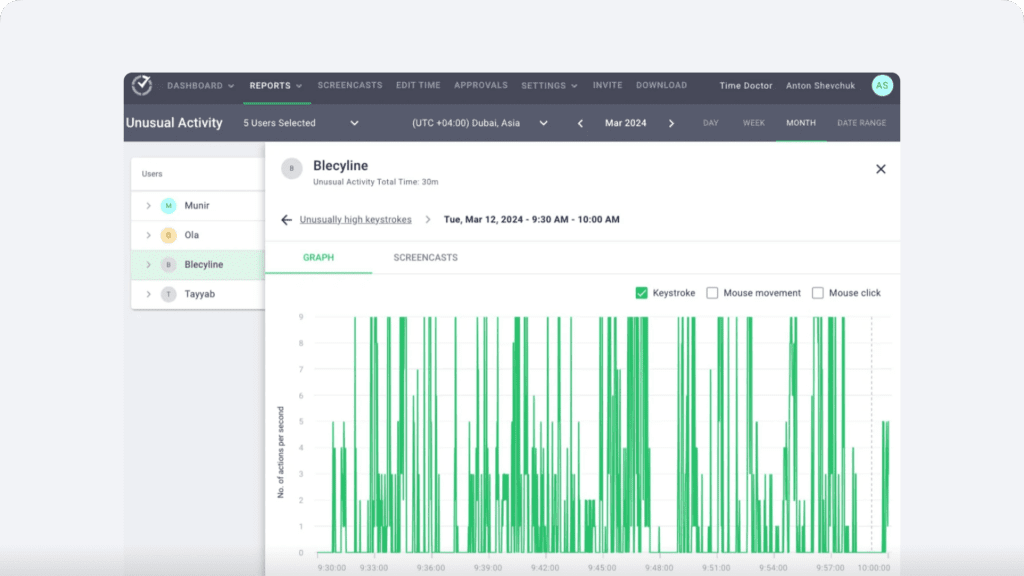
3. Support coaching with objective, shared data
Employee monitoring features such as app and website usage, optional screen monitoring, and task-level views give managers factual context for feedback. This makes performance evaluation more constructive and supports employee development through a clearer development plan, without micromanaging.
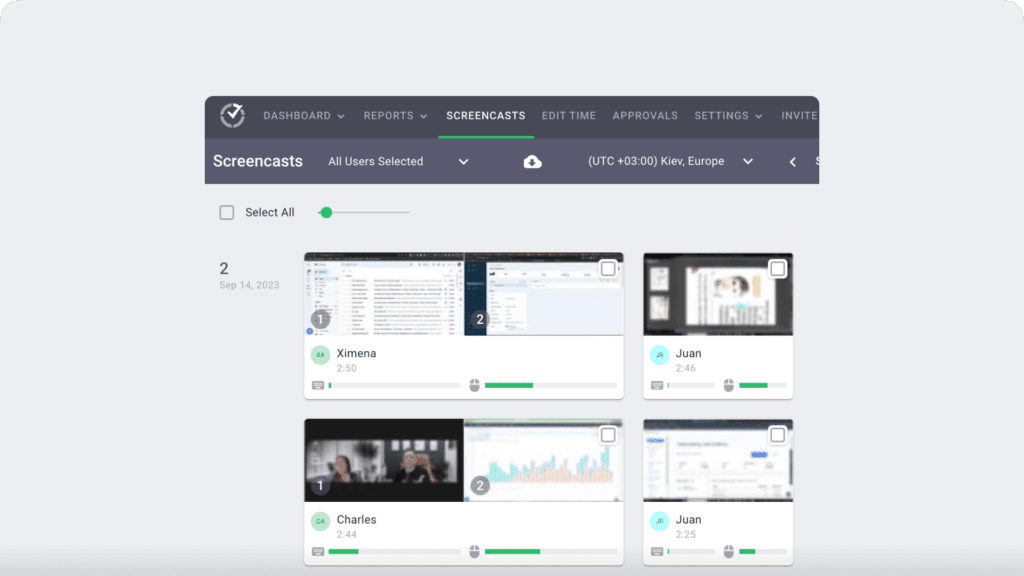
4. Create alignment across teams and roles
Standardized productivity analytics and benchmarks help leaders compare performance patterns across teams, roles, and locations. With Benchmarks AI, performance expectations become clearer, whether teams sit in the office, work remotely, or operate across multiple regions.
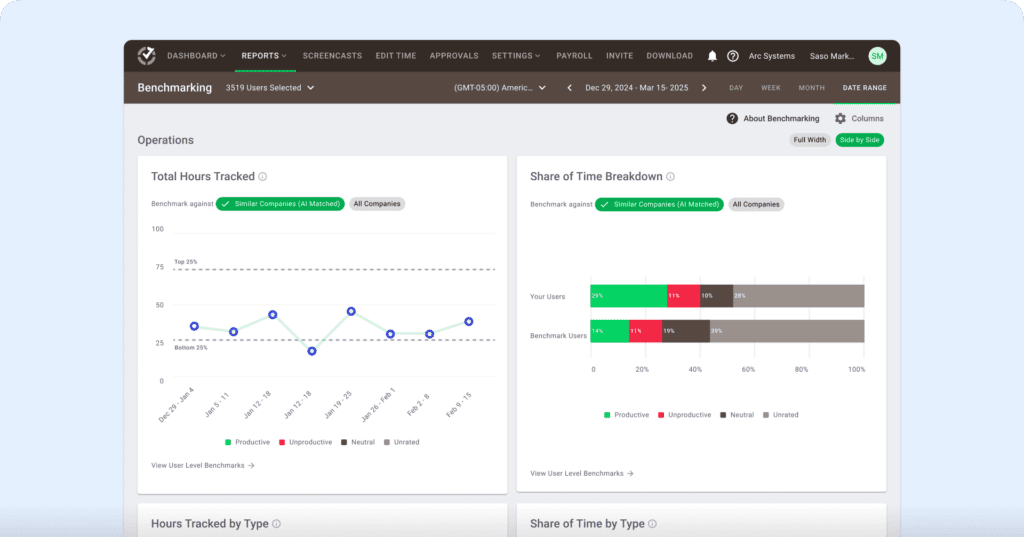
5. Reduce friction through connected systems
Integrations with payroll, attendance, and other operational tools connect performance data to real business processes. This reduces manual work for human resources, Ops, and IT while supporting accurate reporting and fair outcomes.
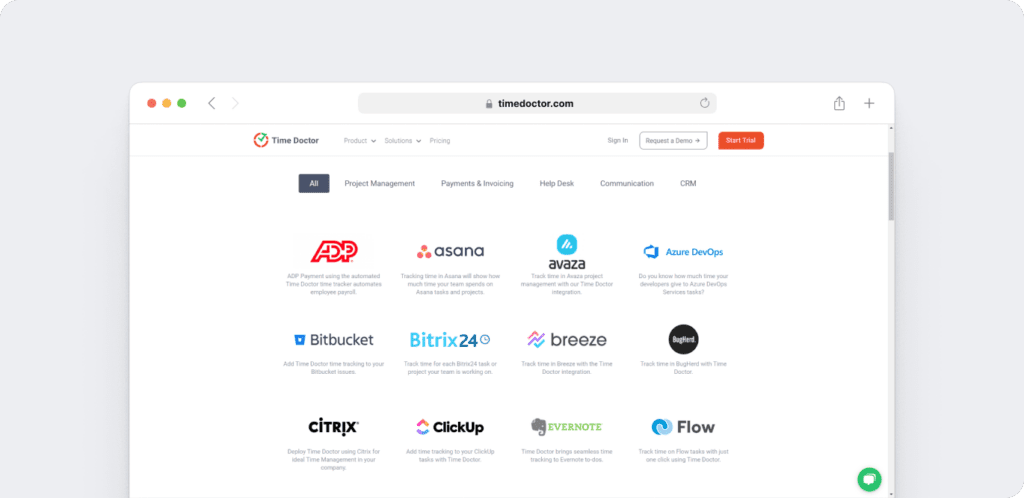
6. Scale performance management with confidence
Time Doctor works across technology companies, agencies, and highly regulated industries, with flexible pricing and low IT overhead. This makes it easier to roll out performance analytics that teams adopt quickly and trust over time.
Time Doctor brings these capabilities together as a workforce analytics platform that supports empowered leadership. By replacing guesswork with actionable visibility, you improve employee performance, strengthen accountability, and build trust across your entire organization.
Final thoughts
Employee performance doesn’t improve with increased oversight, nor does organizational performance. It improves when you have clear, trustworthy insight into how work actually gets done and how effort connects to your business outcomes.
So, are your performance conversations grounded in real-time work data and meaningful performance metrics, or in assumptions and after-the-fact reviews?
When performance is visible, employee engagement improves. Feedback becomes timely, development opportunities become clearer, and trust stays intact. Your teams understand what’s expected, your managers coach with confidence, and progress becomes easier to sustain across today’s distributed work environments.
Get a demo to see how Time Doctor helps you improve employee performance with clarity, consistency, and trust, without micromanaging.
Frequently asked questions (FAQs)
Effective goal setting is clear, outcome-focused, and grounded in real work. It defines what success looks like, why it matters, and how individual efforts support company goals.
When goal setting reflects actual workload, time use, and priorities, goals stay realistic and measurable. Workforce analytics helps ensure goal setting is based on how work actually happens, not assumptions.
Performance assessment usually combines several achievable approaches, including:
• Goal progress: Performance reviews assess how well work aligns with goals and company priorities.
• Delivery and quality: Output, accuracy, and consistency show whether work meets expectations.
• Focus and time use: Patterns in how time and effort are applied help explain results.
• Collaboration: Peer input and teamwork reveal how individual work supports shared outcomes.
• Development conversations: Ongoing feedback connects performance reviews to growth and improvement.
Together, these signals make performance reviews feel fair, consistent, and grounded in real work rather than a single score.
The 5 C’s typically refer to:
• Clarity
• Consistency
• Context
• Coaching
• and Continuity
Together, they ensure performance management system is ongoing rather than reactive.
Data-supported visibility strengthens each of these by clarifying expectations for each individual employee, providing real context for feedback, and supporting continuous improvement instead of one-of
A performance appraisal is a structured review of results, behaviors, and development over time. Modern appraisals work best when they rely on ongoing performance signals tied to real work, helping high-performing employees grow while keeping feedback aligned with organizational goals.
The best tools focus on visibility, not surveillance. They help you understand how time, focus, and tools translate into outcomes across remote, hybrid, and in-office teams.
Workforce analytics platforms like Time Doctor support this by turning day-to-day activity into actionable insights that managers can use for coaching, planning, and performance improvement without micromanaging.
The most effective strategies focus on clarity, balanced workloads, timely feedback, and removing friction from daily work. These approaches support career development, help top performers stay engaged, and contribute directly to organizational success.
Performance improves faster when leaders can spot issues early, adjust priorities, and guide professional development with objective data, strengthening overall performance instead of waiting for problems to surface after results slip.
Yes, performance management today focuses on alignment, trust, and continuous improvement while supporting employee well-being and strengthening overall work performance.
With Time Doctor, performance management becomes a shared system of visibility that helps team members stay focused, managers coach with confidence, and leaders scale without added oversight.


Carlo Borja is the Content Marketing Manager of Time Doctor, a workforce analytics software for distributed teams. He is a remote work advocate, a father and an avid coffee drinker.