
Quick overview
Real-time operational visibility means seeing how work performs as it happens, not after reports arrive. When workforce analytics connects time, workflows, and productivity data into one live system, decision-making becomes faster and bottlenecks surface earlier.
How many bottlenecks are shaping your decisions before you even realize they exist?
You track utilization, cycle time, and delivery targets with discipline, yet workflows begin to slow without a clear explanation.
Dashboards update and performance metrics circulate, but operational visibility still feels incomplete because real-time data remains scattered across disconnected systems.
As a result, when accurate information arrives late, decision-making turns reactive and confidence starts to erode.
Reports describe what already happened instead of what is unfolding now. This delay slows corrective action and allows inefficiencies to settle into everyday workflows.
By the time performance metrics reveal the slowdown, operational efficiency has already absorbed the impact.
If real-time insights surface only after disruption begins, how confident can you truly be in your decision-making?
Without this level of visibility, bottlenecks shape outcomes quietly and consistently, long before they surface in formal reports.
Table of Contents
- What real-time visibility actually means
- When should you invest in real-time operational visibility?
- 5 reasons real-time visibility drives operational efficiency
- How real-time operational visibility improves decision-making
- How do modern operations teams apply it in practice?
- How workforce analytics powers live operational visibility
- Why choose Time Doctor for live operational insight
- Final thoughts
- Frequently asked questions (FAQs)
What real-time visibility actually means
Real-time visibility is the ability to see how workflows, systems, and performance metrics operate as work happens. It is usually enabled through a centralized visibility platform.
Think of it like having a live heartbeat monitor for your business. Instead of waiting for a diagnosis after something fails, you see performance signals in real time and can act the moment something starts to drift.
In other words, it provides continuous access to accurate, real-time data so leaders make informed decisions based on current activity instead of delayed reports.
In operations, this typically includes:
- Live dashboards showing performance metrics
- Real-time tracking of workflows and resource use
- Visibility into bottlenecks as they form
- Integrated data that reduces silos across systems
Unlike static ERP exports, this approach reflects performance in motion. It delivers a connected, 360-degree view of operations so metrics, workflows, execution, and critical supply chain processes stay visible as they evolve.
So, what happens when real-time insight is missing?
As visibility weakens, decisions rely on partial information and risk management becomes reactive.
The impact of delayed visibility is not theoretical. According to McKinsey & Company, “real-time operational visibility is a critical, digitally enabled capability that allows organizations to monitor supply chains, manufacturing, and logistics as events occur, moving from lagging indicators to proactive, data-driven decision-making.”
McKinsey also notes that “operational shocks can cost up to 45% of one year’s EBITDA over a decade, while digitally enabled visibility can unlock 15% to 20% efficiency gains in operations.”
Small workflow gaps turn into bottlenecks. These raise operational risk and trigger supply chain disruptions, weakening overall supply chain management.
Research shows that reacting late carries a measurable cost. According to MetaPress, “Maintenance costs drop 20–30% when you fix things based on actual condition rather than calendar dates.” It means delayed visibility often means paying more to fix preventable issues.
Over time, Forecasting becomes unreliable, inefficiencies compound, and performance slips without a clear cause.
Meanwhile, competitors acting on real-time insights adjust faster. They gain a measurable competitive edge and strengthen their long-term competitive advantage.
When visibility lags behind execution, decisions carry more risk than certainty.
So, what changes when real-time visibility drives operational efficiency instead?
When should you invest in real-time operational visibility?
Real-time operational visibility becomes essential when operational complexity starts outpacing reporting speed.
You should consider investing when:
- Bottlenecks appear repeatedly but root causes remain unclear
- Forecasts miss targets because data reflects past activity instead of current conditions
- Teams rely on manual reports or disconnected dashboards
- Supply chain disruptions impact delivery timelines and supply chain management performance
- Leaders hesitate to act because data arrives too late to support informed decisions
If execution moves faster than your visibility, risk compounds quietly.
5 reasons real-time visibility drives operational efficiency
This level of visibility changes how execution and coordination happen throughout the day. When data reflects work as it unfolds, efficiency becomes measurable and easier to improve.
Here are five (5) ways real-time visibility strengthens operational efficiency.
1. Continuous optimization
Instead of waiting for periodic reviews, real-time data exposes workflow friction as it happens. Teams can adjust tasks, timelines, and resources quickly, turning optimization into an ongoing effort that strengthens operational efficiency over time.
2. Improve alignment across teams
Disconnected systems create blind spots between teams. When data is integrated, workflows become clearer and easier to manage. This reduces delays, improves consistency, and strengthens the overall customer experience.
3. Identify potential issues early
Real-time tracking and automated notifications flag anomalies before they turn into disruptions. Small changes in performance metrics reveal emerging bottlenecks early, allowing teams to act fast, prevent inefficiencies from compounding, and protect overall product quality.
4. Strengthens automation and process discipline
Automation only works when data is accurate and connected. However, if visibility is fragmented, results become unreliable. When real-time data feeds are integrated into systems, reporting stays streamlined and performance monitoring remains consistent without manual effort.
5. Improves forecasting and confidence in decision-making
Forecasting relies on current operational conditions. Real-time insights provide accurate data that supports stronger projections, better capacity planning, and more confident resource allocation. As a result, decision-making becomes data-driven rather than assumption-based.

How real-time operational visibility improves decision-making
Real-time operational visibility strengthens decision-making at both tactical and strategic levels. Teams adjust operations with greater precision and confidence when performance metrics reflect live conditions.
| Decision Layer | How Real-Time Operational Visibility Strengthens It |
| Tactical | Real-time tracking reveals bottlenecks early. Teams can act faster and allocate resources more flexibly, including team capacity and raw material constraints.Live dashboards improve workload visibility and reduce delays caused by fragmented data. |
| Strategic | Standardized metrics align teams and stakeholders around clear performance goals. Predictive analytics and machine learning identify trends early, improving forecasting and long-term results.This strengthens operational efficiency and supports higher customer satisfaction. |
When both layers operate on integrated, real-time insights, decision-making becomes structured, data-driven, and aligned with operational efficiency goals.
How do modern operations teams apply it in practice?
Modern operations teams build real-time operational visibility on top of workforce analytics. Instead of using scattered tools and manual reports, they rely on connected systems that keep dashboards, workflows, and performance metrics aligned in real time.
Here’s how it works.
Centralize visibility
You move away from spreadsheets and static reports and shift to cloud-based dashboards powered by workforce analytics. Real-time data feeds into one connected operational ecosystem, making workflows, resource use, and operational efficiency easier to see.
Integrate core systems
Workforce analytics connects ERP systems, workflow tools, and reporting platforms so performance metrics update automatically. Data integration reduces silos and ensures stakeholders work from the same real-time information.
Automate tracking and reporting
Manual reporting slows operations. Automation keeps dashboards and performance summaries updated using live data. Real-time tracking replaces delayed exports and improves consistency across teams.
Detect issues early
Workforce analytics flags performance deviations as they happen. Early alerts reveal workload imbalances or resource shortages, allowing teams to reroute tasks and capacity in real time. This keeps risk management proactive instead of reactive.
Align performance across teams
Real-time data keeps teams aligned with consistent benchmarks. It shows supply chain performance, inventory levels, delivery ETAs, and coordination with shippers in one connected view. This leads to clearer, faster decisions based on accurate information.
Modern operations environments treat real-time operational visibility as an integrated capability. Dashboards, ERP connectivity, automation, and continuous monitoring work together to support operational efficiency.
But what enables that level of connected, real-time visibility without adding complexity?

How workforce analytics powers live operational visibility
Real-time operational visibility works when workforce analytics connects workflows, performance metrics, and activity data. Everything operates in one unified system. It turns time, tasks, and tool usage into clear performance insight.
A modern workforce analytics platform strengthens operational visibility by delivering:
- Real-time operational efficiency dashboards that show how work is happening as it unfolds
- Standardized performance metrics that enable consistent benchmarking across teams
- Actionable insights that surface bottlenecks, workload imbalances, and emerging inefficiencies early
- AI-enhanced analysis that highlights trends and potential issues before disruption escalates
- Integrated data and automation that eliminate silos and reduce manual reporting friction
- Connected systems and integrations that support visibility across remote, hybrid, and in-the-office environments
With structured, real-time visibility, leaders base decisions on transparent data instead of assumptions.
As a result, Operational efficiency becomes measurable, and teams move from reacting to problems to acting early.
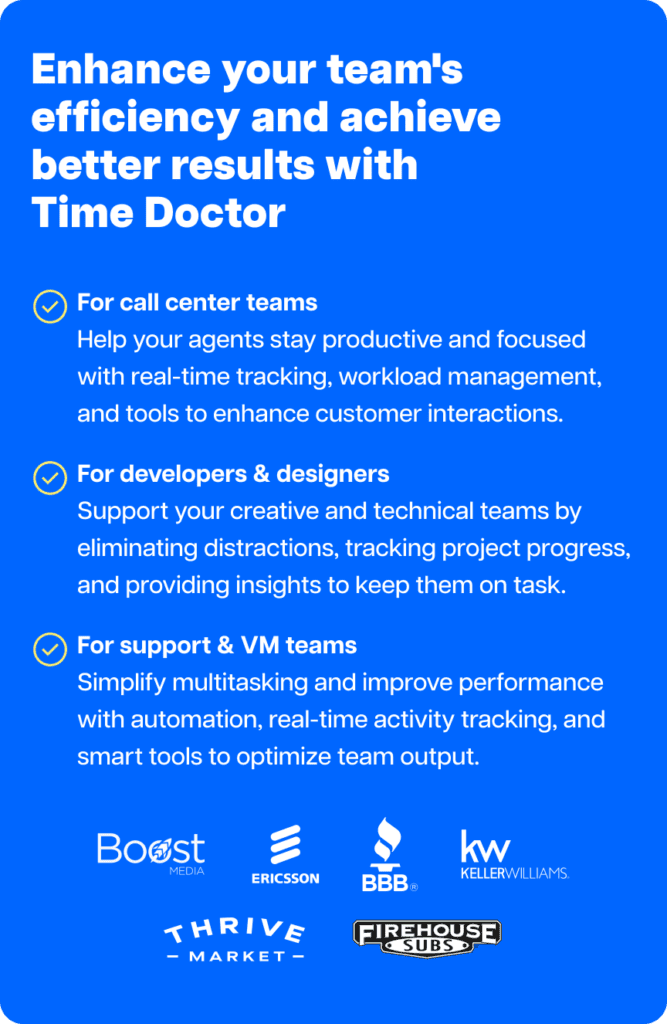
Strong workforce analytics make that level of visibility possible. This is where Time Doctor plays a critical role.
Why choose Time Doctor for live operational insight
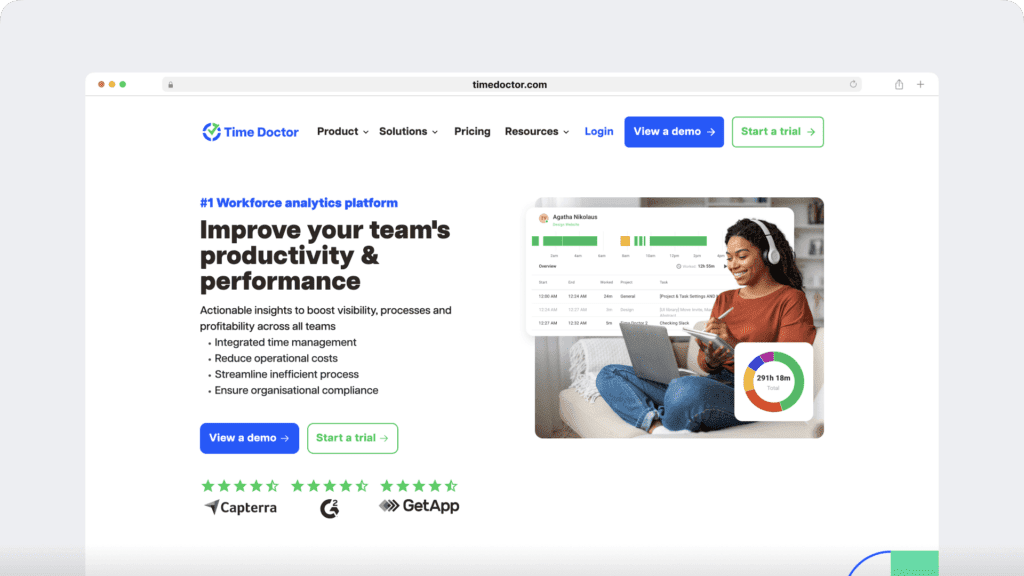
Time Doctor is a workforce analytics platform that provides clear, real-time insight into how work actually happens, helping organizations improve operational efficiency and support continuous improvement.
It delivers this visibility through structured workforce analytics that connects activity, workflows, and performance into one live system:
- AI-enhanced workforce analytics transform raw activity into real-time operational insight, so visibility reflects how work is actually happening.
- Real-time dashboards centralize workflow performance data, making bottlenecks and capacity imbalances visible as they form.
- Standardized productivity metrics create consistent benchmarking across teams, which strengthens visibility into operational efficiency at scale.
- Benchmarks AI and Productivity Analytics surface trends and early risk signals, helping leadership detect performance shifts before disruption spreads.
- Meeting Insights and Software Cost Insights expose hidden time loss and tool inefficiencies, expanding operational visibility beyond task tracking into collaboration and SaaS investment.
- Employee Time Tracking and Attendance data clarify workload distribution and resource allocation, strengthening visibility into capacity and utilization.
- Unusual Activity Reports and secure digital records add structured accountability, supporting risk management and compliance without relying on assumptions.
- Cloud-based deployment and Integrations connect ERP systems and operational tools, reducing silos so real-time data flows across remote, hybrid, and in-office environments.
- Transparent Pricing aligned to Healthcare, Banking and Finance, Insurance, BPOs, Technology Companies, and Agencies supports scalable adoption without hidden complexity, enabling visibility to grow with the organization.
When these capabilities operate together, real-time operational visibility extends beyond reporting. It becomes a continuous, organization-wide view of execution that supports faster decision-making, stronger accountability, and measurable operational efficiency.

Final thoughts
Your organization already generates operational data every day. However, the difference is whether it simply reports the past or helps you act in the present.
When visibility is clear, leaders don’t guess. They streamline decisions, prevent slowdowns, and protect performance before it slips.
If you’re ready to see your operations as they actually happen, not after the damage is done, it’s time to take a closer look.
View a demo and see what real visibility changes.
Frequently asked questions (FAQs)
ERP systems typically provide structured records and historical exports. However, real-time operational visibility requires continuous insight into how workflows, time allocation, and productivity metrics evolve throughout the day.
Time Doctor complements ERP systems by delivering live workforce analytics, real-time dashboards, and AI-enhanced insights that reflect execution as it happens. Instead of relying solely on static reports, leaders gain ongoing visibility into operational efficiency across remote, hybrid, and in-office teams.
Operational data may exist across tools, but without workforce analytics, that data often remains fragmented. Workforce analytics connects time tracking, productivity analytics, workflow performance, and software usage into one structured system.
Time Doctor unifies these data streams, transforming raw activity into actionable insights that support faster decision-making and measurable continuous improvement.
Operational risk often emerges from delayed information, siloed systems, and overlooked workflow inefficiencies. Real-time operational visibility reduces that exposure by surfacing bottlenecks, workload imbalance, and unusual activity early.
Time Doctor strengthens risk management through real-time dashboards, Unusual Activity Reports, attendance data, and secure digital records that support accountability and compliance.
Yes. In distributed environments, visibility gaps widen when teams rely on disconnected systems or manual reporting.
Time Doctor provides cloud-based workforce analytics built for remote, hybrid, and in-the-office environments. Real-time productivity analytics and performance dashboards support transparent decision-making and help organizations maintain visibility into work patterns without relying on excessive oversight.
Continuous improvement depends on consistent benchmarking and accurate performance metrics. Real-time operational visibility makes those metrics measurable.
Time Doctor standardizes productivity analytics, connects workflows, and uses AI-enhanced analysis to surface trends and emerging inefficiencies. As a result, operational efficiency becomes scalable and data-driven rather than assumption-based.
Process-driven industries such as Healthcare providers, Banking and Finance institutions, Insurance firms, BPOs, Technology Companies, Agencies, and high-growth e-commerce operations benefit significantly from structured workforce analytics.
Time Doctor supports these industries with transparent pricing, secure integrations, and real-time visibility that aligns operational execution with compliance, performance, and cost efficiency goals.
Workforce analytics analyzes how time, tasks, tools, and workflows perform across teams. It turns real-time activity into measurable performance insight.
Real-time operational visibility depends on workforce analytics because it connects productivity analytics, employee time tracking, and workflow data into one live system. Time Doctor delivers that connected analysis, helping organizations identify bottlenecks early and make faster, data-driven decisions.
In some industries, IoT devices generate real-time operational data alongside workforce activity. When integrated into a connected analytics system, IoT signals can enhance visibility into asset performance, workflow timing, and operational efficiency. Workforce analytics platforms help unify human activity data and machine-generated data into one structured view.
Real-time supply chain visibility focuses on tracking goods, shipments, and logistics flows. Real-time operational visibility, powered by workforce analytics, provides broader insight into workflows, performance metrics, and execution across teams. In complex organizations, both work together to improve forecasting, efficiency, and decision-making.


Carlo Borja is the Content Marketing Manager of Time Doctor, a workforce analytics software for distributed teams. He is a remote work advocate, a father and an avid coffee drinker.