Quick overview
Accountability in the workplace strengthens your team by creating clarity, improving follow-through, and making work more predictable. When expectations and visibility are clear, teams communicate better, operate with more trust, and deliver consistent results.
Key points
- Clear responsibilities reduce confusion, reactive work, and miscommunication.
- Strong accountability improves teamwork, trust, and overall performance.
- Visibility into how work actually happens reduces bottlenecks and missed priorities.
- Real-time metrics help leaders catch risks early and support people fairly without micromanaging.
- Time Doctor reinforces accountability through visibility, actionable insights, and a trust-first approach to performance.
How often do you feel like you are fixing the same problems because people are not following through?
When accountability slips, your work environment becomes chaotic. Team members miss deadlines, priorities get mixed up, and small issues quickly turn into larger bottlenecks. You spend more time chasing updates than improving operations, and team meetings feel more like fire drills than progress checkpoints.
Without workplace accountability, you lose sight of how work actually gets done.
Miscommunication increases, employee engagement drops, and your team never reaches its full potential. Trust weakens, teamwork suffers, and job satisfaction declines, which ultimately affects the organization’s success.
This is why the importance of accountability is so high for any operations leader. Before you rebuild a stronger culture, you need clarity on what accountability looks like in a healthy workplace and why high-performing teams rely on clear expectations, personal responsibility, and steady, constructive feedback.
Table of Contents
- What does workplace accountability really mean for your team?
- The benefits of accountability in the workplace
- The cost of a lack of accountability in work environments
- How do you build accountability in the workplace without creating fear or micromanagement?
- How do data, metrics, and visibility strengthen accountability across teams?
- Time Doctor: the workforce analytics that gives you the visibility to drive accountability
- How visibility turns everyday work into real accountability
- Final thoughts
- Frequently asked questions(FAQs)
What does workplace accountability really mean for your team?
Workplace accountability begins with clear responsibilities, so team members understand what they own and how their work supports team goals.
Once this clarity is set, accountability becomes visible in simple habits like meeting deadlines, communicating early, and maintaining reliable follow-through. These behaviors strengthen teamwork, reduce friction, and create a healthier, more predictable work environment.
Accountability also grows when it is supported top down. Leaders model personal responsibility, encourage open communication, and offer constructive feedback that helps people improve.
When these practices stay consistent across the organization, team members feel more confident taking ownership of their work and contributing to the organization’s success.
The benefits of accountability in the workplace
A strong culture of accountability helps your organization run with more clarity and confidence.
When expectations are clear, and team members take ownership of their work, you build a workplace culture that supports consistency, trust, and long-term organizational success.
Accountability strengthens teamwork, improves your work environment, and helps people stay aligned with company goals. These improvements show up in several meaningful ways:
- It builds trust and reinforces a company culture where team members understand how their work contributes to the company’s success.
- It raises employee engagement and job satisfaction because people feel confident about their responsibilities and supported by leadership.
- It improves teamwork and open communication, making it easier for employees to coordinate work, prevent slowdowns, and reduce friction.
- It increases employee performance because clear expectations help people meet deadlines and take steady ownership of their work.
- It encourages regular feedback, safe space for constructive feedback, and healthier team meetings that keep everyone aligned.
- It strengthens decision-making and problem-solving, helping teams brainstorm solutions and operate closer to their full potential.
These benefits help you build high-performing teams and a strong foundation for accountability across your entire organization.

The cost of a lack of accountability in work environments
A lack of accountability slows down your entire operation. When people are unclear about priorities or hesitate to take ownership of their work, small issues quickly turn into bottlenecks that hurt team functionality.
You end up spending more time chasing updates and correcting mistakes than focusing on the strategic work that drives the organization’s success, and the work environment becomes reactive instead of stable.
- Miscommunication increases, which makes teamwork harder and adds friction across workflows.
- Meeting deadlines becomes unreliable because follow through varies from person to person.
- Employee engagement drops when team members feel overwhelmed or unsupported.
- Team goals lose momentum because people interpret expectations differently and struggle to prioritize.
- Performance management feels inconsistent, which affects employee performance and job satisfaction.
- Decision-making slows down as leaders lack visibility into workloads, blockers, and real progress.
- Problem-solving becomes reactive instead of proactive, which limits your team’s full potential.
- Distractions also rise, including unnecessary time spent on social media or other non-work activities, which become harder to spot without real visibility.
These issues don’t stay contained. They spread across teams, weaken workplace culture, and make it harder for the organization to operate as a high-performing unit.
How do you build accountability in the workplace without creating fear or micromanagement?
You build accountability without fear or micromanagement by giving people clarity and support. When team members understand their responsibilities and feel guided instead of pressured, they follow through because they know what is expected, see their progress, and feel safe raising issues early.
This approach to fostering accountability strengthens trust, improves teamwork, and creates a work environment where communication stays open, and the organization’s success becomes easier to sustain.
1. Set clear expectations and align team goals
Team members stay accountable when they know what success looks like. Clear expectations and strong goal setting help people prioritize work, understand how their role supports company goals, and stay confident in their responsibilities. This clarity reduces confusion and makes performance management feel fair and consistent.
2. Use regular check-ins to create a safe space for honest updates
Frequent check-ins give people the structure they need to stay aligned without feeling micromanaged. These conversations create a safe space for open communication, regular feedback, and constructive criticism. Direct reports can speak up early about blockers, and leaders can support them before issues escalate.
3. Encourage ownership and reliable follow-through
Accountability becomes stronger when team members take personal responsibility for their work. When people feel trusted, they focus more and stay committed to team goals. This mindset strengthens teamwork and reduces the friction that slows down progress.
4. Model leadership accountability through supportive coaching
Leaders shape workplace culture through how they communicate, plan, and respond to challenges. When you take responsibility for your decisions, offer constructive feedback, and coach with clarity, you set the tone for stronger leadership development across your team. This kind of leadership accountability builds trust and reinforces the culture of accountability you want to grow.
As Gallup writes, “A company’s accountability problem may actually be a coaching problem in disguise.”
5. Promote problem-solving and continuous improvement
Teams operate more effectively when they feel safe to brainstorm solutions, share ideas, and flag risks early. Encouraging proactive problem-solving helps people use their full potential and keeps workflows moving. This strengthens organizational culture and helps teams perform at a higher level.
Building accountability this way helps your team deliver consistent results while staying engaged, supported, and aligned to what matters most.
How do data, metrics, and visibility strengthen accountability across teams?
Culture alone cannot carry accountability. You also need visibility into how work actually happens each day so you can guide your team with clarity instead of pressure.
Modern workforce analytics give you a real-time view of workloads, performance patterns, and workflow handoffs, which helps you understand what accountability looks like in practice.
With this level of insight, you make stronger decisions, support people more fairly, and create a work environment where high-performing teams stay aligned without feeling micromanaged.
Here are three ways data and visibility strengthen accountability across your teams:
1. Clear metrics reduce ambiguity and improve decision-making
Clear metrics reduce ambiguity and improve decision-making by giving you a factual view of progress, capacity, and workload trends.
When you can see accurate performance metrics, it becomes easier to set clear expectations, create fair performance management processes, and spot risks before they slow down team goals.
This data-driven clarity supports stronger accountability because team members understand exactly how their work contributes to the organization’s success.
2. Visibility into workflows strengthens follow-through and employee performance
Visibility into workflows strengthens follow-through and employee performance because you can see how time, tasks, and tools are used throughout the day. Insight into real activity patterns helps you identify where ownership of their work may be slipping, where follow-through needs support, and where bottlenecks affect delivery.
This level of visibility encourages more consistent execution, helps team members take accountability for their responsibilities, and keeps workflows running smoothly.
3. Transparency builds trust across hybrid and distributed teams
Transparency builds trust across hybrid and distributed teams by keeping expectations steady and communication open, regardless of where people work.
When leaders and team members share a clear view of workloads, progress, and priorities, conversations become more productive and honest.
This transparency creates a healthier workplace culture, reduces misunderstandings, and reinforces accountability in a way that feels supportive rather than intrusive.
Time Doctor: the workforce analytics that gives you the visibility to drive accountability
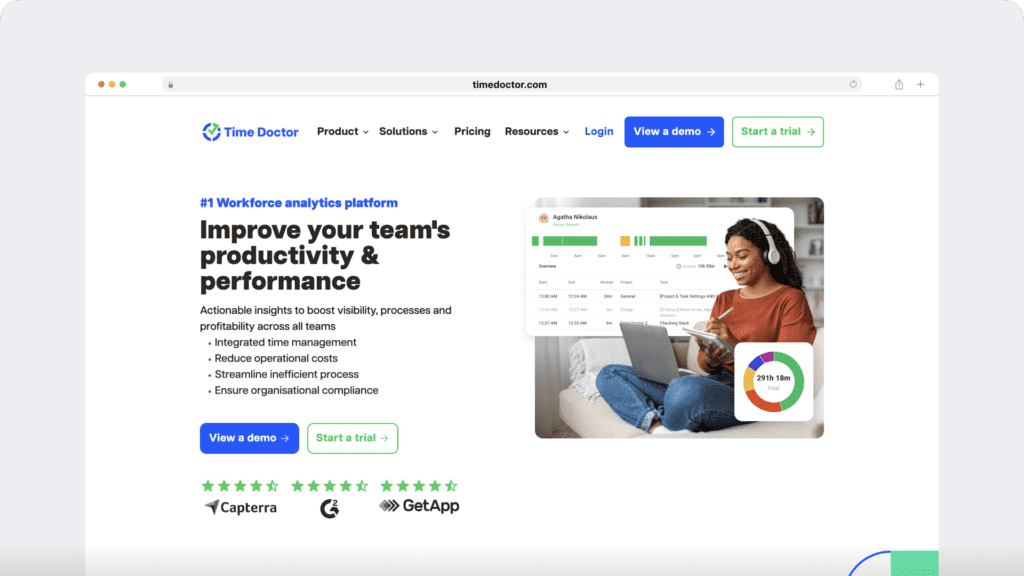
Workplace accountability becomes much stronger when you have a clear, real-time view of how work actually happens across your team. Time Doctor is the workforce analytics platform that gives operations leaders the visibility to lead with trust, not control.
By turning real activity data into AI-enhanced, actionable insights, you understand workloads, focus patterns, and performance trends with clarity. This helps you support people fairly, strengthen performance management, and create a work environment where accountability feels consistent, transparent, and grounded in shared expectations.
Here are the ways Time Doctor strengthens accountability across your entire organization:
1. Empowered leadership through data-driven coaching
Time Doctor equips you with accurate metrics that show where your direct reports need support, how work shifts throughout the day, and where strong follow-through is happening.
This visibility strengthens leadership accountability because you can offer regular feedback, constructive feedback, and more meaningful coaching grounded in facts rather than assumptions.
With features like Employee Time Tracking and Productivity Analytics, you guide your team with clarity and fairness while reinforcing a culture built on trust.
2. Actionable visibility that improves teamwork and removes bottlenecks
Time Doctor transforms daily activity into practical intelligence, helping you see workflow delays, workload imbalances, and gaps in follow-through.
Features such as Screen Monitoring, Benchmarks AI, and meeting insight show how work moves across tasks and tools so you can identify bottlenecks early and improve collaboration.
This type of real-time visibility keeps high-performing teams aligned and accountable without creating pressure or micromanagement.
3. A seamless and supportive work environment that builds trust
Time Doctor is designed to be easy to adopt, which helps you maintain accountability without adding friction. This seamless partnership helps people understand expectations, communicate more openly, and operate with confidence.
It reinforces a healthier workplace culture where accountability grows naturally because everyone has clear visibility into how work gets done.
Time Doctor helps you plan smarter, strengthen accountability, and lead your team with confidence, no matter how complex your workflows are.
How visibility turns everyday work into real accountability
When you gain visibility into how work actually gets done across your team, accountability becomes easier to spot and support. You start to see clear patterns in how people communicate, follow through, and make decisions, which gives you real examples of accountability you can build on.
For instance, during check-ins, you can rely on metrics instead of assumptions, which helps your team improve decision-making and stay aligned on priorities.
You also notice stronger employee accountability when team members understand how their choices affect shared outcomes. Visibility helps people take greater ownership of their work because they can see progress, patterns, and areas where constructive feedback will make a difference.
At the same time, visibility supports leadership accountability by helping you step in early, guide more effectively, and reinforce workplace accountability without micromanaging.
These insights show you what accountability looks like in daily workflows, how follow-through improves when expectations are clear, and how teams perform better when everyone understands the impact of their decisions.
Final thoughts
When accountability is supported by clarity, visibility, and open communication, it becomes a natural part of your workplace culture. You create an environment that builds trust, strengthens teamwork, and helps people understand how their work contributes to your organization’s success.
As an operations leader, the more visibility you have into how work actually happens each day, the easier it becomes to guide your team with fairness and transparency rather than pressure or assumptions.
Workforce analytics give you the insight to see where follow-through is strong, where communication needs support, and where teamwork can improve. With this level of clarity, people take ownership with confidence and contribute more consistently to a healthier, high-performing workplace culture.
So here’s the realization to sit with: what would your team’s accountability look like if every decision, conversation, and coaching moment were grounded in real visibility?
Get a Demo to strengthen accountability with data-driven visibility
Frequently asked questions(FAQs)
Accountability today is less about policing behavior and more about creating clarity, transparency, and ownership. You see accountability when team members understand priorities, communicate early, and follow through without being pushed. Leaders support this by setting clear expectations, using shared metrics, and maintaining open communication so people understand how their work contributes to the organization’s success.
Time Doctor’s workforce analytics bring this clarity to life by showing how work actually happens, making accountability fair, consistent, and grounded in facts rather than assumptions.
Leaders promote healthy accountability by replacing pressure with visibility. Instead of checking in constantly, they provide clear expectations, share relevant metrics, and use regular coaching conversations to guide progress.
Time Doctor strengthens this approach by offering high-level insights and not intrusive monitoring. So leaders can support their teams based on patterns, workload signals, and performance trends. This helps accountability feel like collaboration rather than control.
Consistency comes from objective information. Managers need a reliable view of workloads, timelines, and actual work activity so accountability conversations stay fair and focused on improvement instead of opinion.
Time Doctor provides this through tools such as Employee Time Tracking, app and web usage insights, and role-based dashboards. These signals help managers identify gaps, recognize strong follow-through, and coach based on real performance patterns.
Metrics give structure to accountability. When teams can see progress, capacity, and performance patterns in real time, expectations become clearer, and decisions become easier. Metrics highlight where work is progressing smoothly and where support or adjustments are needed.
Time Doctor’s Productivity Analytics and Benchmarks AI automatically provide these insights, helping leaders spot risks early, improve performance conversations, and keep everyone aligned on shared goals.
Distributed teams need consistent visibility to stay aligned. Accountability becomes more challenging when people work across different locations, time zones, or schedules, because leaders cannot rely on in-person cues.
Time Doctor solves this by providing a single source of truth for everyone, whether remote, hybrid, or in the office. Attendance visibility, workday activity timelines, and app usage insights help leaders maintain fairness, improve communication, and support follow-through across any work environment.
Leaders demonstrate accountability by modeling the behavior they expect from others. This includes communicating clearly, following through on commitments, sharing the context behind decisions, and using data to guide teams rather than relying on gut feel.
With Time Doctor, leaders gain the visibility needed to coach more effectively, offer constructive feedback with confidence, and hold themselves to the same standards of transparency they ask of their teams.
Teams collaborate more effectively when they have shared visibility into priorities, workflows, and performance expectations. Accountability encourages people to communicate early, coordinate more efficiently, and reduce the friction that slows down progress.
Time Doctor helps teams work better together by showing how tasks move across workflows, where bottlenecks form, and where follow-through needs support. These insights make it easier to stay aligned and operate as a truly high-performing team.


Liam Martin is a serial entrepreneur, co-founder of Time Doctor, Staff.com, and the Running Remote Conference, and author of the Wall Street Journal bestseller, “Running Remote.” He advocates for remote work and helps businesses optimize their remote teams.