Quick overview
Employees rarely leave without warning. Retention improves when leaders understand what keeps people supported, engaged, and growing before burnout or disengagement sets in.
The 10 employee retention factors leaders need to act on are:
- Competitive compensation that reflects role value and market expectations
- Comprehensive benefits that support real employee needs and well-being
- Flexible working conditions that work across remote, hybrid, and in-office teams
- Career development opportunities that show a clear future inside the organisation
- Positive workplace culture built on trust, fairness, and respect
- Recognition and rewards that make effort feel seen and valued
- Supportive management that prioritises coaching and clarity
- Employee engagement through involvement and meaningful feedback
- Work-life balance that keeps work sustainable over time
- Thoughtful extra perks that enhance, not replace, a healthy work environment
In this article, you’ll learn why retention is harder today, what happens when key factors go unseen, how modern teams apply them day to day, and how Time Doctor helps leaders act early with confidence.
Why do employees leave when everything seems fine—until they suddenly resign?
Retaining employees today goes beyond pay or perks. People disengage when work feels unsustainable, unclear, or unsupported, often long before leaders see obvious warning signs.
You’re expected to protect productivity, prevent burnout, and keep teams stable, even as work becomes more distributed and harder to see. But when retention breaks down, the impact shows up fast through lost productivity, disrupted teams, and constant rehiring, while the real causes quietly build in the background.
Before you can address those hidden causes, it helps to step back and clarify what employee retention really means in practice.
What is employee retention?
Employee retention refers to your organisation’s ability to keep employees engaged, committed, and productive over time by supporting a positive employee experience, sustaining employee satisfaction, and reducing voluntary turnover to maintain team stability.
But why is employee retention harder to manage today?
Work is no longer confined to a single place, schedule, or way of operating. Since the pandemic, teams have spread across remote, hybrid work, and in-office environments, making it harder to see day-to-day effort and engagement clearly.
At the same time, employee needs continue to shift. Workloads change more frequently, expectations evolve faster, and maintaining a consistent organizational culture across teams requires more intention.
When these shifts go unnoticed, burnout and disengagement can develop even while performance still looks steady.
Without clear visibility and reliable metrics showing how work actually happens, planning decisions and retention initiatives rely more on assumptions than evidence. Lost productivity and declining retention rates then appear unexpectedly, which is why managing retention often feels reactive instead of manageable.
In fact, as per Gallup’s research, “it shows that 68% of employee departures are driven by breakdowns in engagement, organisational culture, and work-life balance, not just compensation alone.”
What happens when employee retention factors go unseen?
Problems rarely show up all at once. They build quietly in day-to-day work and surface suddenly, often when there is little time to respond.
1. Resignations feel sudden, but the damage has been building
Departures often come as a shock, even though the warning signs were present long before. Frustration, misalignment, and unmet employee needs can grow over weeks or months, leading to resignations that feel abrupt but were already in motion.
2. Burnout spreads among top talent
Your most dependable employees and top talent are often the first to take on extra work. Without visibility into workload and effort, burnout develops while performance still appears strong, making the risk easy to miss.
3. Managers are forced to react instead of mentor
When early signals are missed, feedback arrives too late. Managers spend more time fixing problems than acting as mentors, which weakens trust, consistency, and long-term development.
4. Retention initiatives turn reactive
Human resource management, Operations, and IT teams scramble to replace people and rebalance workloads under pressure. Without reliable insight, decisions are rushed, and short-term fixes replace well-planned initiatives.
5. Costs rise and retention rates become unpredictable
Lost productivity and a rising turnover rate surface with little warning. Workforce planning becomes harder, costs increase, and team stability becomes difficult to maintain.
These outcomes don’t happen overnight, which is why recognising the employee retention factors that signal risk early is critical.

The 10 key employee retention factors leaders need to identify
1. Competitive compensation
Competitive compensation plays a central role in whether employees choose to stay. As roles evolve and job market conditions change, employees naturally compare their pay with industry and local standards. Those comparisons influence how they view their employee value and long-term place in the organisation.
When pay reflects both role demands and market expectations, employees feel recognised and treated fairly. When it doesn’t, even a positive work environment can struggle to offset that imbalance.
What to do
Regularly review compensation against industry and locality benchmarks, especially as responsibilities change. Be clear about how salaries, raises, and progression decisions are made. Transparency builds trust and helps employees see how their contribution connects to pay, making them more likely to stay engaged over time.
2. Comprehensive benefits
Benefits shape how supported employees feel beyond their salary. Health coverage, retirement plans, paid time off, and wellness programs all contribute to employee well-being and influence how people experience their work day to day.
When benefits reflect real employee needs across different demographics, they reinforce a sense of security and care. When they feel outdated, hard to access, or disconnected from daily realities, their impact on retention weakens, even if they look good on paper.
What to do
Regularly review whether benefits remain relevant, accessible, and supportive of employee well-being. Pay attention to how benefits are actually used and whether they align with changing needs. Clear communication about what’s available and how to use it helps employees feel supported and confident staying with the organisation.
3. Flexible working conditions
Flexible working conditions influence how well employees balance work with the rest of their lives. Options like remote work, flexible hours, and the ability to take time off when needed help employees manage responsibilities and stay productive without unnecessary stress.
When flexibility works in practice, employees feel trusted and supported. When it exists only on paper, workloads and expectations can quietly undermine it, leading to frustration and disengagement.
What to do
Make flexibility realistic by aligning workloads, deadlines, and expectations with flexible policies. Check that employees can actually use flexible options without negative consequences. When flexibility is applied consistently and fairly, it strengthens trust and encourages employees to stay committed over time.
4. Career development opportunities
Career development plays a major role in whether employees, including new hires, see a future with the organisation and that journey often begins during onboarding. People want to feel that they are growing, able to upskill, and moving forward rather than staying in the same role without progress.
When development opportunities are clear and accessible, employees feel invested in and are more likely to stay engaged. When growth feels limited or unclear, motivation can fade even if other aspects of the job are positive.
What to do
Create clear pathways for growth by offering training, learning opportunities, and clearly defined career paths within the organisation. Regular conversations about goals and development help employees understand how they can grow over time. When people see a future for themselves, they are far more likely to stay.
5. Positive workplace culture
Workplace culture shapes how employees feel about showing up each day. A culture built on fairness, respect, and open communication helps people feel safe, included, and connected to their work and colleagues.
When culture feels supportive, employees are more likely to collaborate, speak up, and stay committed. When it feels tense or inconsistent, even strong compensation or benefits may not be enough to keep people engaged.
What to do
Reinforce culture through consistent behaviour, not just values on paper. Encourage open communication, address issues early, and create opportunities for teams to connect meaningfully. When employees feel respected and supported, culture becomes a powerful reason to stay.
6. Recognition and rewards
Recognition and rewards influence how valued employees feel for the effort they put into their work. Acknowledging contributions, both big and small, reinforces that effort is seen and appreciated.
When recognition is consistent and fair, it boosts morale and strengthens engagement. When it’s missing or uneven, employees may feel overlooked, even if they continue to perform well.
What to do
Recognise contributions regularly and in ways that feel genuine. This can include formal rewards, performance-based incentives, or simple, timely appreciation in everyday conversations. Consistent recognition helps employees feel valued and encourages them to stay motivated and committed.
7. Supportive management
Supportive management has a direct impact on whether current or new employees, choose to stay. Managers shape day-to-day experiences through how they communicate, set expectations, and support their teams.
When managers act as guides and mentors, employees feel supported, confident, and clear about their role. When management feels distant or inconsistent, uncertainty and frustration can grow, even among high performers.
What to do
Equip managers to provide regular feedback, clear direction, and practical support through ongoing mentorship programs. Encourage open conversations and timely check-ins, not just formal reviews. When employees feel supported by their managers, trust strengthens and long-term commitment becomes more likely.
8. Employee engagement
Employee engagement reflects how connected people feel to their work and the organisation. Engaged employees are more focused, motivated, and willing to contribute beyond the minimum required.
When engagement is strong, employees feel that their voice matters and that their work has purpose. When engagement fades, people may still complete tasks, but commitment and energy gradually decline.
What to do
Create regular opportunities for employees to share feedback and participate in decisions that affect their work. Encourage open communication and follow through on input where possible. When employees feel heard and involved, engagement stays high and retention improves naturally.
9. Work-life balance
Work-life balance shapes how sustainable employees experience their workweeks over time. When employees can manage their work alongside personal responsibilities, they are more likely to stay healthy, focused, and committed.
When balance is respected, employees maintain energy and avoid burnout. When work regularly spills into personal time, stress builds and long-term commitment becomes harder to sustain.
What to do
Set clear expectations around working hours and encourage employees to disconnect outside of work when possible. Review workloads regularly to ensure they remain realistic and manageable. Supporting balance helps employees stay productive without sacrificing well-being.
10. Extra perks
Extra perks can enhance the overall employee experience and help an organisation stand out. Things like free snacks, team activities, transport support, or pet-friendly offices add comfort and enjoyment to everyday work.
When perks complement a healthy work environment, they reinforce a sense of care and appreciation. On their own, they won’t fix deeper issues, but they can positively influence how employees feel about staying with the organisation.
What to do
Offer perks that genuinely align with employee preferences and day-to-day realities, rather than novelty alone. Pay attention to which perks are actually valued and used. When thoughtfully chosen, extra perks can strengthen morale and make the workplace a more enjoyable place to stay.

How do modern teams operationalise employee retention day to day?
Teams feel supported and company culture strengthens when employee retention factors consistently guide everyday decisions, making leadership more steady and intentional.
In practice, this shows up as:
- Work patterns guide how scope, timelines, and capacity are set by showing how time is actually spent. This helps protect the employee experience and job satisfaction before overload builds.
- Shared workforce analytics show where professional development, coaching, or workload adjustments will have the greatest impact, helping leaders apply retention strategies based on real work patterns.
- When HR, Operations, IT, and executives share the same productivity analytics, retention decisions stay coordinated and focused on supporting professional growth.
- Applying the same standards across all work models builds fairness, trust, and stronger results for retention and the bottom line.
- When managers can clearly see how work is going, they can mentor people better. This clarity helps set priorities, give timely guidance, and support career growth before problems build up.
- Open communication about work data builds confidence, supports mental health, and keeps distributed teams engaged.
This requires a shared, reliable view of how work actually happens across teams to be consistent. And this is where Time Doctor fits in, as a workforce analytics platform that helps leaders see patterns in workload, time use, and engagement without micromanagement.
With clear visibility into how work unfolds, teams can act earlier, stay aligned, and support retention decisions with confidence.
How does Time Doctor use workforce data to improve employee retention?
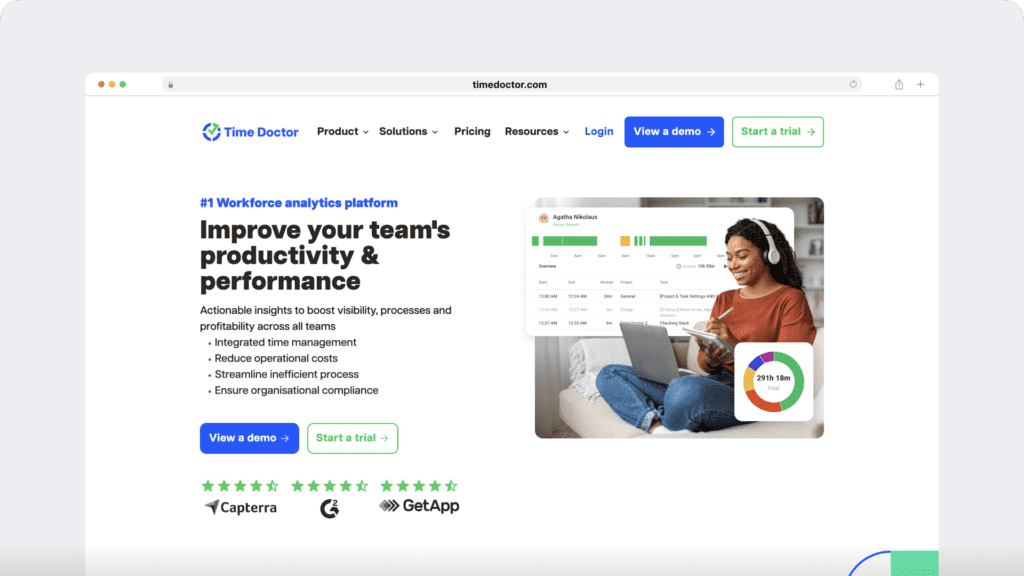
Improving retention at scale takes more than instinct. It requires clear, shared visibility into how work actually happens across your teams.
Time Doctor is a workforce analytics platform that gives you clear, real-time visibility into how work actually happens, so you can lead with trust, not control. By bringing together employee time tracking, productivity analytics, and work pattern insights, you can spot early signs of overload, lost focus, or capacity strain. Instead of learning what went wrong through exit interviews, you see where support is needed while it can still change the outcome.
Here’s how that plays out in practice.
Empowered leadership without micromanagement
Clear insight into time use, focus, and meetings helps leaders manage fairly and consistently. Time Doctor shows real work patterns and uses optional, periodic screen monitoring for context, not constant surveillance. Activity data helps identify blockers and workload issues, enabling better coaching, clearer expectations, and career support.
Actionable visibility into real work patterns
Productivity analytics show how effort is distributed across tasks, tools, and projects. Workforce insights surface workload imbalances, disengagement risks, and early burnout signals, especially in distributed teams. Reports like the Unusual Activity Report highlight changes in work patterns early, so leaders can address issues before they impact job satisfaction or retention.
Consistent decisions across teams and work models
The same work signals apply across healthcare teams, technology companies, agencies, and other complex environments. Whether teams are remote, hybrid, or in the office, shared dashboards keep HR, Operations, IT, and executives aligned on what employees actually experience day to day.
Support for wellbeing and sustainable performance
Time management data, attendance trends, and meeting insight help protect the employee experience before pressure becomes overload. Transparent use of data supports mental health, reinforces trust, and strengthens company culture over time.
Clear operational alignment without extra lift
Time Doctor integrates with payroll, attendance, and reporting tools, fitting easily into existing workflows. Insights like software cost visibility and Benchmarks AI help leaders spot inefficiencies and balance performance, costs, and retention. Predictable pricing makes adoption simple and sustainable.
With this level of visibility, leadership becomes steadier. Team members feel supported, expectations stay clear, and retention improves through consistent, data-informed decisions rather than micromanagement.

Final thoughts
Employee retention does not usually fail in one dramatic moment. It shifts quietly through everyday decisions, how work is planned, how pressure is handled, and whether people feel supported when things get hard.
When you act early instead of reacting late, retention feels steadier. Your teams feel seen. Expectations stay clear. Trust grows because decisions feel fair, consistent, and grounded in what is actually happening at work, not assumptions or last-minute fixes.
Strong retention is not built on perks alone. It comes from having clarity into how work gets done, using data to support people before burnout takes hold, and leading with trust rather than control. That is what turns retention from a constant worry into a leadership strength.
Now, can you see the early signals that shape retention today, or do they only become clear after someone has already decided to leave?
View a demo to see how Time Doctor helps you identify and act on employee retention factors early, so teams stay supported and employee turnover does not take you by surprise.
Frequently asked questions (FAQs)
The key factors of employee retention include compensation, benefits, flexibility, career development, workplace culture, recognition, management support, engagement, work-life balance, and meaningful perks. Time Doctor helps leaders monitor how these factors show up in real work patterns, so retention decisions are based on evidence rather than assumptions.
Employee retention protects productivity, reduces hiring costs, and keeps teams stable. With Time Doctor’s workforce analytics, leaders can see early signs of strain or disengagement and act before turnover disrupts performance and team continuity.
Turnover often stems from sustained overload, unclear expectations, limited growth, or disengagement that builds quietly over time. Time Doctor helps surface these issues early by showing trends in workload, focus time, and engagement before they appear in exit interviews.
Employee experience reflects how work feels day to day, including workload balance, clarity, and support. Time Doctor provides visibility into how work actually happens, helping leaders improve the employee experience in ways that support long-term retention.
Employee retention rate measures how many employees stay with an organisation over a given period. Time Doctor helps improve retention rates by giving leaders ongoing insight into work patterns, capacity, and engagement, so they can intervene early instead of reacting after resignations occur.
Companies improve retention by using workforce analytics to understand trends in workload, time use, and engagement. Time Doctor combines employee time tracking and productivity analytics to help leaders apply retention strategies that support teams without micromanagement.
Exit interviews explain why employees left, but they come too late to prevent turnover. Time Doctor helps leaders see what is changing in real time, allowing them to address retention risks while employees are still engaged and supported.
Time Doctor focuses on patterns, not individual surveillance. It provides shared, transparent visibility into how work flows across teams, helping leaders coach, plan, and support employees with trust rather than control.


Carlo Borja is the Content Marketing Manager of Time Doctor, a workforce analytics software for distributed teams. He is a remote work advocate, a father and an avid coffee drinker.