Quick overview
Business process standardization helps you run work in a consistent, repeatable way that supports scalability as teams grow.
Instead of each team handling the same work differently, you rely on shared workflows and clear expectations to manage time, capacity, performance, and new processes more reliably.
This reduces rework, makes daily operations easier to manage, and improves operational efficiency as your organization scales.
In this article, you’ll learn what business process standardization looks like in practice, why it matters, how it improves execution, the key stages to follow, and why workforce analytics becomes essential as you grow.
Why does operational efficiency become harder to maintain as organizations grow, even when processes already exist?
As organizations grow, the same work often takes different amounts of time. Handoffs slow down, rework increases, and outcomes become less predictable. Even with documented processes, execution variability emerges across team members.
As work spreads across different work environments, teams adjust how tasks are done, tools change, and expectations shift. This makes it harder to see how time, capacity, and effort move through daily work, weakening visibility and slowing decision-making.
Over time, these gaps create inefficiencies, missed deadlines, and constant firefighting. Maintaining consistency in how work gets done becomes the real challenge.
Table of Contents
- What is business process standardization?
- What benefits can businesses gain from process standardization?
- How does business process standardization differ from process improvement?
- What are the 4 stages of business process standardization?
- An example of process standardization in practice
- Why is workforce analytics critical to standardization?
- How Time Doctor supports standardized operations at scale
- Final thoughts
- Frequently asked questions (FAQs)
What is business process standardization?
Business process standardization means defining one clear, repeatable way to run a process so work is done consistently across teams and roles.
Instead of each group handling the same task differently, you use shared workflows, expectations, and metrics to guide how work moves from start to finish and support effective change management.
This creates alignment around how work actually happens, not just how it is documented. By making time, effort, and outcomes easier to compare, standardization supports business process management and helps teams stay consistent as operations grow.
Think of it as a common playbook. Standard operating procedures (SOPs) outline the steps for specific tasks, while shared KPIs define what success looks like. Teams maintain flexibility in execution while the structure remains consistent, making performance easier to manage and improve over time.
What benefits can businesses gain from process standardization?
These are the core benefits of process standardization that matter most to operations, process excellence, and business leaders.
1. Clearer operational efficiency across teams
When teams follow the same workflows and expectations, work moves faster, delivers consistent quality, and becomes more predictable, leading to more reliable customer satisfaction. You reduce delays caused by unclear handoffs and improve operational efficiency.
2. Fewer inefficiencies and less rework
When processes vary, redundancies creep in. Standardization efforts help you spot duplicate steps, unnecessary approvals, and wasted effort. This makes it easier to streamline workflows and reduce inefficiencies that quietly drain time and capacity, creating meaningful cost savings.
3. More consistent performance and outcomes
With common KPIs and benchmarks in place, performance becomes easier to compare across the entire organization. This consistency supports fair evaluation, more reliable results, and a more consistent customer experience.
4. Better support for continuous improvement
You can’t improve what you can’t compare. Standardized processes make it easier for stakeholders to see existing processes, patterns, track progress, and measure the impact of improvement initiatives. Over time, this creates a stronger foundation for process optimization and continuous improvement, rather than one-off fixes
5. Improved capacity and resource planning
When work follows a consistent structure, it becomes easier to understand how time and effort are used. This clarity helps you balance workloads, plan capacity more accurately, and bring new employees up to speed faster by reducing the learning curve, while aligning resources with business priorities without constant firefighting.
6. Stronger alignment across a distributed workforce
During digital transformation, clear process documentation supports collaboration across a distributed workforce while preserving flexibility and adaptability in execution.
7. Reduced risk and easier compliance
Clear processes create a stronger audit trail. This helps reduce operational risk, supports business process management, and makes it easier to maintain accountability, which is especially important for compliance-heavy industries such as healthcare.

How does business process standardization differ from process improvement?
Before any process can be improved, it needs to be stable and visible. Standardization creates that baseline by ensuring the same steps are followed across current processes.
This clarity shows where delays, rework, or capacity issues exist and highlights which tasks are ready for workflow automation. With consistent execution in place, teams can make informed decisions about what to improve next.
Standardization vs. process improvement
| Aspect | Standardization | Process improvement |
| Primary focus | Consistency in how work is done | Optimization of how work is done |
| Goal | Ensure the same process runs the same way every time | Make an existing process faster or better |
| Timing | Comes first | Follows standardization |
| What it addresses | Variations, execution gaps, process drift | Bottlenecks, delays, inefficiencies |
| Role in operations | Creates a shared baseline across current processes | Builds on that baseline to refine performance |
| Measurement | Makes time, effort, and steps comparable | Uses those comparisons to test improvements |
| Risk if done alone | Can feel rigid without insight | Can amplify inconsistencies if processes differ |
What are the 4 stages of business process standardization?
Each stage provides step-by-step instructions that build the foundation for consistent execution and support continuous improvement as operations grow.
Stage 1: Map and define the process
You begin by outlining how work should flow from start to finish, using templates and flowcharts to consistently document steps, roles, and handoffs. This shared process mapping aligns teams around the same view of current processes and helps build early buy-in before standardization begins.
Stage 2: Standardize metrics and benchmarks
Next, you agree on how work is measured. Common KPIs and benchmarks make time, effort, and outcomes comparable across teams and locations. This step supports business process management and keeps improvement initiatives aligned.
Stage 3: Monitor execution and variation
You then observe how work actually operates day-to-day. Monitoring highlights execution gaps, process drift, deviations, rework, and redundancies that create inefficiencies across workflows.
Stage 4: Optimize and reinforce at scale
With consistent execution in place, you can refine processes, reinforce best practices, and safely introduce process automation. This stage helps maintain alignment as teams grow, new employees are onboarded, and work expands across remote, hybrid, and in-the-office environments.

An example of process standardization in practice
When teams execute the same task in slightly different ways, outcomes become harder to predict. Even small variations in handoffs or sequencing can lead to delays and inconsistent results over time.
This is why process standardization matters in practice. Aligning teams around the same execution sequence makes it easier to compare time, effort, and outcomes, so inefficiencies surface earlier rather than compounding quietly.
ISO 9001, the global standard for quality management systems, formally recognizes this. It requires organizations to define and follow consistent processes to achieve reliable outcomes. The standard emphasizes that without standardized execution, performance cannot be measured accurately, and deviations are harder to detect and correct at scale.
Why is workforce analytics critical to standardization?
BPS only works when you can see how work actually happens in real-world conditions across teams, because without that visibility:
- it’s difficult to validate whether work is executed consistently, even when workflows and process documentation exist
- meetings, reports, and status updates fail to show how time, effort, and tools are used across current processes, including supply chain workflows
- standards become static as teams adapt workflows without visibility into execution differences
- assumptions replace evidence when identifying inefficiencies, rework, and redundancies across operational silos
- execution gaps remain hidden, increasing risk around regulatory requirements and accountability
- continuous improvement efforts stall without shared, objective insight into how work flows
How Time Doctor supports standardized operations at scale
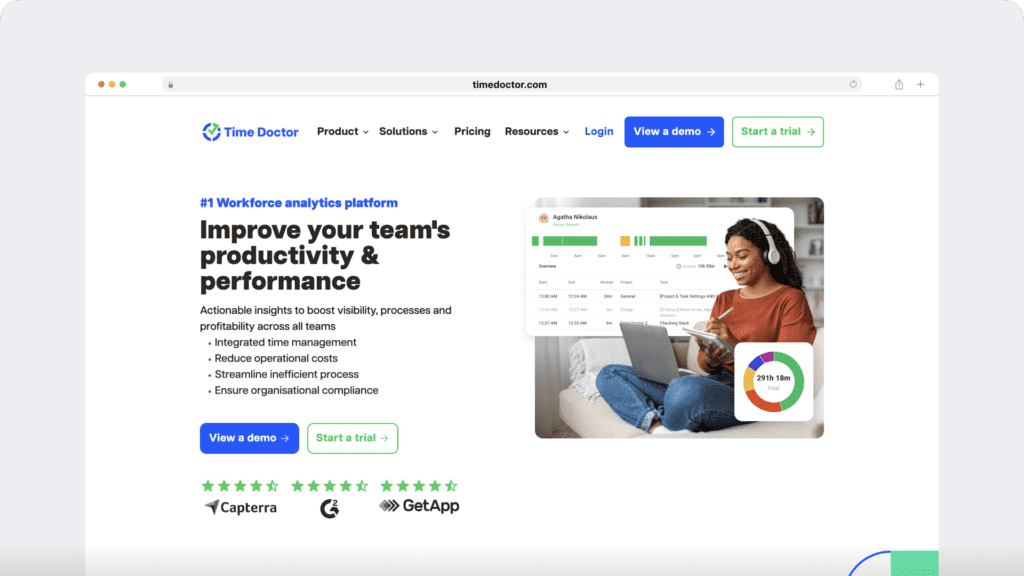
Time Doctor is a workforce analytics platform that provides clear visibility into how work actually happens, enabling you to standardize execution without adding layers of oversight or friction.
Instead of relying on assumptions, manual audits, or one-off time studies, you gain shared, real-time insight into how time, tools, and workflows move across teams.
This makes standardization measurable and sustainable without sacrificing high-quality execution
Empowered leadership through consistent, data-backed standards
Standardization works when you can lead with clarity and fairness. Time Doctor supports this by turning everyday work activity into practical insight you can use to guide teams with confidence.
With workforce analytics in place, you can:
- see how time and effort align with priorities across projects, roles, and current processes
- define clear KPIs and realistic benchmarks based on actual work patterns
- establish a shared baseline for execution across teams, agencies, and locations
- keep expectations consistent without relying on assumptions or manual oversight
- support data-driven coaching that reinforces standards while preserving team autonomy
Transparent, objective data reduces subjective decisions and supports consistent execution as operations scale, without adding rigid rules or micromanagement.
Actionable visibility into how standardized work flows
Time Doctor gives you real-time visibility into how work moves through your processes, so variation becomes visible before it turns into a problem.
With this level of workforce analytics, you can:
- see where time is spent across tasks, projects, and current processes
- understand how tools and applications are used within each workflow
- spot handoffs or delays that disrupt flow and extend cycle time
- identify bottlenecks, rework, and inefficiencies without running manual audits
- monitor execution patterns as they evolve, rather than relying on static process documentation
This visibility turns standardization into something you can actively observe and refine. You see where standards hold, where execution starts to drift, and where continuous improvement efforts should focus.
A seamless partnership that scales with your operations
Standardization often breaks down when tools introduce friction rather than support. Time Doctor is designed to fit naturally into existing workflows across remote, hybrid, and in-the-office teams, so adoption doesn’t become another obstacle.
With a focus on ease and trust, you can:
- roll out standardized visibility with intuitive onboarding and minimal disruption
- control access with role-based permissions that match how teams actually work
- apply strong privacy controls so visibility stays focused on work, not personal behavior
- reduce IT effort through straightforward integrations and low ongoing maintenance
- scale standardized execution across teams, locations, and agencies without added complexity
Standardization holds as operations grow, without slowing teams down or forcing changes that disrupt daily work.
Final thoughts
Business process standardization succeeds only when consistency is evident in how work is done each day. As operations scale, relying on documentation alone makes it harder to spot drift, address inefficiencies early, or keep improvement efforts on track.
So the real question becomes simple:
Do you have clear visibility into how your processes run today, or are decisions still based on assumptions?
When execution gaps surface too late, it usually signals a lack of shared, objective insight into daily work.
The right workforce analytics software gives you that clarity, helping you monitor execution, reinforce standards, and scale with confidence.
Get a Demo to see how workforce analytics supports standardized operations as you grow.
Frequently asked questions (FAQs)
The four common types of standardization focus on different layers of how work is done:
1. Process standardization, which defines consistent workflows and execution steps
2. Data standardization, which aligns how time, effort, and KPIs are measured
3. Tool standardization, which reduces variation in the applications teams use
4. Role standardization, which clarifies responsibilities and expectations
Standardization improves workflow efficiency by reducing variation in how work moves between steps. When workflows follow the same structure, handoffs become clearer, cycle time becomes easier to track, and rework decreases.
Time Doctor supports this by capturing employee time, task activity, and app usage in one place, so you can see how work actually flows through each process and spot inefficiencies without relying on manual audits.
Process mapping is essential because it establishes a shared understanding of how work currently flows. Without it, teams often standardize assumptions rather than real execution.
Time Doctor complements process mapping by validating it with real work data. Its timeline views, productivity analytics, and workforce analytics dashboards show how mapped processes play out day to day, helping you confirm where execution matches the standard and where it drifts.
Business process management focuses on designing, monitoring, and improving how work gets done over time. Standardization is a foundational step within BPM because it creates consistency before optimization begins.
Time Doctor supports BPM by acting as a system of record for process performance. With standardized metrics, Benchmarks AI, and ongoing visibility into execution, BPM initiatives can rely on objective data instead of fragmented reports or subjective feedback.
BPS stands for business process standardization. It refers to the practice of defining and enforcing consistent ways of working so processes are executed predictably across teams and environments.


Liam Martin is a serial entrepreneur, co-founder of Time Doctor, Staff.com, and the Running Remote Conference, and author of the Wall Street Journal bestseller, “Running Remote.” He advocates for remote work and helps businesses optimize their remote teams.