
Quick overview
An effective RTO plan starts with clarity. Organizations need to define on-site expectations, structuring hybrid arrangements around workflow demands, and using visibility to protect performance and employee well-being.
Key points
- Measuring success effectively: Why the quality of work—not attendance—is the real way to track RTO success.
- What RTO really means: Why returning to the office isn’t just about being on-site, and how it affects workflows, hybrid work, and team productivity.
- Choosing the right model: How full return, hybrid, and flexible schedules impact collaboration, focus time, and employee well-being.
- Using data to guide decisions: How workforce analytics reveal bottlenecks, workload balance, and performance trends.
- Protecting employees and performance: Ways an RTO plan supports well-being, focus, and work-life balance during transitions.
Getting people into the office takes a policy, but getting them productive takes a plan.
A shift back to the office does not, on its own, improve handoffs or resolve the underlying workflow challenges teams experience. These challenges can show up in any work environment, whether your team is remote workers, hybrid, or working in the office, because being physically on-site does not make workflow bottlenecks and handoff delays disappear.
Without visibility into how work actually moves, the real issues stay buried in routine activity, keeping you from leading with confidence, acting early, and supporting teams in ways that actually improve performance.
What does RTO mean?
RTO means return-to-office. It refers to the shift from remote work back to working on-site, either full-time or as part of a hybrid schedule. When organizations talk about RTO, they are setting expectations for when employees work in the office, how often they are on-site, and how daily routines will adjust across remote, hybrid, and in-office work.
Many companies push for RTO because they believe in-person work improves control, culture, and performance. Some leaders assume that productivity drops at home and that returning to the office will automatically fix underperformance.
In reality, the data does not always support that assumption. In our own experiment, agents showed a 56% decrease in unproductive time when working from home compared to the office — the opposite of what many expect in a traditional setup.
What is the meaning of the Return-to-Office (RTO) plan?
A Return-to-Office (RTO) plan is the strategy that guides how your organization transitions people back to working on-site, whether full-time or through a hybrid schedule. It creates structure for your distributed workforce by defining how remote work, hybrid routines, and in-office days will function while keeping productivity and efficiency on track.
A strong RTO plan gives people clarity on:
- when they are expected in the office and how the work schedule is set
- how in-person collaboration, communication, and focus time should work
- how hybrid schedules support productivity, work-life balance, and mental health
- how workflows and responsibilities shift across locations
An RTO plan keeps your workflow stable as teams move between remote, hybrid, and in-office work. It reduces friction and helps you guide teams smoothly through the transition.
Why is it important to have an effective return-to-office plan?
After the pandemic reshaped expectations around flexibility and work-life balance, an RTO plan needs a clear structure to keep work predictable in the future of work. Whether teams shift to hybrid routines or transition into a full return, a clear structure becomes the anchor that keeps work consistent and minimizes the friction that often appears when people change how and where they work.
A strong RTO plan helps guide teams through pressures that appear when people transition back to the physical office or on-site work. It gives you clarity on how work flows, how teams collaborate in person, and how performance stays consistent across locations. It helps you:
1. Maintain workflow continuity
Clear on-site expectations prevent schedule conflicts, uneven attendance, and handoff delays across every workspace your teams use. This keeps work moving smoothly across remote work, hybrid arrangements, and in-office days.
2. Keep throughput predictable
Changes in routines and team rhythms can break focus. Clear, simple remote work policies that respect employee preferences keep work predictable and productivity steady.
3. Strengthen company culture during the transition
An effective RTO plan clarifies when in-person time matters and how it supports teamwork, mentorship, communication, and healthy social dynamics as teams reconnect.
4. Reduce RTO-related risks
A lack of structure during a return-to-office mandate increases delays, missed dependencies, and uneven workloads. A clear RTO plan helps you anticipate issues early, rather than react when cycle times slip.
5. Support employee well-being
Returning on-site brings new stressors: commuting, noise, shifting routines, and less flexibility. A thoughtful RTO plan protects employee well-being by outlining support systems, focus-time norms, and reasonable work expectations.
6. Stabilize productivity during the shift back
Environmental changes, new policies, and social reintegration can cause dips in productivity. A structured plan smooths the transition and streamlines productivity, so teams maintain steady performance.
7. Create visibility across your distributed workforce
As teams move between remote work, hybrid arrangements, and on-site days, you need visibility into how work actually moves. This helps you spot bottlenecks early, rather than relying on assumptions or physical presence as measures of productivity.
A strong RTO plan will not automatically boost productivity, but it keeps teams grounded during change by reducing confusion, limiting risk, and supporting the well-being of everyone involved.
5 challenges teams face when returning to the office without clear structure
When your return-to-office plan lacks structure, the impact shows up fast. Even bringing people back into the physical office does not fix the workflow issues that slow teams down. Instead, the lack of clarity creates new problems on top of the old ones.
1. Work becomes inconsistent
Teams return on different days, hybrid arrangements overlap, and schedules do not align. When the new policy is unclear, office space fills up unpredictably, approvals slow down, and workflows lose rhythm.
2. Productivity becomes harder to predict
Commutes, office noise, and unclear routines disrupt focus time. When work is inconsistent, teamwork suffers, and it becomes harder to see where tasks slow down.
3. Managers spend time chasing updates instead of leading
When you can’t see how work moves across remote, hybrid, and on-site environments, and when office attendance is uneven, managers rely on constant check-ins. This reactive cycle takes time away from coaching, solving bottlenecks, and understanding employee sentiment.
4. Critical slowdowns stay hidden
Burnout spikes, tool friction, missed dependencies, and delays often go unnoticed until they escalate. Without real visibility, early warning signals never surface.
5. SLAs, throughput, and capacity alignment suffer
Misaligned schedules, unclear priorities, and inconsistent coverage ripple into customer-facing teams. This leads to slower turnaround times and missed performance targets.

Effective RTO models and their impact on team performance
There is no one-size-fits-all RTO plan. The right model depends on how your workflows operate, how much in-person collaboration your teams need, and how predictable you want capacity and throughput to be.
Below are the most common RTO models organizations consider, along with how each one affects daily work and overall execution.
1. Full return
A full return brings everyone back on-site during standard work hours and restores pre-remote routines. This model offers high visibility into workflows and simplifies scheduling, but it also increases pressure on teamwork, office space usage, and work-life balance.
It can also mask underlying workflow issues if you rely too heavily on physical presence as a measure of productivity.
Execution impact
- Predictable staffing and quick coordination
- Easier alignment for cross-functional tasks
- More pressure on commuting, focus time, and work-life balance
- Requires visibility into actual work patterns so you avoid productivity theater
2. Hybrid arrangements
Teams split time between remote and on-site days: some days are for in-person collaboration, while others protect deep-focus work from home. This flexible model works, but only when schedules and workflows are aligned across teams.
Execution impact
- Strong productivity on focus days
- Better collaboration when office days are intentional
- Higher risk of misaligned schedules
- Needs real-time workforce analytics to keep handoffs smooth and identify gaps between locations
3. Voluntary or flexible return
Employees choose whether they work remotely or on-site.
This model supports autonomy and boosts engagement, especially when paired with clear policies and access to an EAP (Employee Assistance Program), but it increases staffing, coverage, and team coordination variability.
Execution impact
- Higher satisfaction and stronger trust
- Useful for outcome-focused teams
- Harder to predict throughput without data
- Requires visibility tools to understand performance, regardless of where someone works
4. Project-based or task-based return
Teams come on-site only when the work requires hands-on collaboration, such as engineering builds, launches, or cross-functional sprints.
Execution impact
- Efficient office space usage
- High collaboration quality during key phases
- Remote routines must stay aligned
- Requires detailed activity insights to know when on-site time is actually needed
5. Incremental return
Teams gradually increase on-site days over time. This minimizes disruption and supports employee well-being by giving people time to adjust to new routines.
Execution impact
- Smoother transitions
- Lower productivity dips
- Risk of uneven attendance without structure
- Benefits from trend insights that show how performance shifts as office days increase
6. Half-staffing or rotational scheduling
Only part of the team comes to the office at any given time.
This model helps prevent overcrowding and supports distributed workflows, but it adds scheduling complexity.
Execution impact
- Balanced office usage
- Controlled team flows
- More moving parts across roles and shifts
- Works best when you have visibility into capacity, idle time, and workload patterns across rotations

How do you choose the RTO model that actually supports how your organization works?
The right RTO model reflects how work actually happens in your organization, not how you assume it does. Every model comes with trade-offs, so your Return-to-Office plan needs to align with real workflow demand, shifting performance patterns across remote work, hybrid arrangements, and on-site days, the capacity signals you monitor daily, and the collaboration rhythms your teams rely on.
It also needs to support employee well-being and protect work-life balance, especially as some roles move toward a full return while others stay flexible.
No matter which model you choose, you need workforce analytics that show how work truly happens across remote, hybrid, and in-office environments. That is where platforms like Time Doctor help you lead with trust rather than assumptions. With real-time visibility into throughput trends, early bottlenecks, workload balance, and protected focus time, you can adapt the RTO plan confidently and support teams without micromanagement.
When an RTO strategy is guided by real insight rather than physical presence or guesswork, it shifts from being a workplace policy to becoming a reliable framework for how work gets done. It becomes a practical execution framework that keeps teams aligned, maintains predictable performance, and strengthens company culture through any transition.
How do you build a stable and effective RTO plan?
An effective RTO plan starts with understanding how work actually flows across your organization. The goal is to keep workflows predictable as hybrid employees and teams move between remote work, hybrid arrangements, and on-site days.
Here’s a practical way to build a plan that supports stability, employee well-being, and consistent performance.
1. Assess the organization’s readiness
Start by mapping workflows, dependencies, handoffs, and any tasks that genuinely require in-person collaboration. Identify where remote work remains efficient and where the physical office improves outcomes. This gives you a realistic view of what the RTO plan must support.
2. Map workloads and capacity
Look at capacity limits, workload distribution, and where delays currently form. An effective RTO schedule should support throughput, not compete with it. Workforce analytics from Time Doctor help show who is overloaded, who has room, and where work slows down.
3. Set clear expectations
Define focus days, collaboration days, on-site requirements, communication norms, and hybrid schedules. Clear expectations create predictable rhythms and reduce the friction that often comes with a full return or new workplace policies.
4. Use workforce analytics to guide decisions
This is where Time Doctor becomes essential. You gain visibility into productivity patterns, performance trends, burnout signals, app usage behavior, and workflow bottlenecks. These insights help you adjust the RTO plan using real data and not just assumptions about where people should work.
5. Create fast feedback loops
Gather weekly or monthly feedback from managers and teams. Combine employee sentiment with real workflow signals so you can adjust the plan quickly and support well-being throughout the transition.
6. Watch early warning signs
Idle spikes, longer task cycles, tool friction, and drops in focus time indicate when your RTO model is creating friction. Workforce analytics surfaces these signals early so you can correct issues before they escalate into missed deadlines or throughput problems.
A stable, RTO plan does not rely solely on the physical office. It depends on clarity, real visibility into how work actually happens, and the ability to adjust based on data. With Time Doctor supporting your decisions, you can lead with confidence, protect performance, and keep teams aligned, no matter where work takes place.
How do you measure RTO success?
RTO success is measured by how well work actually performs, not by how many people show up in the physical office. The real indicators come from workforce and productivity analytics that reveal whether the return-to-office plan improves how tasks move across remote work, hybrid arrangements, and on-site days.
The most useful signals come from workforce analytics that reveal how teams use time, tools, and focus throughout the day. Track changes in:
- workflow stability and whether handoffs stay smooth
- focus time, especially on in-person days
- throughput across roles and queues
- task turnaround times and cycle times
- tool usage patterns and friction points
- attendance accuracy and schedule alignment
- burnout indicators, idle spikes, or overload
- meeting load and whether in-person days become overbooked
- time lost to interruptions, both in-office and remote
These metrics show whether your RTO plan strengthens performance or simply adds commute hours and office noise to the workday.
With real-time visibility from Time Doctor, you can understand how work actually happens, evaluate the impact of each RTO model, and make timely adjustments before minor issues turn into larger performance risks.
Office vs remote: What actually drives better performance?
It’s easy to assume that bringing people on-site will lift productivity, but location alone does not fix workflow problems. The office gives you proximity, not proof of output. Remote work offers focus, but not guaranteed alignment.
What actually drives performance is how smoothly work moves across tasks, tools, and teams, regardless of where people sit.
So, The real reminder for leaders is this:
RTO changes the setting, not the underlying work patterns.
Without visibility into those patterns, it becomes impossible to tell whether in-office days are improving execution or simply adding commutes, interruptions, and coordination overhead.
Final thoughts: How Time Doctor supports your RTO transition
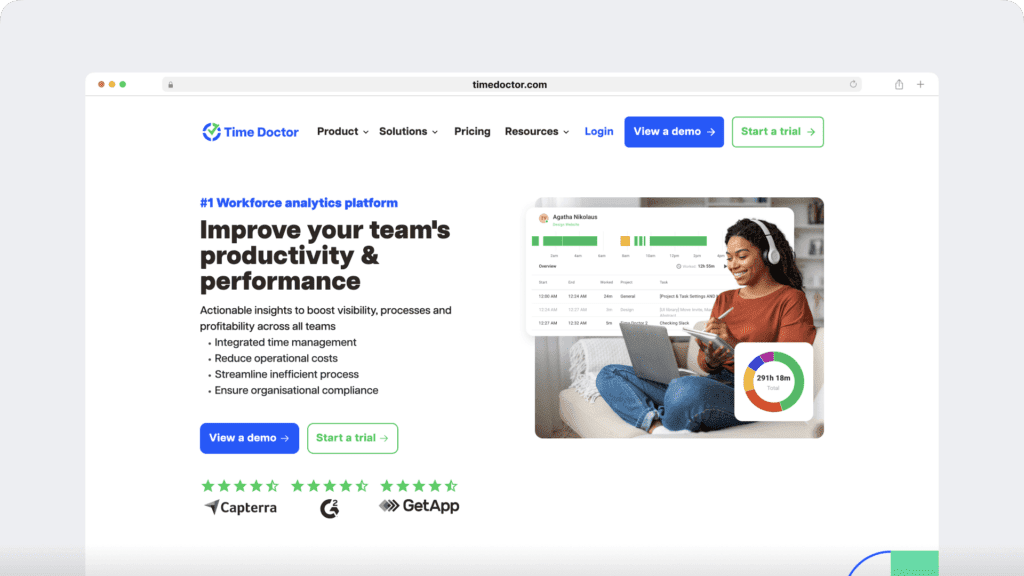
Time Doctor gives you the visibility that an RTO plan cannot provide on its own, helping you protect performance, support employee well-being, and make proactive decisions instead of reacting with cuts or layoffs.
Bringing people back on-site may change the location of work, but it does not reveal how workflows actually move or where performance breaks down.
Time Doctor fills that gap by showing real patterns in workload, focus time, bottlenecks, collaboration quality, and productivity across remote work, hybrid arrangements, and in-office days.
This level of clarity helps you build an RTO strategy that supports how your teams really work and what they need to perform well. You see where work slows, who is overloaded, how routines shift during the transition, and where teams need support.
Leaders make better decisions, teams stay aligned, and performance remains stable because visibility is consistent in every environment.
Returning to the office gives you proximity. Time Doctor gives you the clarity to make it productive.
Before you finalize your RTO plan, ask yourself one question: Are decisions being made based on who is in the office or on how work actually happens?
Get a demo to see how visibility strengthens your RTO plan
Frequently asked questions (FAQs)
RTO refers to the expectations and structure for on-site work. It outlines attendance schedules, collaboration routines, and how hybrid arrangements operate across the team. Leaders use this framework to create predictable workflows, especially when pairing the plan with real visibility from tools like Time Doctor.
Organizations expect better collaboration and predictability on-site, driven by face-to-face work, but productivity only rises when leaders can see workflows. Time Doctor provides a clear view of how routines, workloads, and focus shift during RTO, so you can support people before problems escalate.
Only when paired with data. Being in the office does not automatically fix bottlenecks, workload imbalances, or collaboration issues. Time Doctor helps leaders measure what is truly working by showing real-time productivity signals, capacity trends, and workflow patterns across remote, hybrid, and in-office days.
Yes. RTO can improve teamwork during collaboration days, but it can also introduce commute fatigue, office interruptions, and inconsistent focus time. Leaders rely on workforce analytics from Time Doctor to see whether on-site days are lifting performance or simply adding noise and extra steps to the workday.
The strongest RTO strategy aligns with workflow demand, capacity signals, and performance data, not assumptions about where people work best. Time Doctor highlights workload trends, task patterns, early bottlenecks, and employee needs, making it easier to select an RTO model that supports both performance and well-being.
RTO defines when employees are expected to work on-site and how hybrid schedules operate. A clear plan supports focus time, teamwork, and work-life balance. When paired with Time Doctor’s visibility, leaders can support employees more fairly by understanding the real impact of the transition on their workload and well-being.
Time Doctor gives ops leaders real-time clarity on workloads, bottlenecks, focus time, and collaboration, so they can design an RTO plan that steadies performance across remote, hybrid, and on-site teams, improves retention of remote employees, and protects employee well-being during transitions.
Clear office policies define expectations for on-site work, hybrid schedules, collaboration days, and focus time. Paired with workforce analytics, they reduce confusion, maintain workflow stability, and protect employee well-being.


Liam Martin is a serial entrepreneur, co-founder of Time Doctor, Staff.com, and the Running Remote Conference, and author of the Wall Street Journal bestseller, “Running Remote.” He advocates for remote work and helps businesses optimize their remote teams.