Quick overview
Software Cost Insights exposes hidden SaaS costs by showing which licenses are truly used, which ones show low activity, and how much each seat actually costs. With clear usage and cost data in one place, leaders can uncover waste, right-size their licenses, and make smarter renewal decisions with confidence.
In this article, you’ll see how Software Cost Insights works, why traditional methods fall short, and how teams use this visibility to reduce spend and make smarter decisions.
The problem: Why is software spend rising while visibility isn’t?
Companies invest heavily in SaaS tools, yet most leaders still cannot see which licenses are actually being used. Renewal decisions often rely on scattered reports, manual audits, or assumptions instead of real usage data.
As software budgets grow, leaders feel more pressure to prove that every tool is worth the cost. The challenge is that most teams still don’t have a clear way to connect actual usage with what they’re paying for. This creates confusion, hidden waste, and a limited view of what’s really happening across the software stack. For example:
- Manual exports and cross-checking take too much time
- Vendor dashboards show license counts, but not who is actually using each tool
- Free and paid users get lumped together, masking real adoption
- “Rarely used” seats stay hidden, contributing to silent waste
Because of these gaps, leaders across the organization struggle to answer essential questions:
- Which paid seats show no usage at all?
- Which licenses show low activity, even though the organization continues to pay for them?
- Where are adoption gaps slowing teams down or signaling training needs?
- How much budget is tied to tools that no longer deliver value?
Without clear usage and cost visibility, renewal decisions become guesswork instead of data-backed choices.
The solution: Time Doctor’s Software Cost Insights
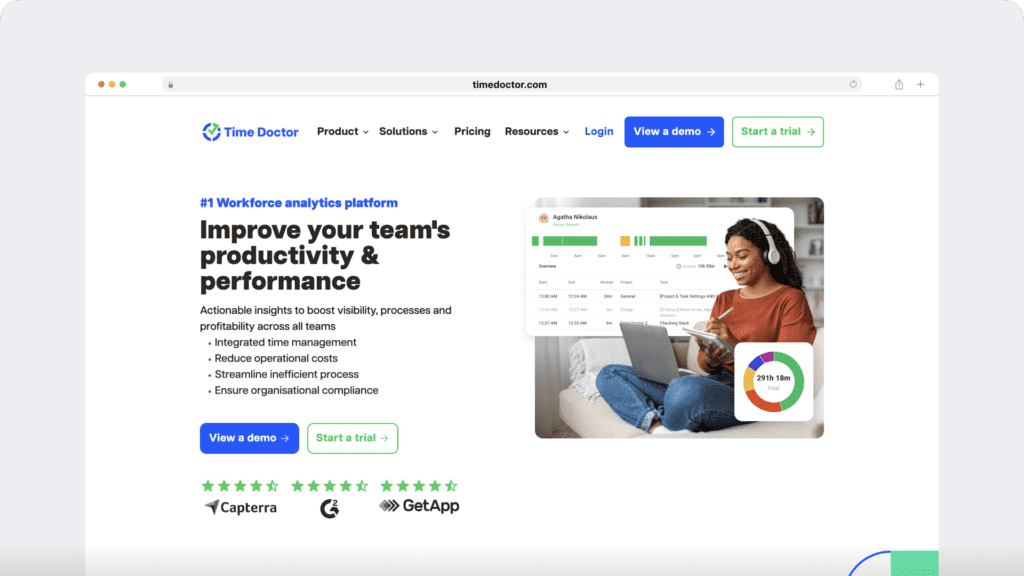
Time Doctor’s Software Cost Insights gives you a clear report showing how each paid tool is actually used and how much every license really costs.
It is built for organizations that want to:
- Spot seats with little activity or underused paid licenses so they can reclaim wasted spending
- Understand adoption gaps across tools and estimate potential savings with accurate, real usage data
- Bring objective insights into renewal conversations, consolidations, and vendor negotiations
What makes it different from usage-only tools?
Most usage tools only show basic app activity, providing a limited view of what’s really happening. They tell you how long someone spent in an app, but they cannot show:
- Whether the person is using a paid or free seat
- Which licenses are inactive
- How much money is tied to seats that deliver little or no value
- How much could be saved by removing or reassigning licenses
Because of these gaps, traditional tools require leaders to do extra work to interpret data, cross-check costs, and manually audit seat lists.
How does Time Doctor’s Software Cost Insights go further?
Time Doctor’s Software Cost Insights offer deeper detail by highlighting the specific metrics that show how each tool is used and how each license contributes to software costs.
It includes insights such as:
- which seats are used, unused, or rarely used, and their monthly costs
- how actively each tool supports daily work
- when each tool or seat was last used
- how usage patterns shift over time
- estimated savings from removing or reassigning low-use seats
- total cost of selected applications
- per-user usage paired with cost impact
These metrics make it easier to see which tools deserve their place in the stack, where licenses can be adjusted, and where real savings opportunities exist.
The value: Immediate savings and smarter decisions
When usage and cost data are centralized, leaders can spot reclaimable budget, identify essential tools, and optimize seat counts and renewals.
This kind of visibility often uncovers opportunities that were easy to miss before.
For example, one company identified $400 in inactive design-tool licenses by checking which seats were actually being used, and saved that amount each month.
Savings like this are common once teams can see real usage data. This is supported by research from FIS Global, which indicates that “75% of C-level executives who have invested in these types of cost reduction technologies find them to be highly impactful!”
With this clarity established, Software Cost Insights helps teams take action in three high-value areas.
1. Identify and eliminate wasted software spend
Software Cost Insights highlights inactive and rarely used licenses by displaying metrics such as used vs. unused seats, last used date, cost per seat, and potential monthly savings. With this visibility, teams can quickly see how much money they could save by removing, downgrading, or reassigning licenses before renewal season.
Teams can use these insights to:
- remove or downgrade licenses that haven’t been used in weeks or months
- reassign seats to active users instead of purchasing new ones
- build data-backed savings recommendations for finance and budget owners
2. Understand the adoption and ROI of key tools
Low usage often means a team needs more training, better onboarding, or a tool that fits their workflow. Software Cost Insights shows how much time people spend in each tool, how usage changes over time, and which seats are barely used. This makes it easier to spot adoption issues early and fix them before they affect productivity.
Teams can use these insights to:
- identify roles or teams with low adoption and offer targeted training
- monitor usage trends to catch early drop-off after rollout
- flag features or licenses that aren’t being used to guide vendor-level conversations
3. Make smarter renewal and consolidation decisions
For renewals, Software Cost Insights provides teams with clear evidence of underutilized seats and easy comparisons across departments. This helps leaders see which premium features are truly needed and which licenses can be reduced, removed, or reassigned.
Teams can use these insights to:
- prepare renewal discussions with objective data on seat utilization
- compare usage across departments to confirm which tools require premium licenses
- validate or challenge vendor claims about seat counts or usage requirements
Final thoughts
Low-activity or lightly used software licenses can quietly drain thousands of dollars each month. These gaps were difficult to uncover in the past because leaders relied on manual audits, scattered reports, and assumptions about what teams were actually using.
With Time Doctor’s Software Cost Insights, this clarity appears instantly. You get a real view of usage and cost in one place, making it easier to protect budgets, eliminate waste, and keep your software stack aligned with how work really happens.
If you want a simple, accurate way to understand SaaS usage, cut unnecessary costs, and make confident renewal decisions, Time Doctor gives you the visibility and insights needed to take action quickly and plan with confidence.
Get a demo to understand which tools deliver real value.
Frequently asked questions (FAQs)
You can track this by reviewing seat-level usage rather than relying on vendor dashboards. Time Doctor’s Software Cost Insights gives you a clear view of which paid licenses are active, low-activity, or inactive, so you can quickly see where your budget is really going.
“Rarely used” refers to seats that show minimal activity compared to the total tracked time for that tool. Time Doctor’s default benchmark is less than 5%, although you can adjust the threshold based on your organization’s needs.
Without the right visibility, you usually need manual audits or spreadsheets. Software Cost Insights surfaces low-activity and inactive seats automatically, so you can spot opportunities to remove, downgrade, or reassign licenses before renewal season.
The best way is to check seat activity ahead of renewals. Time Doctor shows which seats haven’t been used in weeks or months, helping you right-size your license count instead of renewing based on assumptions.
Software pricing varies widely by contract, tier, user count, region, and negotiated discounts. Manual entry ensures your cost and savings data reflect your actual agreement rather than generalized estimates.
Compare usage to spend. If a tool has high costs but low activity, it may not be delivering the value you expect. Software Cost Insights brings these signals together so you can evaluate ROI more accurately.
You need objective evidence: active seat counts, low-activity seats, cost per seat, and potential savings. Software Cost Insights with Time Doctor provides this in one place, helping you negotiate confidently and avoid inflated renewal rates.
Many tools include free or mixed-tier users. Selecting users and groups ensures that Software Cost Insights evaluates only paid seats, giving you accurate license and cost matching.
Time Doctor’s Software Cost Insights currently supports one price per tool. Tiered pricing and mixed seat types may be supported in future updates.
Yes. You can simply enter the equivalent monthly cost (annual price ÷ 12). Future releases may support annual pricing directly.